

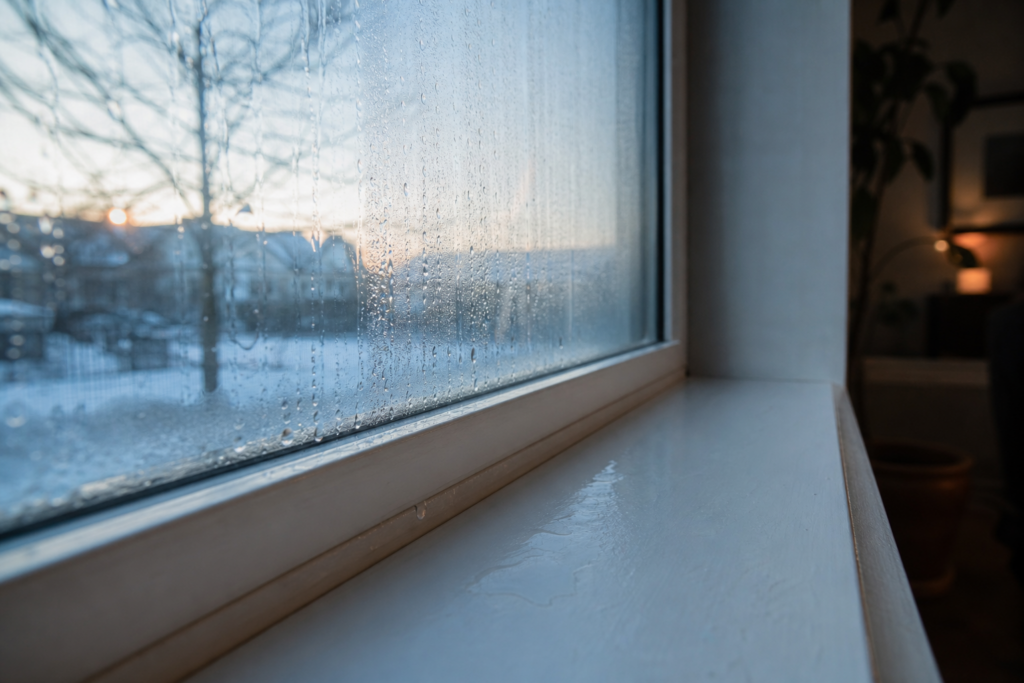
Steamy panes and water dripping down the inside of your windows are familiar sights once the temperature drops. Often called “sweating windows,” this buildup is more than just a morning annoyance. Persistent condensation is a clear sign that your indoor climate is out of balance—and left unchecked, it can lead to mold, respiratory issues, and structural damage over time.
The science behind condensation is simple: warm, moisture-laden indoor air comes into contact with a cold surface, such as a window pane. Because cold air holds less water vapor than warm air, the air reaches its dew point, and the excess humidity condenses into water droplets on the glass. The sharper the contrast between indoor and outdoor temperatures—and the higher your indoor humidity—the more severe the condensation becomes.
Where Is the Condensation and What Does It Mean?
Before tackling the problem, check where the moisture is actually forming. The location reveals the underlying cause:
- Inside the home (interior glass): This points to elevated indoor humidity, insufficient airflow, or both. It is by far the most common issue in residential spaces.
- Outside the home (exterior glass): This is actually a hallmark of high-performance, well-insulated windows. It happens when the outer pane stays colder than the outdoor dew point because very little heat escapes through the double or triple glazing. It is entirely normal and typically burns off as the day warms up.
- Between the glass panes: This indicates that the seal of the insulated glazing unit has failed. Once moisture enters the sealed cavity, neither a dehumidifier nor improved ventilation will fix it—the glass unit must be replaced.
Why Is Excess Humidity Dangerous?
Excess moisture indoors goes well beyond water pooling on the windowsill. According to the World Health Organization (WHO), persistent dampness and the resulting microbial growth are directly linked to respiratory problems, allergies, and asthma. Damp environments foster mold colonies, which release airborne spores that trigger chronic sinus irritation, eye discomfort, and other health issues.
Beyond the impact on your health, moisture compromises the building itself. Learning about high indoor humidity and how to prevent it is essential, as trapped moisture can rot wooden frames, damage drywall, seep under baseboards, and cause paint or wallpaper to peel. Moreover, humid air requires significantly more energy to heat because your heating system must warm the suspended water vapor alongside the air itself.
How to Measure and Assess Humidity Levels
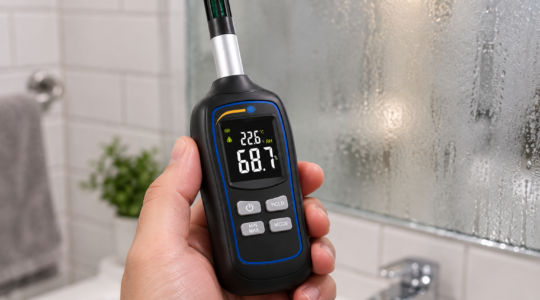
To determine whether your sweating windows require immediate intervention, start by measuring your indoor relative humidity. In living spaces, the optimal range is between 40% and 60%. If humidity levels consistently hover above 60–65%, the risk of mold growth rises dramatically, and active steps are necessary.
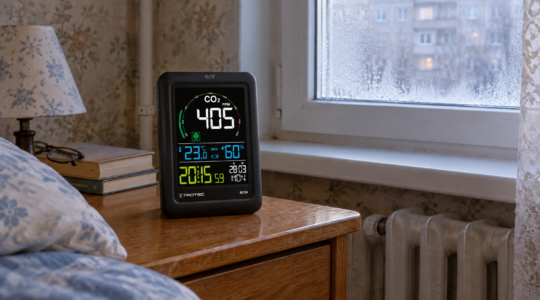
A digital thermo-hygrometer is the most reliable tool for tracking these fluctuations throughout the day. For accurate readings, place the device in the center of the room, away from direct sunlight, drafty windows, and radiators.
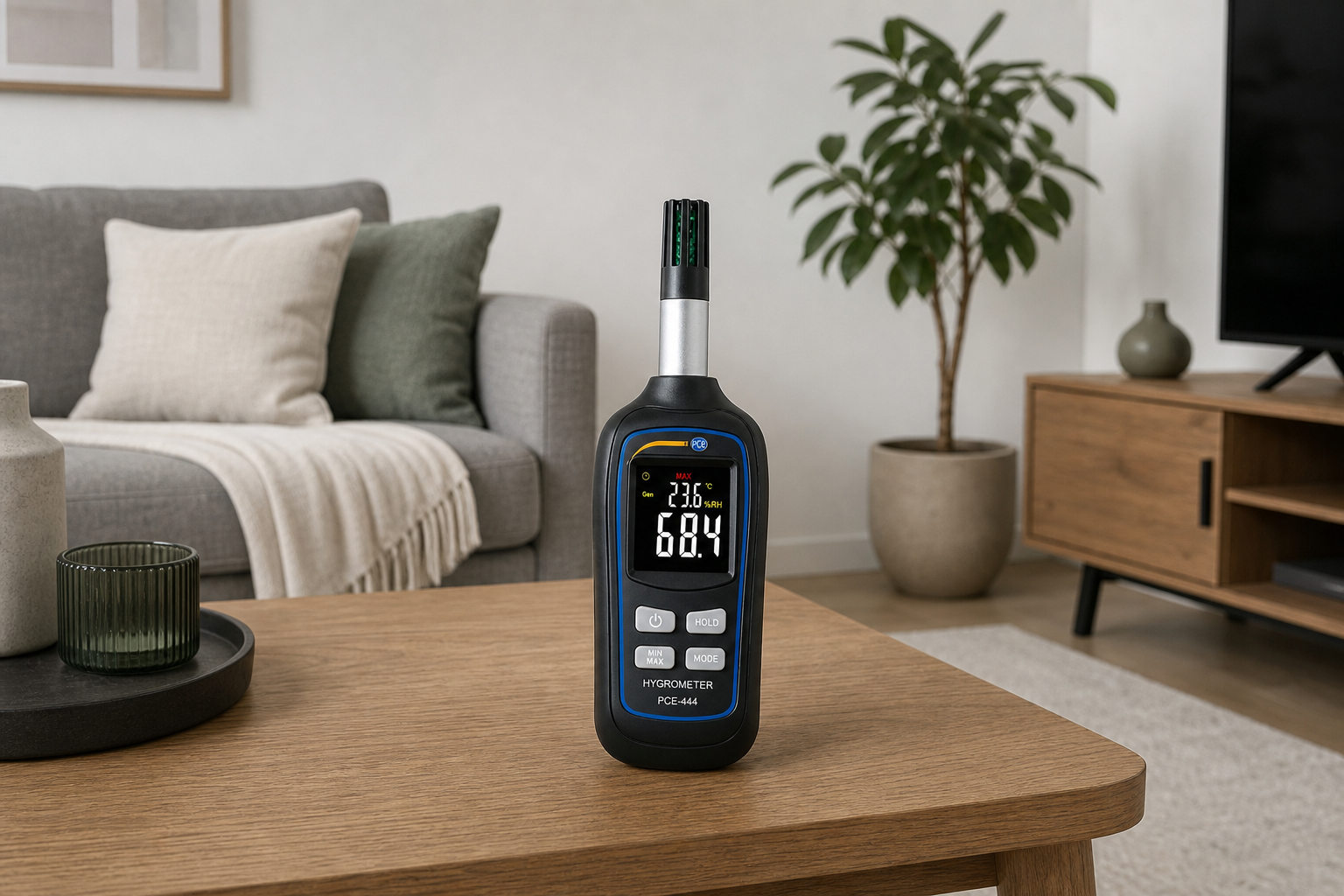
Explore our full selection of monitoring equipment in our temperature and humidity meters category.
Solution 1: Effective Ventilation and Airflow
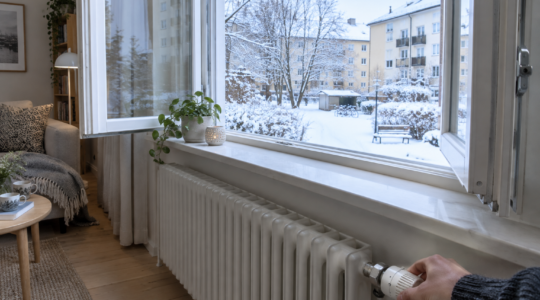
When windows mist up, the default reaction is often to leave them cracked open. While regular airflow is vital, poor ventilation technique can make the problem worse. Leaving windows tilted open in cold weather cools down the surrounding walls and frames, encouraging deeper condensation and faster mold growth around the reveal.
A much better approach is cross-ventilation (or “shock ventilation”): open windows wide for 5 to 10 minutes several times a day. This completely refreshes the indoor air without chilling the walls and furniture. For an effortless, permanent fix, consider installing decentralized ventilation with heat recovery. These systems supply continuous fresh air and expel stale, humid air and CO₂ without sacrificing your home’s thermal efficiency.
Solution 2: Energy-Efficient Dehumidifiers
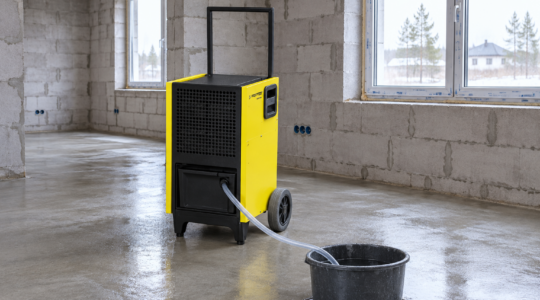
In modern, airtight homes—or in spaces where laundry must be dried indoors—ventilation alone is often not enough. In these cases, dehumidifiers provide the most practical and reliable way to maintain balanced humidity. Modern compressor dehumidifiers run automatically: you set a target humidity level (such as 50%), and the unit only operates when moisture levels rise above that threshold.
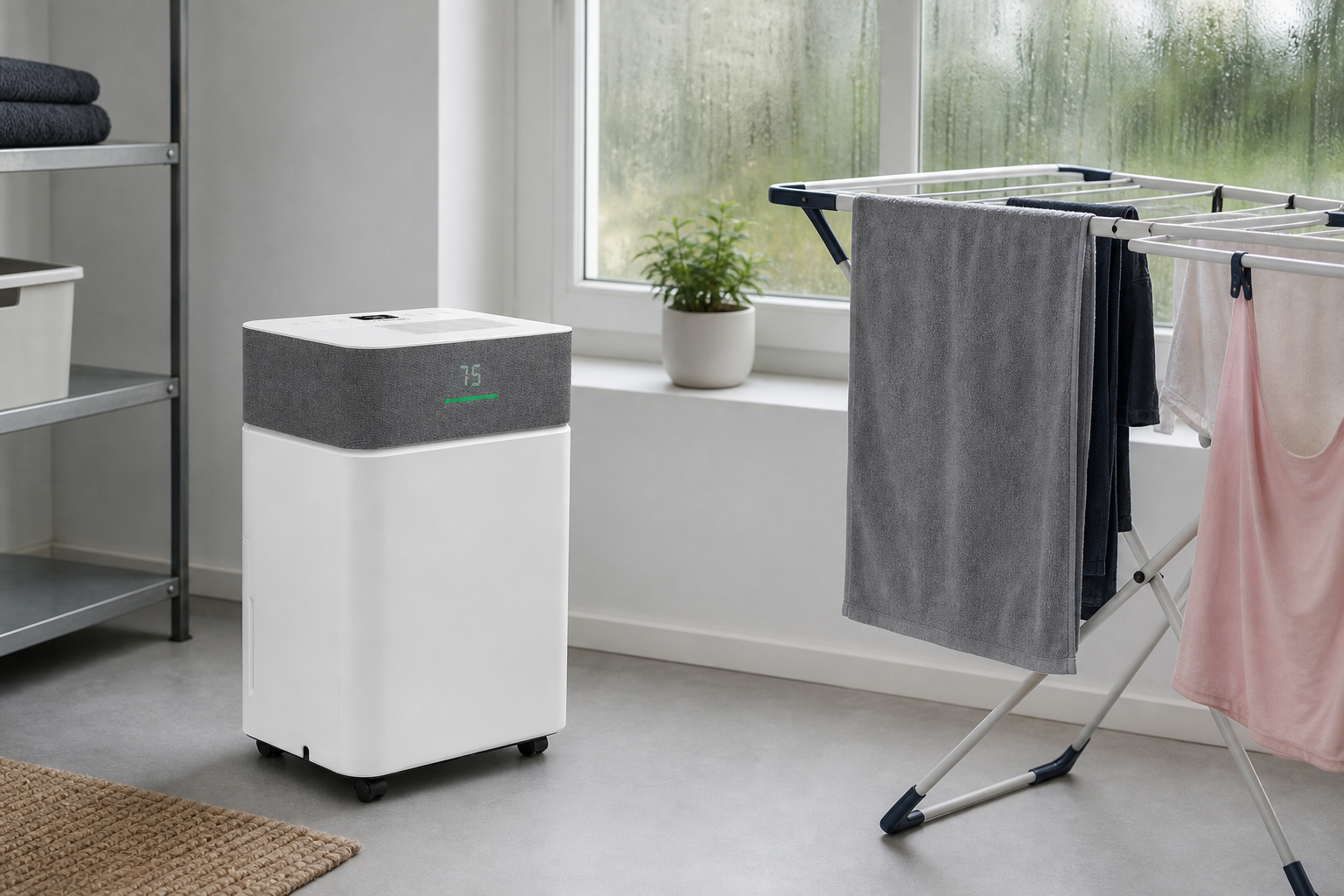
Key benefits of using a dedicated dehumidifier include:
- Lower energy use: It consumes less power to extract moisture than to repeatedly heat cold air brought in by open windows.
- Consistent regulation: It protects your home even when you are away for extended periods.
- Cleaner air: Many models feature integrated HEPA or carbon filters to trap dust and mold spores.
- Fast indoor drying: It speeds up laundry drying while preventing moisture from penetrating walls and soft furnishings.
-
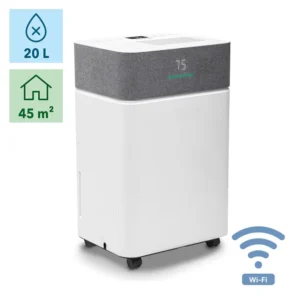 Available
Trotec TTK 63 E WiFi Dehumidifier – A Smart Solution for Moisture, Mold, and Condensation on Windows
269 €
-
 Available
Trotec TTK 99 HEPA Dehumidifier – Effective moisture removal and cleaner indoor air for areas up to 90 m²
376 €
-
-15%

TTK 64 HEPA Dehumidifier and Air Purifier, 50 m²
Original price was: 303 €.257 €Current price is: 257 €.
When choosing a dehumidifier, select a unit sized appropriately for your space. For a deeper look at which method fits your situation best, read our comparative guide on dehumidifiers vs. ventilation.
Practical Steps to Reduce Condensation
Alongside mechanical solutions, small daily habits can significantly lower moisture levels:
- Always turn on the range hood while cooking, and use lids on pots and pans.
- Keep bathroom doors closed during showers and let the exhaust fan run until moisture clears.
- Avoid drying wet laundry directly on radiators or in unventilated living areas.
- Pull heavy furniture a few inches away from exterior walls to ensure proper air circulation.
- Wipe away standing water on window sills promptly to protect silicone seals, frames, and drywall.
The risks of excess humidity and its health impact should never be ignored. Waking up to waterlogged windows is your home’s early warning sign. Addressing the root cause protects both your family’s health and the long-term value of your property.
Frequently Asked Questions
Yes. Exterior condensation is actually a sign of superior thermal insulation. It means your windows are preventing indoor heat from escaping, keeping the outer glass cold. The moisture usually disappears quickly as the sun comes up or a breeze picks up.
During the heating season, indoor relative humidity should sit comfortably between 40% and 50%. Letting it fall below 30% can dry out your airways and skin, while levels consistently above 60% create prime conditions for mold.
On the contrary, a dehumidifier can often lower your overall heating costs. Moist air requires far more thermal energy to heat than dry air. Modern units also feature built-in humidistats, ensuring they only run when the moisture level requires it.
References
- WHO guidelines for indoor air quality: dampness and mould.
- REHVA: Guide for indoor climate and humidity control.
- Trotec: Condensation and moisture prevention research.
- Pro Air OÜ: Indoor air quality diagnostics and measurement data.