

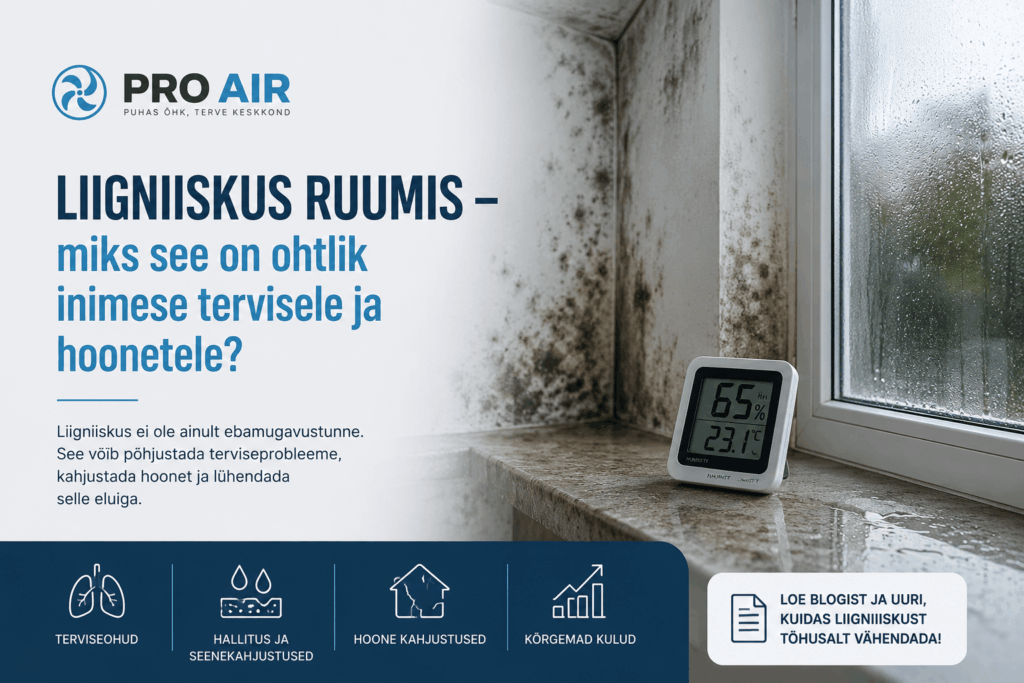
Excessive humidity is a problem that many people only notice when windows start to fog up, mold begins to grow, or a musty odor fills the rooms. In fact, excessively high humidity can affect human health, indoor climate, and building structures long before any visible damage appears.
Excess moisture is particularly common in Estonia:
- in poorly ventilated apartments
- in older buildings
- in basements
- in bathrooms
- in rooms with clothes dryers
- after water damage
- in new energy-efficient buildings
What is a normal level of humidity?
The recommended relative humidity for indoor spaces is usually:
- 40–60% RH
If the humidity level remains above 60% for an extended period, the following risks begin to increase:
- the formation of mold
- the spread of bacteria
- for the reproduction of dust mites
- structural damage
How can you tell if a room is too humid?
The most common signs:
- the windows fog up
- Condensation forms on the windows
- Dark spots appear on the walls
- There’s a musty smell in the room
- the wallpaper or paint is starting to peel
- The furniture feels damp
- The laundry dries very slowly
- The air feels heavy and stuffy
The problem is often underestimated until visible mold appears.
How does excessive humidity affect human health?
1. Molds and Respiratory Problems
High humidity creates an ideal environment for mold growth. Mold fungi release spores into the air, which can cause:
- cough
- nasal irritation
- eye irritation
- breathing difficulties
- allergies
- an asthma flare-up
The following are particularly sensitive:
- children
- senior citizens
- people with allergies
- people with asthma
2. The Spread of Dust Mites
Dust mites thrive in humid environments. If the humidity is too high, the mite population increases rapidly.
This may cause:
- allergic reactions
- skin irritation
- chronic rhinitis
- breathing problems
3. Poorer sleep quality
Air that is too humid can change the room:
- dull
- difficult to breathe
- hot
This directly affects:
- sleep quality
- recovery
- well-being
4. The Spread of Bacteria and Microbes
The following reproduce more quickly in a humid environment:
- bacteria
- mushrooms
- microorganisms
This can affect the entire indoor climate and lead to long-term health problems.
How does excess moisture damage a building?
1. Mold on walls and ceilings
Excess moisture causes mold:
- on the walls
- in the open
- in the joints
- around windows
In addition to being an aesthetic problem, mold can damage building materials.
2. Damage to Structures
Prolonged exposure to moisture can damage:
- wooden structures
- parquet
- gypsum boards
- insulation materials
- furniture
In the worst-case scenarios, the following may occur:
- rot
- weakening of structures
- high repair costs
3. Damage to paint and wallpaper
Excess moisture can cause:
- paint curing
- peeling wallpaper
- cracks
- stain formation
4. Unpleasant odor
The following often occurs in damp rooms:
- a musty smell
- a stuffy feeling
This has a significant impact on the comfort of the space and the indoor climate.
Why does excess moisture occur?
Most common causes:
- poor ventilation
- inadequate ventilation
- drying laundry indoors
- moisture in the shower and bathroom
- food preparation
- water damage
- cold bridges
- poorly insulated buildings
- windows that are too airtight
Even in new, energy-efficient buildings, moisture problems can arise if ventilation is inadequate.
How can you reduce excess moisture?
Improve ventilation
The most important thing is adequate ventilation:
Use a dehumidifier
A dehumidifier helps:
- remove excess moisture
- reduce the risk of mold
- improve the indoor climate
- speed up drying after water damage
A dehumidifier is especially necessary:
- in basements
- in the washrooms
- during post-construction drying
- after the floods
- in poorly ventilated rooms
Monitor the humidity
A moisture meter, also known as a hygrometer, helps you monitor:
- Is the humidity within the normal range?
- When does the problem arise?
- Is the ventilation working properly?
When should a problem be addressed immediately?
You should respond immediately if:
- Mold grows on the walls
- The windows are constantly fogging up
- There is a strong musty smell in the room
- The rooms have not been dried out since the water damage
- breathing problems develop
- The furniture or walls feel damp
The longer the problem persists, the greater the damage and costs become.
Summary
Excess moisture isn’t just a nuisance. It can affect:
- human health
- respiratory tract
- allergies
- indoor climate
- building structures
Proper ventilation and, if necessary, a dehumidifier help keep the room:
- as healthy as
- dry
- convenient
- energy-efficient
Early intervention helps prevent high repair costs and significantly improves the quality of the living environment.
FAQ
What is the normal level of humidity in a room?
The recommended relative humidity is usually 40–60%.
Can excess moisture cause mold?
Yes. Prolonged high humidity creates conditions that are very favorable for mold.
Does a dehumidifier help prevent mold?
A dehumidifier helps reduce humidity and, as a result, reduces the risk of mold growth.
Why Do Windows Sweat?
This is often due to excessively high humidity or inadequate ventilation.
Does excessive humidity affect your health?
Yes. It can cause allergies, respiratory problems, and worsen indoor air quality.
Where is the best place to use a dehumidifier?
The dehumidifier is well-suited for:
- to the basement
- into the bathroom
- laundry room
- into the bedroom
- after water damage
- in poorly ventilated rooms
SEO keywords
excessive humidity in the room, too high humidity, mold at home, dehumidifier, humidity in the room, poor indoor climate, preventing mold, ventilation and humidity, windows condensing, excessive humidity in the apartment, moisture damage, humidity at home, risk of mold, healthy indoor climate, removing moisture from a room