


Dehumidifier vs. Ventilation – Which Is More Effective Against Humidity?
When there is excess moisture, mold, or fogged-up windows at home or in the office, the question often arises: Will a dehumidifier or ventilation solve the problem?
Although both help combat humidity, they work in completely different ways. Choosing the right solution depends on whether the problem is poor ventilation or excessively high humidity.
What does ventilation do?
The main purpose of ventilation is:
- bring fresh air into the room;
- remove CO₂;
- remove moisture and odors;
- improve indoor air quality.
Signs of poor ventilation:
- stale air;
- sweaty windows;
- mold;
- difficulty breathing;
- morning fatigue.
Heat recovery is more effective than ventilating through a window
Modern homes are increasingly using heat-recovery ventilation, also known as recuperation, which:
- constantly circulates the air;
- reduces moisture;
- saves energy.
What does a dehumidifier do?
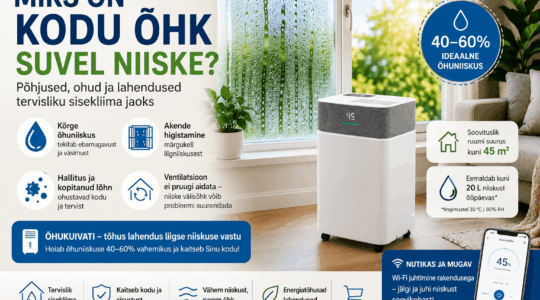
A dehumidifier removes excess moisture from the air.
This helps:
- reduce relative humidity;
- dry rooms more quickly;
- prevent mold;
- remove condensation.
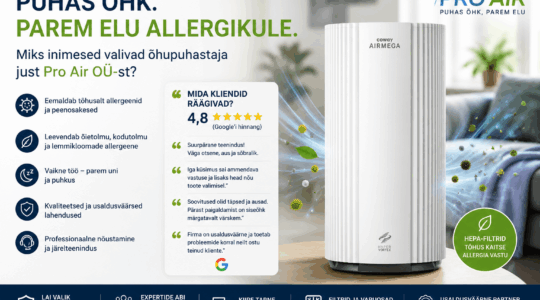
The dehumidifier is particularly well-suited for:
- to the basement;
- laundry room;
- after water damage;
- for post-construction drying;
- into poorly ventilated rooms.
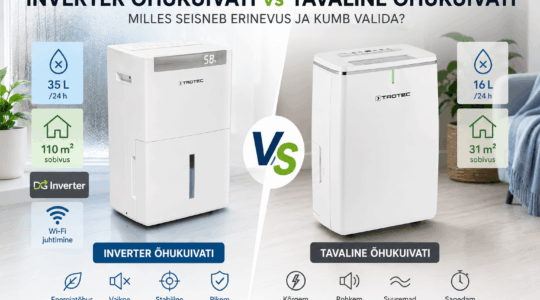
Dehumidifier vs. Ventilation – Key Differences
| Property | Dehumidifier | Ventilation |
|---|---|---|
| Quickly removes moisture | Yes | Moderately |
| Brings in fresh air | No | Yes |
| Reduces CO₂ levels | No | Yes |
| Effective against mold | Yes | Yes |
| Suitable for water damage | Very well | No |
| Improves air quality | A few | A great many |
When Should You Choose a Dehumidifier?
An air dryer is a better solution than:
- The room is very damp;
- condensation occurs;
- Quick drying is required;
- this is a basement or laundry room;
- Laundry is being dried in the room.
When Should You Choose a Ventilation System?
Ventilation is a better option than:
- the air is stuffy;
- CO₂ levels are high;
- There is no proper ventilation in the home;
- The windows are constantly fogging up;
- You want healthier indoor air.
The best solution is often both together
In practice, the following are often used:
- for daily air exchange in ventilation systems;
- an air dryer as an add-on solution.
This helps:
- prevent mold;
- improve air quality;
- reduce moisture damage.
FAQ
Does ventilation remove moisture?
Yes, ventilation helps remove moisture, especially when heat recovery is used.
Does a dehumidifier replace ventilation?
No. A dehumidifier removes moisture, but it does not bring fresh air into the room or reduce CO₂ levels.
Is ventilation or a dehumidifier more effective against mold?
It depends on the problem. Poor air circulation requires ventilation; very high humidity requires a dehumidifier.
Does a dehumidifier help with condensation on windows?
Yes. A dehumidifier helps reduce humidity and condensation.