

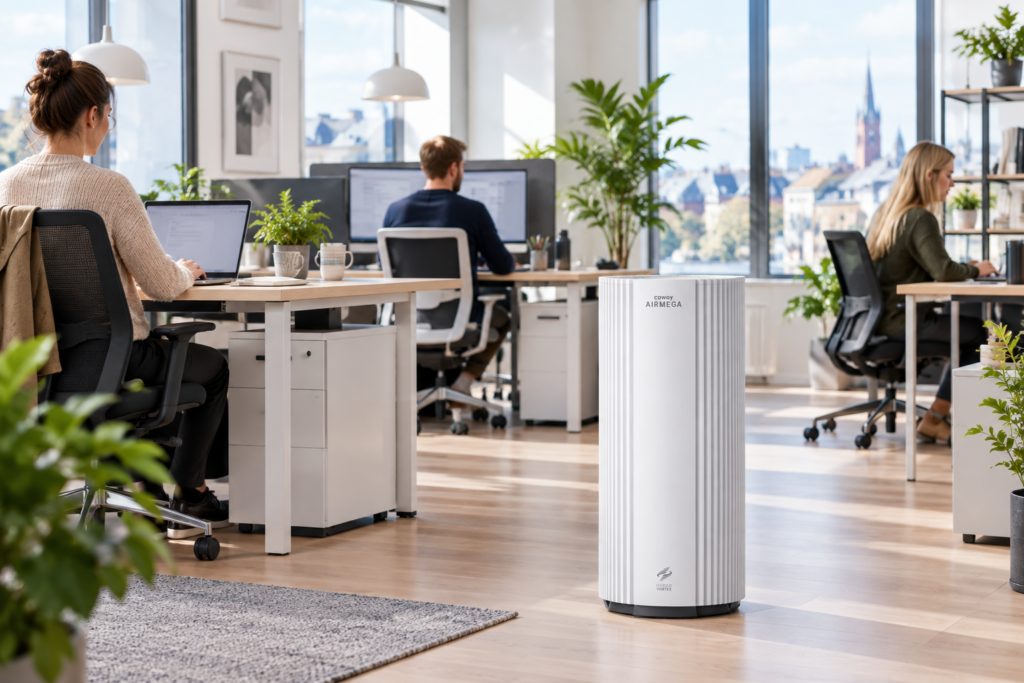
Every autumn and winter, business leaders and office managers face the same disruptive cycle: empty desks, missed deadlines, and mounting sick leave expenses. When an employee falls ill, viruses and bacteria spread rapidly through poorly ventilated or inadequately filtered indoor air. Persistent coughing, sneezing, and recirculating fine dust create a continuous exposure loop that cracking a window simply cannot solve.
Deploying commercial air purifiers in the workplace is one of the fastest and most measurable ways to improve indoor air quality and curb contagion risks. Research and real-world trials confirm that professional-grade filtration removes dust and allergens while substantially cutting the transmission of airborne infectious diseases.
The Swedish Preschool Study: A Documented 20% Drop in Sick Days
To measure the real-world impact of air purification, Albion Nordic AB conducted a rigorous 16-week field study at Enögla Preschool, the largest early childhood center in Enköping, Sweden. Running throughout the autumn peak season from August to November, the trial monitored 10 classrooms and 150 children aged 1 to 5.
The study followed a clear methodology:
- Five classrooms were equipped with two Coway Storm air purifiers each.
- The remaining five classrooms served as an untreated control group.
- Staff recorded every absence, specifically distinguishing airborne respiratory illnesses from other reasons (such as injuries or ear infections).
The findings showed a clear statistical divergence. Over the 16-week period, children in the five classrooms with air purifiers logged 323 sick days, compared to 417 sick days in the control classrooms (and because records from one control group were partially incomplete, the actual difference was likely even greater).
Running air purifiers reduced absences from airborne infections by nearly 20%. This provides direct, empirical evidence that active air circulation paired with multi-stage filtration effectively disrupts the transmission pathway of respiratory aerosols in high-density shared spaces.
Why Does Office Air Make Employees Sick?
Indoor air can be two to five times more polluted than the air outside. Modern, energy-efficient buildings often minimize outdoor air exchange, allowing airborne contaminants and pathogens to concentrate. Research consistently highlights the relationship between indoor air quality and performance: in spaces with low outdoor air supply rates, short-term employee sick leave increases by up to 1.53 times.
Several primary factors undermine air quality in typical office environments:
- Aerosols and viruses: Microscopic droplets expelled by speaking, coughing, and sneezing remain suspended in stagnant air for hours without active filtration.
- Fine dust and printer emissions: Laser printers and copiers emit fine particulate matter (PM2.5) that irritates the respiratory tract and weakens local immune defenses.
- Volatile organic compounds (VOCs): Off-gassing from furniture, carpeting, and cleaning agents triggers headaches, cognitive fatigue, and mucous membrane irritation.
- Dry, stagnant air: Seasonal heating regularly drives relative humidity below healthy levels, drying out the respiratory tract and lowering resistance to viral infection.
Chronic exposure to these pollutants leads to Sick Building Syndrome (SBS), leaving teams fatigued, unfocused, and vulnerable to frequent illness.
How Modern Filtration Technology Neutralizes Viruses
A basic dust filter cannot stop airborne pathogens. Meaningful risk reduction demands an integrated system where air purifiers with HEPA and activated carbon filters combine several mechanical and physical capture stages:
- Pre-filter: Traps coarse dust, hair, and fibers, preventing premature clogging of the high-efficiency stages downstream.
- True HEPA filter (H13 / H14): Captures at least 99.97% to 99.995% of airborne particles down to 0.3 microns. Because viruses travel within aerosol droplets typically measuring between 0.5 and 5 µm, True HEPA filters capture them with exceptional efficiency.
- Activated carbon filter: Adsorbs chemical vapors, odors, VOCs, and tobacco smoke that bypass mechanical media.
- Ionization or cold plasma: Electrostatically charges airborne particles, neutralizing microbial cell walls and causing fine particles to agglomerate so filters can trap them more readily.
Ventilation Meets Air Purification: Maximizing the Results
European ventilation standards (REHVA) and public health guidance emphasize that standalone air purifiers do not replace fresh air ventilation; rather, they serve as an essential supplement. When central HVAC systems cannot deliver adequate outdoor air changes in occupied spaces without causing drafts or energy waste, mobile air purifiers dramatically increase equivalent air changes per hour (ACH).
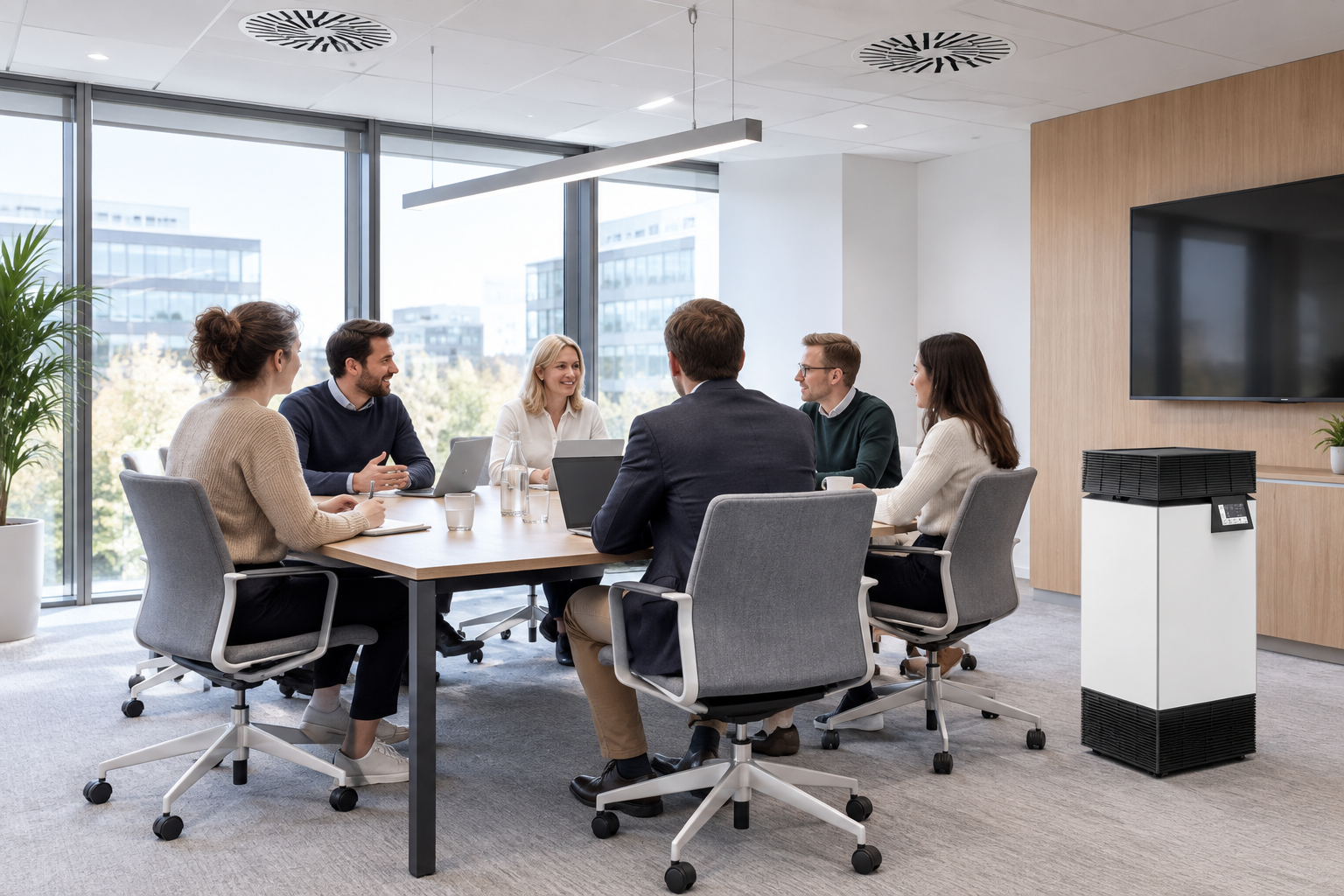
To fully leverage office air quality and air purifier capabilities, apply the following best practices:
- Air change rate: For effective pathogen removal, target an air purifier capacity that delivers 2 to 5 full air changes per hour (ACH) for the total room volume.
- Strategic placement: Keep units away from corners, heavy drapery, and directly open windows. Positioning an air purifier closer to the primary breathing zone reduces inhaled particulate concentrations by up to 35% compared to perimeter placement.
- Multi-unit distribution: In open-plan layouts or elongated spaces, using two medium-capacity units at separate points delivers far more uniform air cleaning than a single oversized machine.
- Acoustic comfort: In professional environments, operating noise should remain unobtrusive. Look for systems rated below 47 dB(A) at standard operating speeds to avoid distracting staff or disrupting calls.
A Healthier Team: The Business Case and ROI
An employee absence costs a company significantly more than basic sick pay. Unplanned leave leads to missed sales opportunities, delayed project milestones, added pressure on covering colleagues, and diminished overall morale.
For a 20-person company, cutting sick leave by just two days per employee annually generates savings that fully offset the cost of purchasing or leasing commercial air purifiers within the very first season. Beyond infection control, continuously filtered indoor air enhances cognitive performance—reducing fatigue, mitigating headaches, and sustaining daily productivity.
Before selecting equipment, a thorough workspace evaluation is recommended. An indoor air quality assessment provides objective data on CO₂ levels, PM2.5 concentrations, VOC loads, and ventilation bottlenecks.
Choosing the Right Solution for Your Workplace
The optimal setup depends on room volume, occupancy density, and how the space is used. Purpose-built air purifiers for offices and homes provide tailored protection across different workplace zones:
- Meeting rooms and executive offices: Require ultra-quiet units equipped with intelligent air quality sensors that automatically scale fan speeds based on real-time room occupancy.
- Open-plan workspaces: Demand high-throughput airflow with multi-directional distribution to ensure comprehensive circulation without uncomfortable drafts.
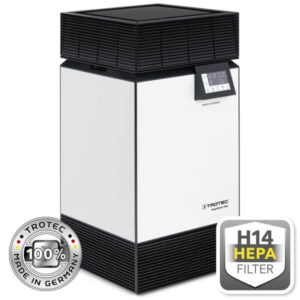
- Reception areas and client lounges: Benefit from commercial-grade systems featuring H14 HEPA filtration to handle steady visitor turnover.
Pro Air OÜ provides tailored air exchange calculations for your facilities, offering equipment through direct purchase as well as flexible full-service rental programs.
Frequently Asked Questions
No. Air purifiers do not generate oxygen and cannot replace outdoor air ventilation. Their primary function is to continuously capture viruses, bacteria, allergens, fine dust, and odors from recirculating indoor air, significantly increasing air purity and reducing infection risks.
Filter replacement intervals depend on room usage and ambient pollution levels. In a standard office environment, HEPA and activated carbon filters are typically replaced every 6 to 12 months. Pre-filters should be vacuumed or washed once a month.
For effective airborne virus removal, the Clean Air Delivery Rate (CADR) should be at least 2 to 5 times the total volume of the room in cubic meters. For example, a 30 m² room with a 2.5 m ceiling height (75 m³ volume) requires an air purifier with a CADR of at least 150 to 375 m³/h.