

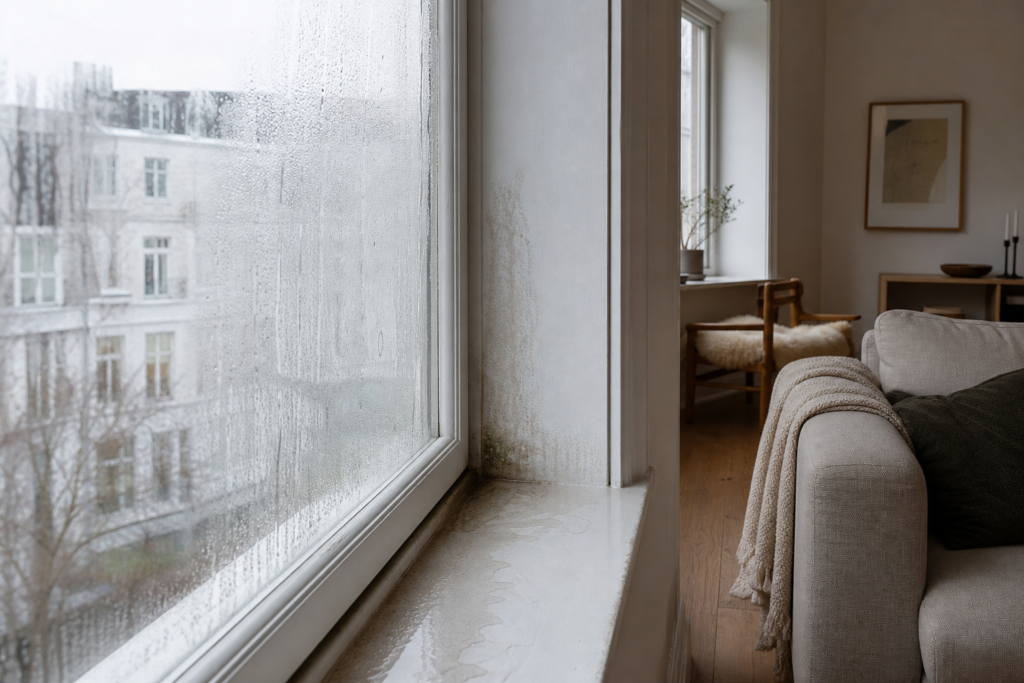
Persistent excess moisture in living spaces is an insidious problem that degrades the indoor climate, damages building materials, and creates ideal breeding grounds for hazardous mold. Homeowners often only notice excess humidity once heavy condensation pools on windows or dark patches start forming in room corners. Prompt intervention and proactive prevention are essential for maintaining a healthy indoor environment and protecting your property from long-term structural damage.
The ideal relative humidity for living spaces ranges between 40% and 60%. When indoor humidity consistently climbs above 60%, the risk of mold growth, dust mite proliferation, and material degradation rises dramatically.
How to Spot the Warning Signs of High Indoor Humidity
Detecting excess moisture does not always require specialized equipment—your home and indoor air offer several clear warning signs. Watch for:
- A persistent musty or damp odor upon entering a room.
- Fogging, streaming condensation, or water droplets on windows and glass surfaces, particularly in the morning and during cold weather.
- Discoloration, dark spotting, or yellowish water stains on walls, ceilings, and window reveals.
- Peeling wallpaper, bubbling paint, or crumbling plaster.
- Damp-feeling fabrics, soft furnishings, and laundry that takes unusually long to dry indoors.
- Visible mold colonies along baseboards, behind furniture, or on cold exterior-facing walls.
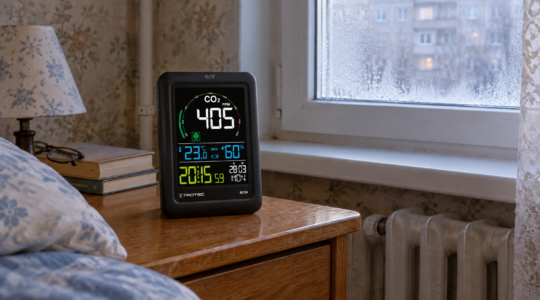
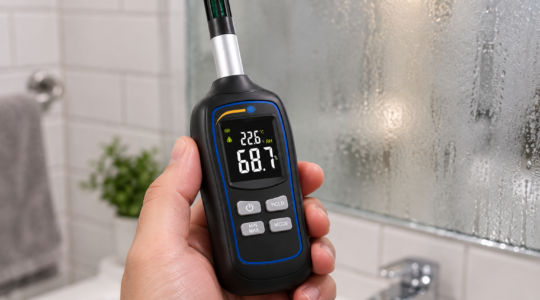
For an accurate assessment, use a digital hygrometer. Professional temperature and humidity measuring instruments allow you to monitor indoor levels around the clock and address issues before visible damage sets in.


What Causes High Indoor Humidity?
Excess moisture typically builds up from a combination of everyday household routines and underlying structural deficiencies. Identifying the primary source is the first step toward a lasting solution:
- Daily domestic activities: Showering, cooking, drying clothes indoors, and watering houseplants generate gallons of water vapor every day in an average household.
- Inadequate or poorly configured ventilation: Without sufficient fresh air exchange, humid air stays trapped inside and settles onto colder surfaces.
- Condensation along thermal bridges: Warm, moisture-laden indoor air collides with poorly insulated exterior walls or cold window frames, cooling down rapidly and condensing into liquid water.
- Plumbing and roof leaks: Hidden leaks within ceilings, pipe chases, or roofing assemblies continuously introduce water into the building envelope.
- Rising damp: Inadequate foundation or basement waterproofing allows groundwater to wick up through lower walls and concrete slabs.
The Risks: Why High Humidity Threatens Health and Buildings
Excessive indoor moisture takes a serious toll on both human health and the structural integrity of your home. European health studies confirm that dampness, water damage, and mold odors correlate strongly with respiratory illnesses, allergic rhinitis, and worsened asthma symptoms in adults and children alike. Airborne mold spores irritate delicate mucous membranes, leading to persistent coughing, throat discomfort, and eye irritation. Learn more about these health implications in our dedicated guide to the health effects of excess humidity.
From a building perspective, chronic dampness causes timber rot, corrodes metal fasteners, softens drywall, and severely diminishes the performance of thermal insulation.
Practical Strategies to Lower and Prevent Indoor Humidity
Keeping relative humidity within a balanced, healthy range requires a dual approach: modifying everyday habits and utilizing appropriate mechanical solutions.
Adjusting Daily Routines and Heating Habits
Simple operational tweaks can significantly reduce moisture output at the source:
- Always turn on the range hood while cooking, and keep lids on boiling pots and pans.
- Keep the bathroom door shut while showering and let the exhaust fan run until steam has fully cleared.
- Avoid air-drying wet laundry in unventilated living areas; if unavoidable, ensure robust airflow in that room.
- Maintain a steady indoor temperature between 18–22 °C and avoid letting any room drop below 15 °C, as colder surfaces trigger rapid condensation.
- Leave an air gap of several inches between bulky furniture and exterior walls to promote unhindered air circulation.
Strategic Airing and Heat Recovery Ventilation
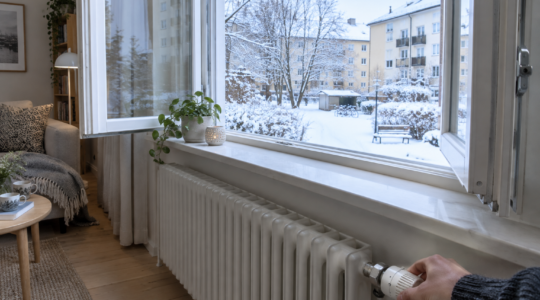
Opening windows helps flush out saturated indoor air quickly. The most effective manual method is cross-ventilation (shock ventilation)—opening multiple windows wide for 5 to 10 minutes several times a day. During summer months, windows can stay open for 20 to 30 minutes. Avoid leaving windows continuously cracked or tilted in winter, as this cools the adjacent wall structures and actually exacerbates localized condensation.
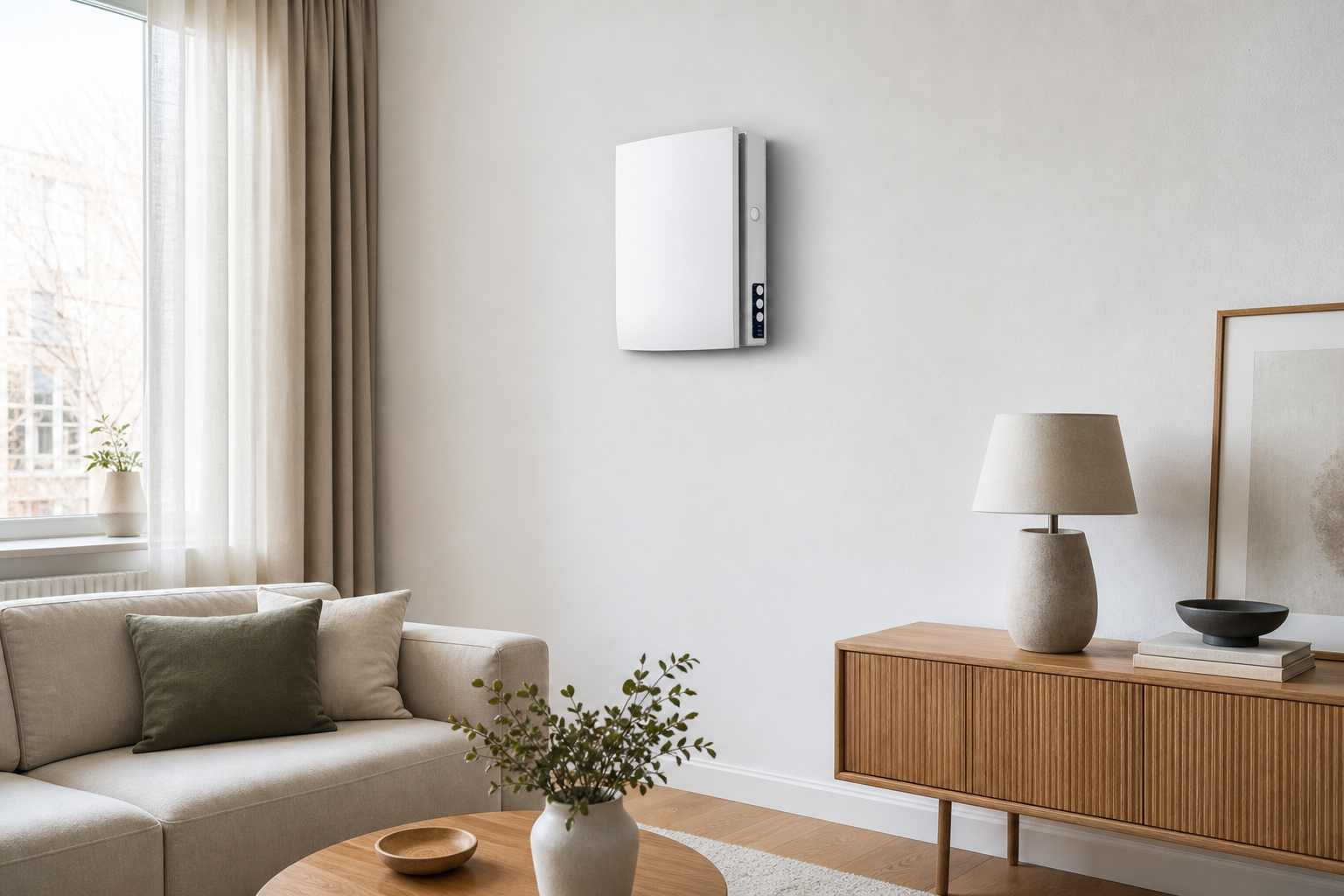
To ensure consistent, energy-conscious air exchange without manual effort, install decentralized heat recovery ventilation units. These systems continuously extract stale, moisture-heavy air while supplying fresh, pre-warmed outdoor air with minimal heat loss.

Efficient Moisture Extraction with Dehumidifiers
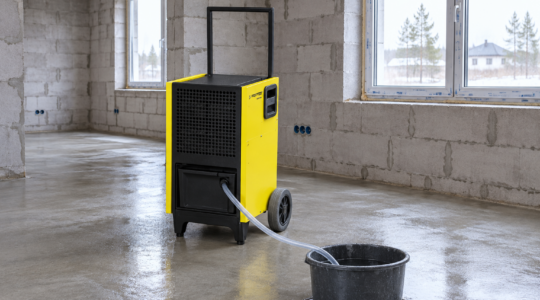
When natural ventilation is inadequate, laundry must be dried indoors, or you are managing a damp basement or utility area, portable dehumidifiers provide the quickest and most reliable solution.
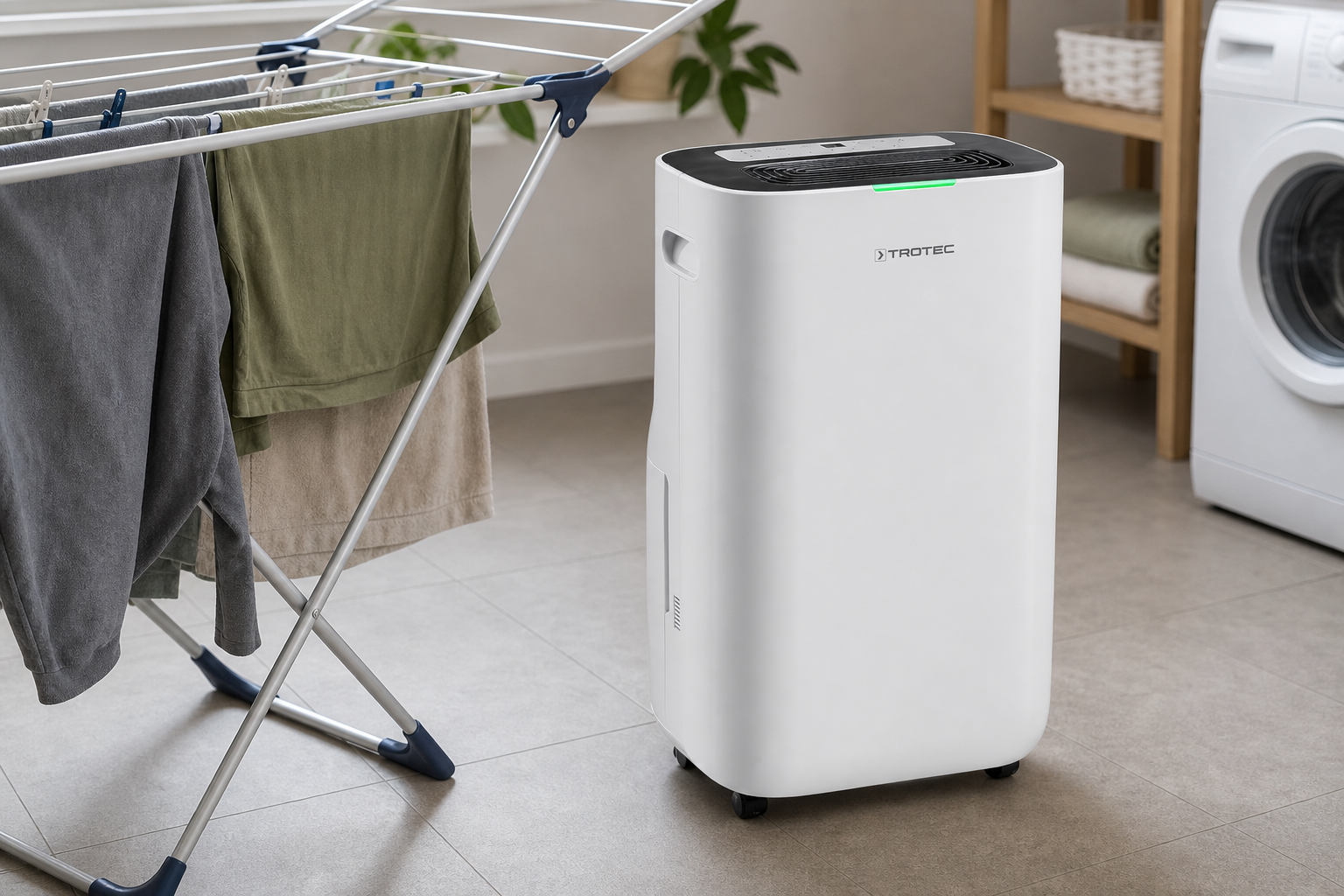
- Compressor (refrigerant) dehumidifiers perform exceptionally well in heated living spaces. They condense moisture directly into a collection tank or continuous drain, while built-in humidistats regulate the room to optimal relative humidity.
- Hybrid dehumidifiers with HEPA filtration extract excess moisture while actively capturing airborne allergens, dust particles, and mold spores.
- Desiccant (adsorption) dehumidifiers operate reliably in unheated spaces down to 1 °C—conditions where standard compressor models lose substantial operating efficiency.
-
 Available
Trotec TTK 99 HEPA Dehumidifier – Effective moisture removal and cleaner indoor air for areas up to 90 m²
376 €
-
 Available
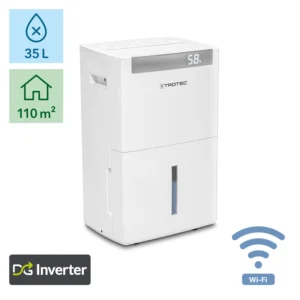
Trotec TTK-I 110 E WiFi Dehumidifier with Inverter Technology – up to 35 l/24h
419 €
-
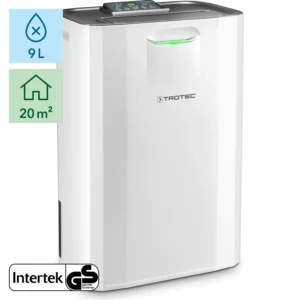 Available
Trotec TTR 57 E Dehumidifier for the Basement
295 €
-
-12%
 Available
TTK 70 HEPA Dehumidifier and Air Purifier, 50 m²
Original price was: 303 €.268 €Current price is: 268 €.
When to Call in a Professional
If you have adopted preventative habits and ventilated regularly, yet relative humidity stubbornly lingers above 60–65%, windows continue to stream with water, or paint is blistering off your walls, the root cause may be a hidden structural flaw. Scheduling professional indoor air quality testing and structural moisture diagnostics can accurately locate hidden leaks, thermal bridges, or insulation failures before costly, irreversible damage develops.
Effectively controlling indoor humidity comes down to balance: curbing moisture production at the source, sustaining consistent room temperatures, ensuring adequate ventilation, and deploying a reliable dehumidifier whenever necessary.
Frequently Asked Questions
The optimal relative humidity range for living spaces is between 40% and 60%. During winter, keeping it around 40–50% prevents window condensation, while in summer it should not exceed 60% to stop mold growth and dust mite infestations.
Short bursts of cross-ventilation help exchange air quickly, but during warm, rainy, or humid weather, outdoor air may carry more moisture than indoor air. For chronic moisture, continuous indoor clothes drying, or damp basements, mechanical ventilation or a dedicated dehumidifier is required.
Selection depends primarily on room size, ambient temperature, and moisture load. Standard heated living areas benefit most from compressor dehumidifiers—ideally with integrated HEPA filtration—whereas cold, unheated garages or basements require desiccant dehumidifiers for efficient low-temperature operation.