

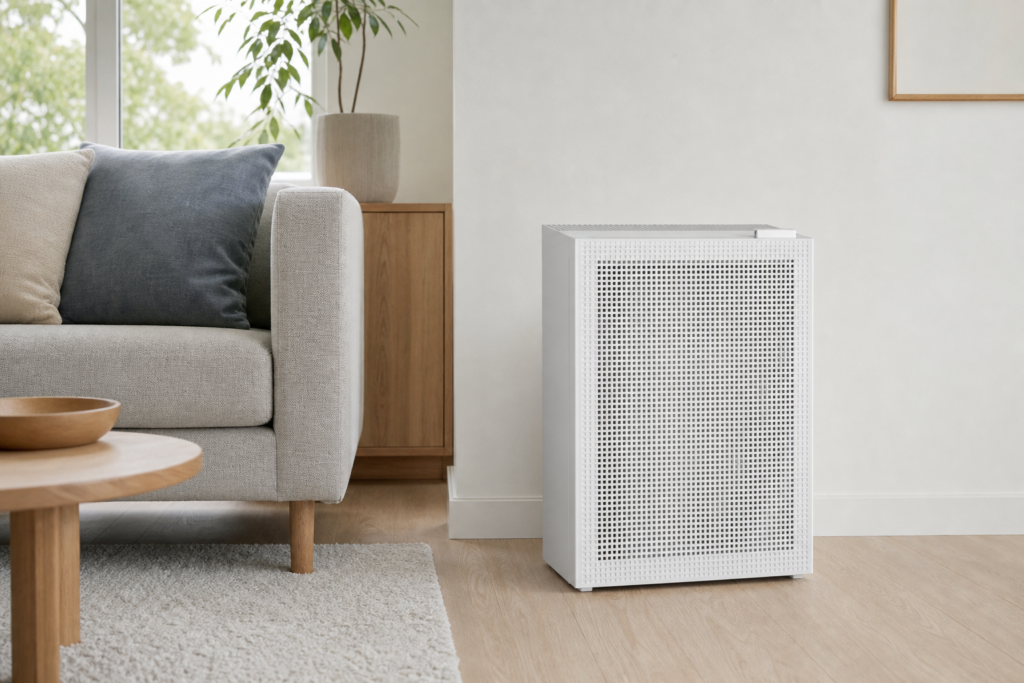
Clean indoor air has a direct impact on your energy levels, sleep quality, and overall health. Because we spend the vast majority of our time indoors, we are constantly exposed to indoor air that is often significantly more polluted than the air outside. Dust, pet dander, mold spores, fine traffic emissions, and volatile organic compounds (VOCs) released by furniture and building materials place a continuous burden on our respiratory systems.
With hundreds of models and technical specifications on the market, finding the right air purifier can feel overwhelming. However, choosing the best unit really comes down to four key factors: room volume, the filtration system, noise output, and your specific air quality concerns.
Room Size and Clean Air Delivery Rate (CADR)
The first step in choosing an air purifier is calculating the area and volume of the space you want to clean. A purifier’s performance is typically measured by its Clean Air Delivery Rate (CADR), which indicates the volume of filtered air the unit delivers in cubic meters per hour (m³/h).
To keep indoor air consistently clean, a purifier must be capable of cycling all the air in the room several times each hour:
- In standard living rooms or bedrooms, aim for at least 2 to 3 air changes per hour (ACH).
- For allergy and asthma sufferers, or in high-traffic office spaces, target 4 to 6 air changes per hour.
To determine your required airflow, multiply your room’s floor area by the ceiling height to get the total room volume in cubic meters, then multiply that number by the desired air changes per hour. For instance, a 30 m² room with a 2.5-meter ceiling height has a volume of 75 m³. Achieving four air changes per hour in that space requires an air purifier with a CADR of at least 300 m³/h.
As a general rule, choose an air purifier rated for a room roughly 30% larger than your actual floor space. This extra capacity allows the machine to run effectively on quieter, lower fan speeds—maintaining pristine air quality while minimizing background noise and power consumption.
Types of Filtration Systems and Their Functions
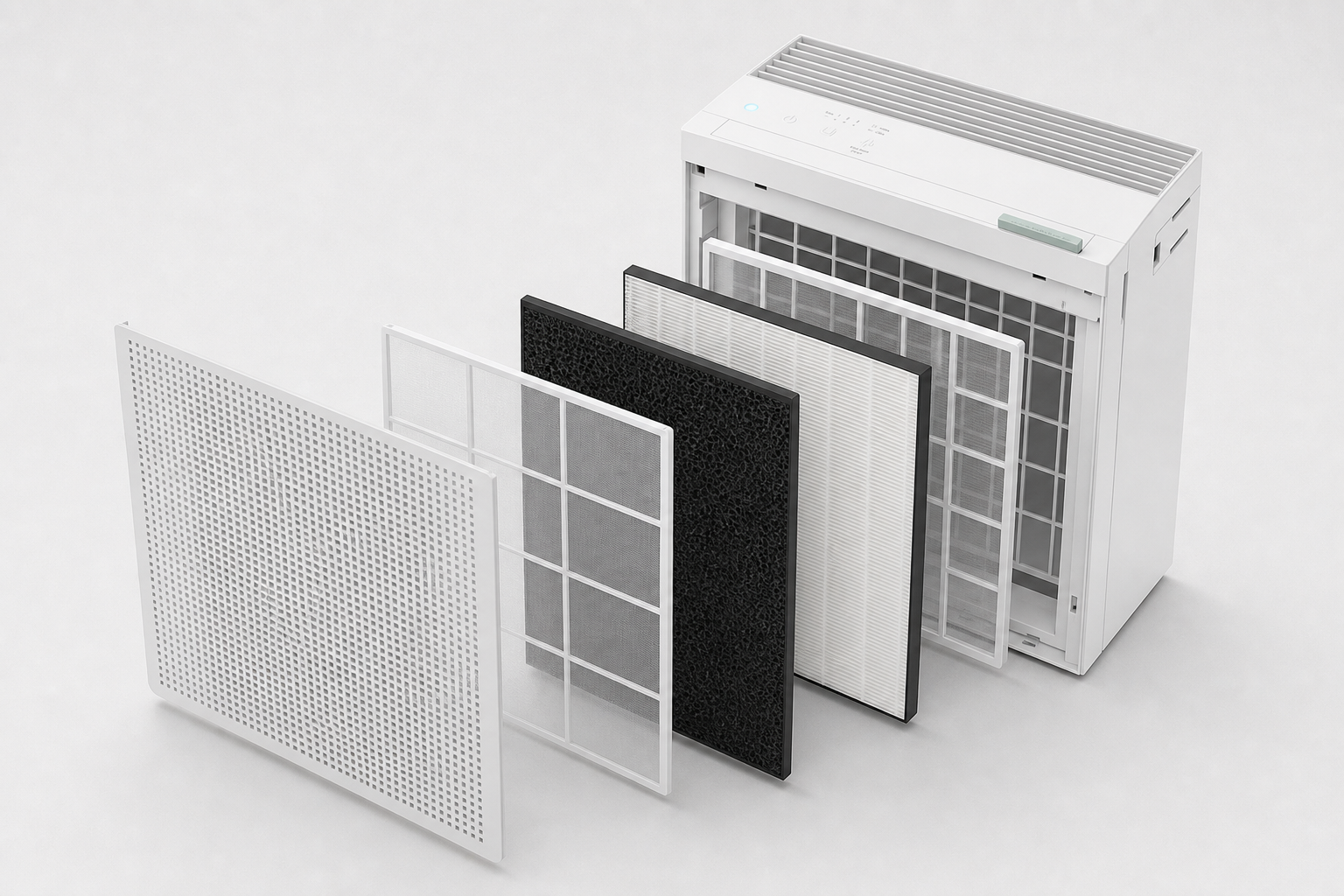
The core of any air purifier is its filter setup. Most high-performance units rely on a multi-stage filtration system, where each layer tackles a distinct type of airborne pollutant:
- Pre-filter: Traps large debris such as dust clusters, hair, and pet fur. By catching these coarse particles, the pre-filter prevents finer filters from clogging prematurely. Most pre-filters can simply be vacuumed or rinsed with water.
- HEPA filter: High-efficiency particulate air (HEPA) filters capture at least 99.97% of microscopic particles down to 0.3 microns in size. This includes pollen, mold spores, bacteria, airborne viruses, and fine particulate matter (PM2.5).
- Activated carbon filter: Designed to neutralize gaseous pollutants and odors. The porous surface of activated carbon adsorbs cooking smells, tobacco smoke, household chemical vapors, and harmful VOCs.
For complete, whole-room protection, look for air purifiers with HEPA and activated carbon filters that can eliminate both fine particulates and harmful gases simultaneously.

Noise Level and Indoor Placement
Air purifiers deliver the best results when run continuously. If a unit is too loud, it will likely be switched off or dialed down to ineffective speeds, defeating its purpose.
European indoor climate standards provide clear acoustic guidelines based on room type:
- Bedrooms: Sound levels in night or sleep mode should stay within 20 to 30 dB(A).
- Living rooms, classrooms, and private offices: A comfortable noise ceiling is around 35 dB(A).
- Open-plan offices and shared workspaces: Sound levels up to 40 dB(A) are generally acceptable.
When setting up your unit, keep both the air intake vents and the exhaust grilles clear of curtains, walls, and furniture. Unobstructed airflow allows clean air to circulate evenly throughout the entire room rather than just recycling the air immediately around the machine.
Specific Needs: Allergies, Smoke, and Office Spaces
Different environments face different air quality challenges. Tailoring your choice to your specific situation ensures the best results.
Allergies and Asthma
For anyone dealing with respiratory sensitivities, filtering out microscopic triggers—such as pollen, dust mite allergens, and pet dander—is critical. An effective air purifier for allergy and asthma sufferers should feature a certified True HEPA filter and carry seals of approval from established health organizations like ECARF or Asthma Allergy Nordic. Opting for certified devices also guarantees that the unit does not generate harmful ozone emissions during operation.
Offices and Commercial Spaces
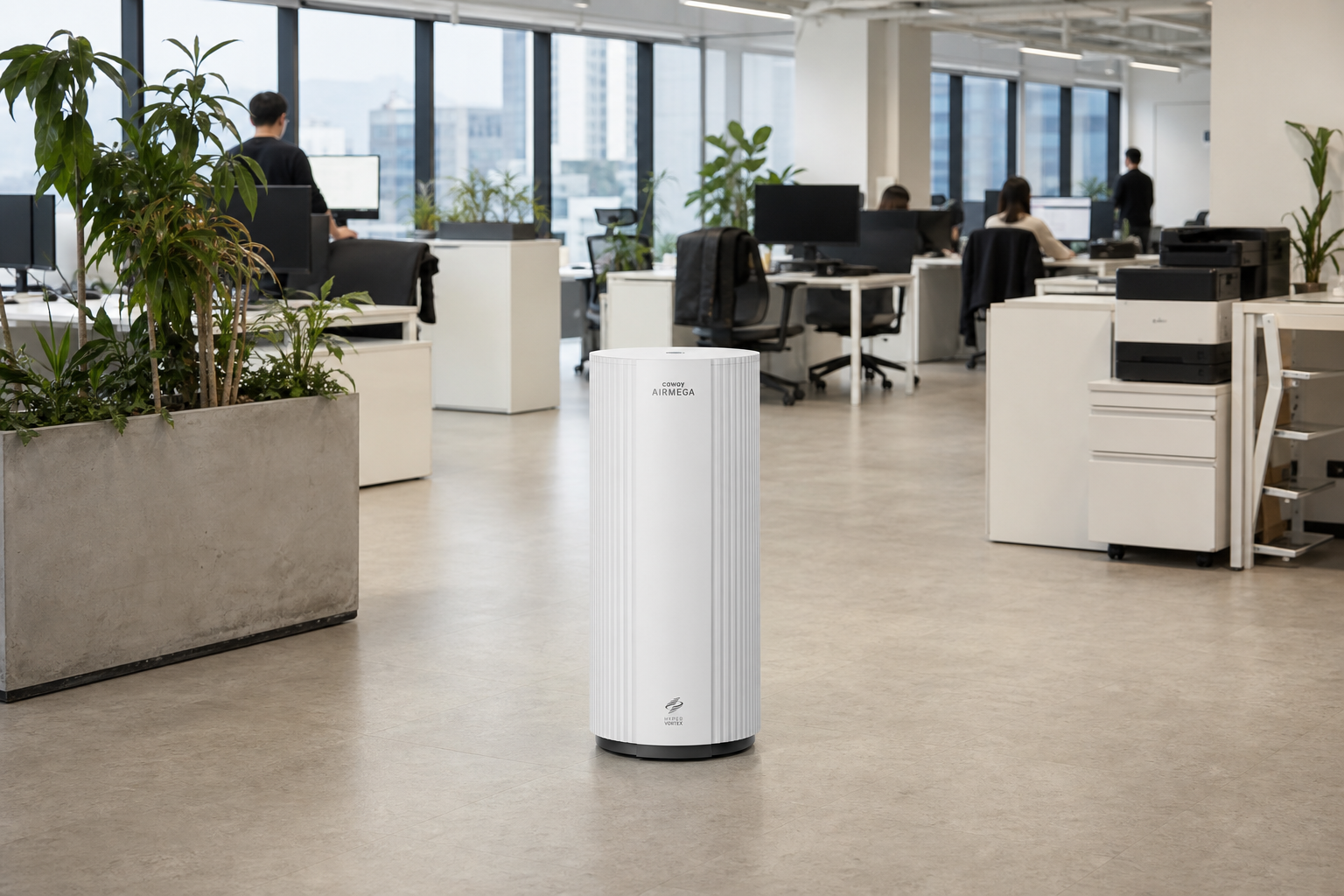
Work environments contend with distinct air quality issues, including high foot traffic, printing equipment emissions, and shared communal spaces. Heavy-duty air purifiers for home and office provide higher CADR ratings, intelligent real-time air quality sensors, and long-lasting commercial-grade filters built to handle sustained use in demanding areas.
-
NEW -31%
 Available
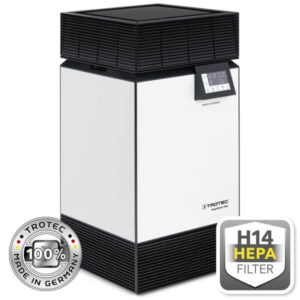
H14 HEPA Filter and High-Performance Air Purifier AirgoClean® ONE
Original price was: 1 299 €.899 €Current price is: 899 €.
-
 Available
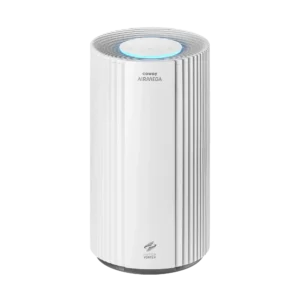
The most powerful top-of-the-line anti-allergy air purifier, the Coway Airmega: 561 m³/h, up to 117 m²
759 €
-
NEW
 Available
The powerful, top-of-the-line Coway Storm anti-allergy air purifier: 492 m³/h, up to 100 m²
749 €
-
 Available
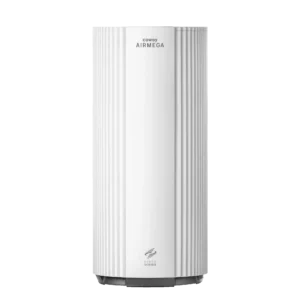
The ultra-powerful and efficient Coway Airmega 450 air purifier for areas up to 191 m²
689 €
Maintenance and Filter Replacement
Routine maintenance is essential for keeping an air purifier running at peak performance. Over time, clogged filters restrict airflow, drive up energy usage, and can even begin releasing trapped odors back into the room.
- Cleaning the pre-filter: Vacuum or rinse the pre-filter every 2 to 4 weeks.
- Replacing HEPA and carbon filters: Depending on usage habits and ambient air quality, main filters generally require replacement every 6 to 12 months.
- Cleaning air quality sensors: If your unit features an automatic mode, gently wipe the particle sensor lens with a soft, dry cloth periodically to maintain accurate pollution readings.
Choosing the right capacity, selecting a multi-stage filtration setup, and keeping up with basic filter maintenance will ensure your air purifier delivers clean, healthy air in your home or office year-round.
Frequently Asked Questions
Yes, modern air purifiers are engineered for continuous operation. When set to auto mode, the unit dynamically adjusts its fan speed according to real-time air quality, keeping both energy consumption and noise levels to a minimum.
No. Air purifiers filter airborne particles, allergens, and odors from existing indoor air, but they do not produce oxygen or reduce carbon dioxide (CO₂) levels. For optimal indoor air quality, use an air purifier alongside proper ventilation.
Most modern air purifiers include a built-in filter indicator light that alerts you when a replacement is due. It is also good practice to visually inspect the condition of your filters every couple of months.