

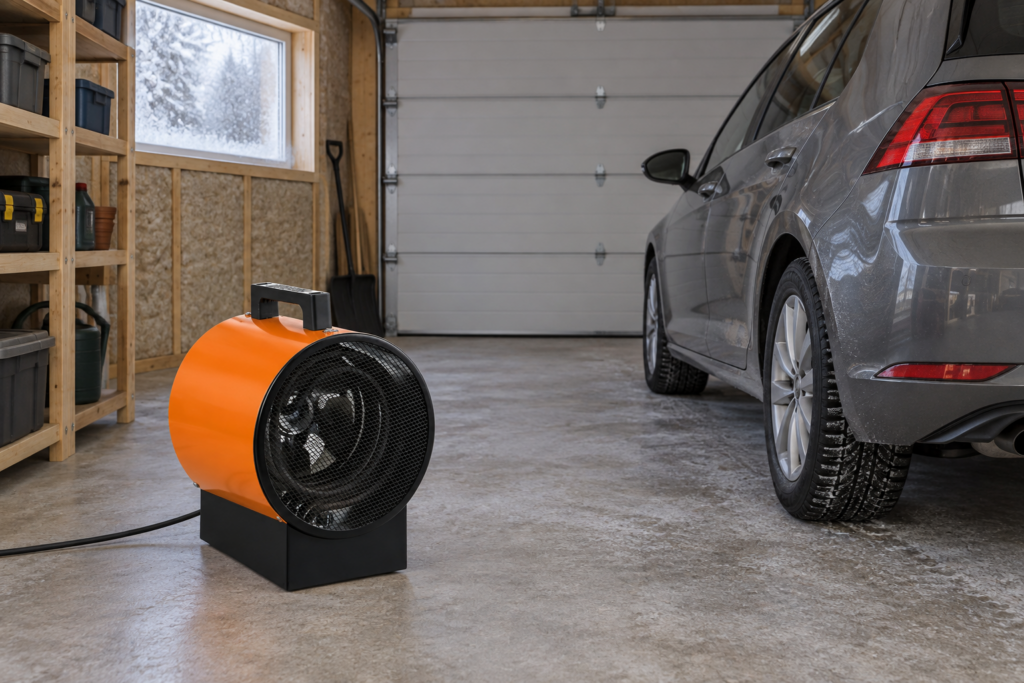
For most domestic garages in Estonia, an electric fan heater with a built-in thermostat offers the most straightforward, practical heating solution. A well-insulated 20–25 m² garage generally requires about 2.5–3 kW of thermal output, which runs comfortably off a standard 230 V household socket. If your garage is uninsulated or significantly larger, you will likely need a 400 V industrial fan heater or an indirect-fired diesel heater.
On the other hand, if you only spend an hour or two at your workbench tinkering on occasional projects, a radiant infrared heater mounted directly overhead will keep you warm faster and far more economically than trying to heat the entire room. Direct-fired diesel and gas heaters should never be used in enclosed domestic garages because combustion fumes and moisture stay trapped indoors. Furthermore, under building regulations, permanently installed wood stoves are only permitted in garages if they are housed in their own fire-separated compartment.
| Solution | Best Suited For | Typical Output | Main Limitation |
|---|---|---|---|
| Electric fan heater | Insulated garages, frost protection, general workshop tasks | 2–9 kW | Units rated above 3.6 kW require a 400 V three-phase supply |
| Infrared heater | Workbench areas, quick work sessions | 1.2–3.2 kW | Heats targeted surfaces, not the surrounding ambient air |
| Indirect-fired diesel heater | Large or uninsulated garages, temporary building heat | 20 kW and up | Requires an external exhaust flue and fuel storage |
| Direct-fired diesel or gas heater | Well-ventilated outdoor sheds, unoccupied open warehouses | 20 kW and up | Releases exhaust gases and heavy moisture straight into the room |
Decide First: Frost Protection or Active Workspace?
Before purchasing any equipment, clarify how you actually use the space. Garage heating usually falls into one of two categories, each with very different equipment requirements and operating costs:
- Frost protection (+3 to +5 °C): Prevents stored paint, water-based chemicals, car batteries, and exposed plumbing from freezing. The heater cycles on and off via its thermostat throughout the winter at a low baseline setting.
- Comfortable working temperature (+15 to +18 °C): Essential if you use the garage as a workshop for vehicle maintenance, woodworking, or DIY projects. Because you only need these temperatures for a few hours at a time, your heater needs to ramp up quickly.
If you need a system that does both, choose an electric fan heater with multiple heat stages and an adjustable thermostat. It can maintain a safe, low baseline to keep frost at bay and switch to full blast to warm the room quickly before you start working.
How Much Heating Capacity Does a Garage Need?
As a practical rule of thumb, budget roughly 100 W per square meter for a well-insulated garage, and 150–200 W/m² for an uninsulated or poorly sealed structure. These estimates assume a standard ceiling height of 2.5–3 meters and an indoor-to-outdoor temperature difference of approximately 20 °C.
Example: A standard 6 × 4 m single-car garage covers 24 m².
- Insulated walls, ceiling, and garage door: 24 m² × 100 W ≈ 2.4 kW. A standard 3 kW fan heater plugged into a regular 230 V outlet will easily handle the load.
- Uninsulated block garage with a drafty metal door: 24 m² × 150–200 W ≈ 3.6–4.8 kW. This exceeds what a standard single-phase 230 V wall socket can safely provide.
A dedicated 230 V single-phase circuit protected by a 16 A breaker maxes out at 3,680 W (230 V × 16 A). Running other high-draw power tools—such as an air compressor or an angle grinder—on the same circuit will trip the breaker. Heaters rated above 3.6 kW require a 400 V three-phase supply. While common in modern detached homes across Estonia, three-phase power is rarely available in older garage cooperatives.
Before sizing up to a massive heater, inspect the garage envelope. An uninsulated sectional door and unsealed thresholds leak more heat than all four walls combined. Adding heavy-duty weatherstripping and door bottom seals is almost always cheaper than running a higher-capacity heating unit.
How Much Does Garage Heating Cost?
In Estonia, the average Nord Pool spot price was €80.38/MWh in 2025, with rates rising noticeably during peak winter months. Once you add network transmission fees, excise duty, renewable energy charges, and VAT, the total electricity rate comes to around €0.21 per kWh in late 2026.
- A 5-hour Saturday DIY session using a 3 kW fan heater running flat out: 15 kWh × €0.21 ≈ €3.20.
- Frost protection for a full winter month, assuming a 3 kW heater cycles on for an average of eight hours a day: roughly 720 kWh ≈ €150 per month.
This running cost highlights why setting your frost-protection thermostat to 10 °C is a costly mistake. Every unnecessary degree of warmth drives up heat loss through the building envelope and inflates your monthly electric bill.
Electric Fan Heaters: The Simplest Solution for Most Garages
Electric fan heaters consume no oxygen and emit no combustion fumes, making them fundamentally safe for enclosed, unventilated spaces. Their internal blower continuously circulates the air, ensuring rapid and even heat distribution throughout the entire garage.
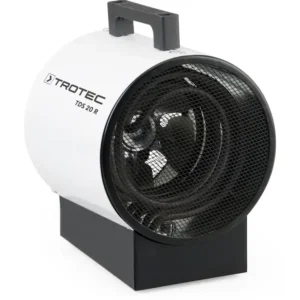
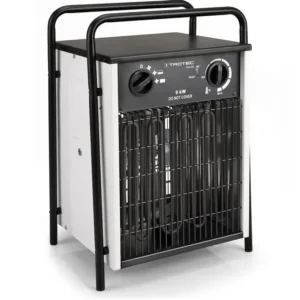
For standard single-car garages, a portable 3 kW unit running on 230 V—such as the Trotec TDS 20 R—is generally all you need. For larger workshops or spaces with poorer insulation, step up to a 400 V model. The heavy-duty TDS 50, for instance, offers ventilation-only mode along with 4.5 kW and 9 kW heating stages, an integrated thermostat, and an airflow rating of 708 m³/h. You can explore the full lineup in our electric heaters category.
Note on dusty environments: Avoid using fan heaters if your garage activities kick up high volumes of airborne debris, such as fine sawdust or drywall powder. The high-velocity fan pulls dust into the housing, where it can bake onto the heating elements and produce acrid burning smells. If you do messy work, clean the intake grilles frequently or switch to an overhead radiant heater.
Overhead Infrared Heaters for the Workbench
Unlike convection heaters, infrared heaters do not waste energy warming the surrounding air. Instead, they emit radiant heat that directly warms the surfaces, tools, and people in their line of sight. This makes them ideal for drafty, uninsulated garages where open doors quickly let warm air escape: you feel comfortable warmth the second you flip the switch.
Dark radiant panels (zero-light heaters) are especially suited for workshops because they do not produce the intense, glaring orange glow of conventional quartz heaters, reducing visual fatigue. The compact IRD 1200 provides 400–1,200 W of directional heat, while the larger IRD 1800 delivers 600–1,800 W and includes a convenient remote control. Mount the panel directly to the wall or ceiling aimed at your work area, making sure to observe the minimum clearance distances in the user manual. You can view additional options in our infrared radiant heaters selection.

Keep in mind that radiant heaters cannot provide whole-room frost protection. If you need to keep liquids and building elements from freezing across the entire garage, pair your workbench infrared heater with an automated, thermostat-controlled fan heater.


Diesel Space Heaters: Indirect-Fired Only
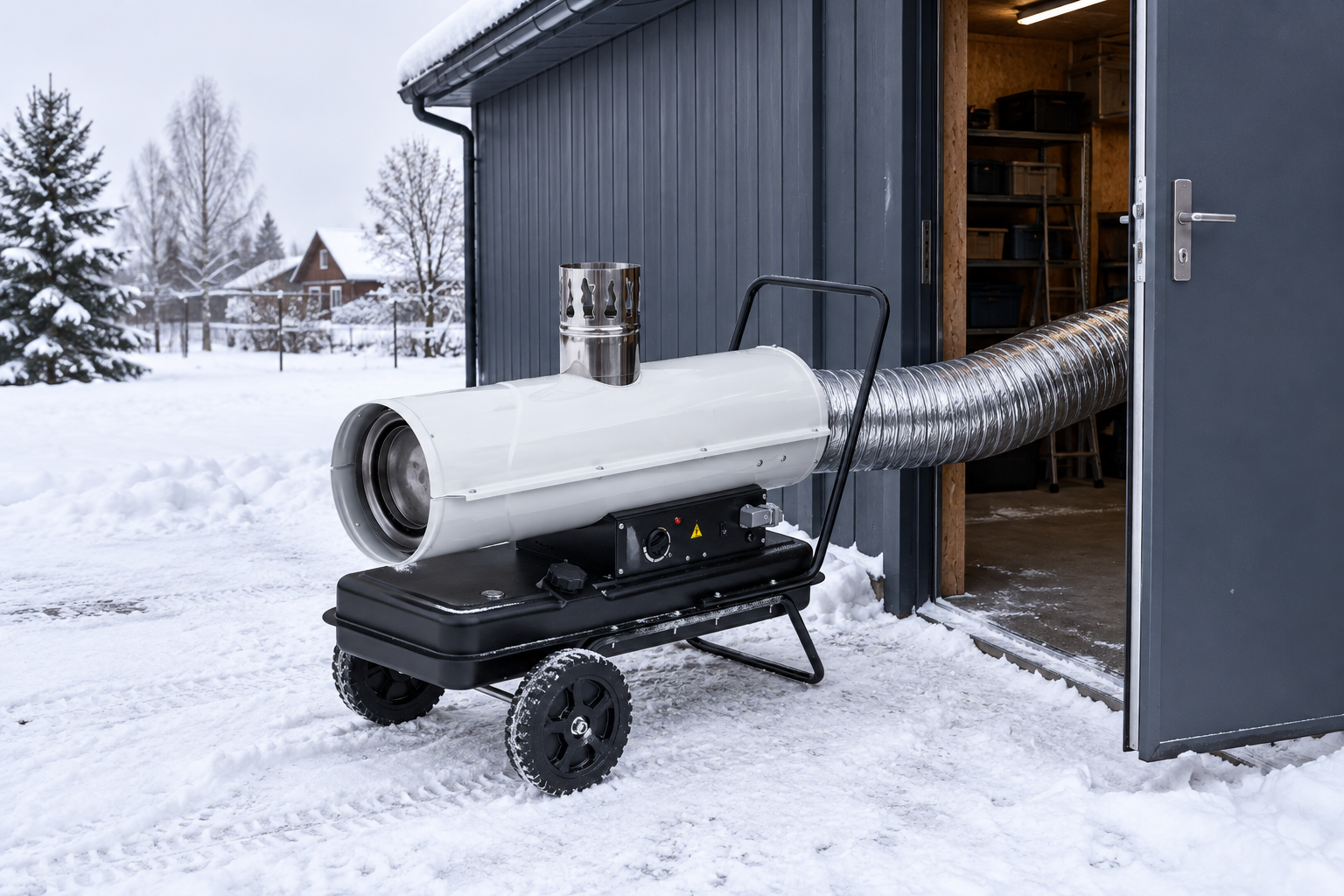
When electrical capacity is limited and you need massive thermal output to heat a large, uninsulated workshop, a diesel space heater is often the only viable choice. However, choosing the right combustion design is vital. As Trotec notes, exhaust gases from direct-fired oil heaters remain inside the heated room, restricting their use to open building sites or well-ventilated, unoccupied commercial sheds. In an indirect-fired diesel heater, by contrast, all exhaust fumes exit outside through a chimney flue, ducting only clean, odorless warm air into the room.
Direct-fired heaters release dangerous levels of carbon monoxide along with gallons of moisture straight into your workspace. They also present an immediate fire hazard near volatile fuel, paint, or solvent vapors.
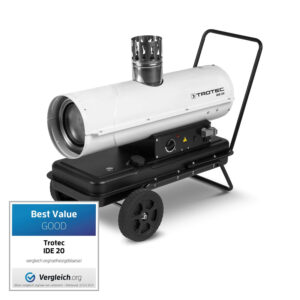
The indirect-fired IDE 20 solves this: it produces 20 kW of clean heat, delivers an airflow of up to 600 m³/h, runs off a standard 230 V socket, and connects to a standard 120 mm exhaust pipe. Alternatively, you can set the heater outdoors and route the warm air inside through heavy-duty flexible ducting.
From a pure fuel-cost standpoint, diesel offers no real savings over electricity. The IDE 20 burns roughly 1.9 liters of fuel per hour at full output. With diesel prices hovering near €2.24/L, an hour of maximum heating costs approximately €4.30—translating to roughly €0.21 per kilowatt-hour of thermal output, which is virtually identical to grid electricity.
The true benefit of a diesel heater is brute heating power without requiring costly electrical upgrades. It is the premier choice for fast workshop warm-ups, emergency heating, or building renovations. For short-term jobs, these industrial units can also be rented directly from Pro Air.
Wood Stoves and Gas Heaters in Garages: What the Law Says
DIY forums frequently showcase home-built wood burners and potbelly stoves installed in garages. In Estonia, however, building codes strictly regulate this. According to the state regulation “Fire Safety Requirements for Buildings”, solid-, liquid-, or gas-fueled combustion appliances cannot be installed inside a garage unless they are isolated within their own certified fire-rated compartment. Because garages routinely store motor vehicles, flammable fuels, lubricants, and solvents, unprotected open flames and scorching stove surfaces pose severe fire risks.
The Fire Safety Act also requires all heating equipment to be installed and serviced according to manufacturer standards, maintaining strict clearance distances from flammable materials. If you are considering any permanent combustion-based system, always consult a certified fire safety expert or structural engineer before starting work.
Warm Garages and Vehicle Rust
Keeping your garage toasty in the dead of winter might seem like a luxury for your car, but it can significantly accelerate body corrosion. When a vehicle covered in road slush and de-icing salt enters a heated garage, the frozen slush melts into a warm, brine-rich slurry that supercharges electrochemical corrosion. Research from the Transportation Research Board (TRB) confirmed that road-salt corrosion worsens dramatically when cars are parked overnight in heated garages.
The real culprit is moisture, not ambient heat alone. A 2026 study demonstrated that high relative humidity is the single most critical factor in initiating metal corrosion. In a well-ventilated, dry, climate-controlled space used for long-term vehicle storage, rust risk remains minimal. However, parking a wet daily driver in an unventilated, heated garage creates a destructive rust incubator.
To protect your vehicle:
- Direct snowmelt toward a floor drain, or squeegee standing slush out of the garage immediately after parking.
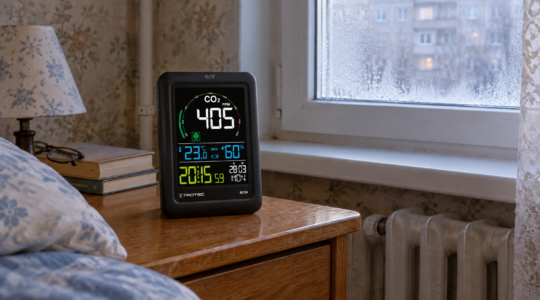
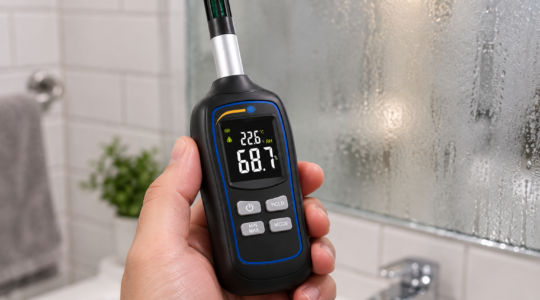
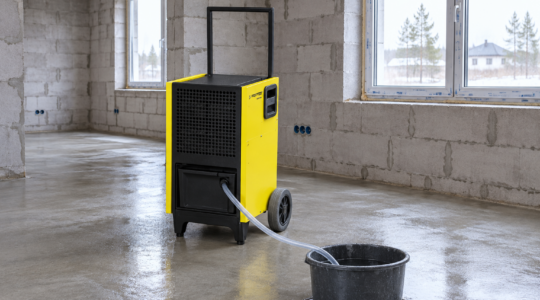
- Maintain relative humidity levels below 60%. A dedicated low-temperature garage dehumidifier works wonders—see our comparison on whether a refrigerant or desiccant dehumidifier is better for your garage.
- If storing a classic, summer-only vehicle through the winter, heating is entirely unnecessary. A cold, dry garage preserves automotive sheet metal far better than a warm, humid one.
Common Garage Heating Mistakes
- Running direct-fired heaters indoors: Carbon monoxide and water vapor build up rapidly. Always choose an indirect-fired model with an outdoor exhaust flue, and back it up with a reliable carbon monoxide detector.
- Underestimating required thermal output: Plugging a small 2 kW fan heater into an uninsulated 30 m² garage means the unit will run non-stop without ever making the space comfortable. Always calculate capacity based on room volume and insulation quality.
- Using coiled extension leads: Drawing 3 kW through a tightly rolled cable reel generates intense internal heat that can melt the cord insulation and start an electrical fire. Always unwind extension cords completely or plug heaters directly into the wall.
- Ignoring clearance distances: Never direct hot airflow toward fuel canisters, solvent racks, or wooden workbenches. Always honor the safe clearances outlined in the operating manual.
When heating your garage, start by defining your primary objective—frost prevention or workshop comfort—and calculate your thermal load accordingly. For a standard insulated residential garage, a 3 kW electric fan heater with a built-in thermostat covers all the bases. Add a targeted infrared panel over your bench for immediate localized warmth, or upgrade to a 400 V fan heater or indirect-fired diesel heater for larger spaces. If you need help choosing the best setup for your workshop, the team at Pro Air is ready to assist with sizing and product recommendations.
Frequently Asked Questions
An insulated 18–25 m² garage typically requires a 2–3 kW heater. An uninsulated garage demands roughly 150–200 W per square meter, meaning you will need 4–5 kW of capacity, which generally requires a 400 V three-phase power supply.
Only if it is an indirect-fired model that vents combustion exhaust outdoors through a dedicated flue pipe. Direct-fired diesel heaters pump dangerous carbon monoxide and high volumes of moisture directly into the room, making them unsafe for enclosed spaces where people work.
For basic frost protection, a thermostat setting of +3 to +5 °C is ideal. If you are actively working in the garage, aim for +15 to +18 °C. If you park a vehicle covered in winter road salt inside, keep the temperature lower and the humidity down to prevent rapid rust formation.