


Choosing the right dehumidifier depends largely on where and under what conditions the unit will be used. The two types of units are most commonly compared:
Both solutions have their own strengths, and choosing the wrong device could mean:
- higher electricity costs
- poorer drying results
- slower drying
- excessive noise or heat
What is a condensate dryer?
A condensation dehumidifier works similarly to an air conditioner:
- Moist air flows through the cold evaporator
- moisture condenses into water
- drier air is recirculated back into the room
This is the most common type of dehumidifier found in homes.
Advantages of a Condensate Dryer
- Highly energy-efficient in a warm room
- A great choice for homes and apartments
- Lower energy consumption under normal conditions
- Works well at temperatures ranging from +15 to +30 °C
- Usually a lower price
Disadvantages of Condensate Dryers
- Work performance declines in a cold room
- Below +10 °C, efficiency decreases significantly
- Not well suited for a cold garage or a construction site
What is a rotary dryer?
A rotor dryer, also known as an adsorption dryer, uses a special moisture-absorbing rotor. The device does not condense water on a cold surface, but rather removes moisture through adsorption.
These devices work very well even in cold conditions.
Advantages of a rotary dryer
- Works very well in cold rooms
- Suitable for garages, basements, and construction sites
- Works well even at +1 °C
- Faster drying at low temperatures
- Excellent for cleaning up water damage
- Suitable for winter use
Disadvantages of a rotary dryer
- Higher energy consumption
- Lower moisture absorption capacity at temperatures above 10 c
- Releases more heat into the room
When Should You Choose a Condensate Dryer?
Choose a condensation dryer if:
- The room is warm
- a temperature above +15 °C
- you use at home or in your apartment
- You want to lower your electricity bill
- You need to monitor humidity levels daily
Works well with:
- into the bedroom
- living room
- for drying laundry
- into the apartment
- into the warm basement
When Should You Choose a Rotor Dryer?
Choose a rotary dryer if:
- The room is cold
- temperatures below +10 °C
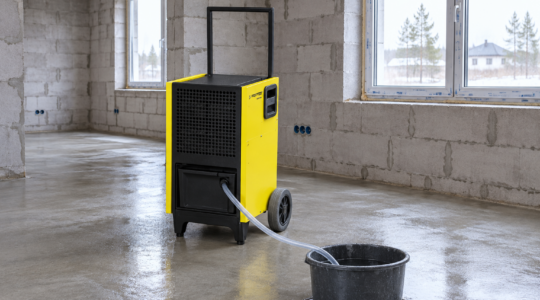
- This is a construction project
- need to dry quickly
- dry out water damage
- use it in your garage or storage room
Works well with:
- into the cold basement
- garage
- to a construction site
- to repair water damage
- into the warehouse
Condensation Dryer vs. Rotor Dryer
| Property | Condensate dryer | Rotary Dryer |
|---|---|---|
| Suitable for a warm room | Very well | Good |
| Suitable for a cold room | Worse | Very well |
| Energy consumption | Lower | Higher |
| Noise Level | Higher | Quieter |
| Drying speed in cold conditions | Slow | Quick |
| Price | More affordable | Darling |
| Perfect for home | Very well | Sometimes |
| Suitable for a cool basement | Not suitable | Very well |
What’s the best choice for home?
In most cases, the best solution for a house or apartment is:
condensate dryer
Reasons:
- lower electricity costs
- greater comfort
- sufficient performance in a warm room
However, if:
- The room is cold
- It’s a garage.
- with a basement
- at the summer cottage in winter
- related to the construction project
In that case, a rotary dryer is often a much better choice.
Does a rotary dryer use more electricity?
Yes. A rotary dryer typically uses more energy because:
- The rotor must be regenerated using heat
- The device produces more hot air
- The system works on a different principle
However, in cold conditions, a rotary dryer may actually be more efficient, since the performance of a desiccant dryer drops significantly.
Summary
Choose a condensation dryer if:
- The room is warm
- You want to save energy (except in a cold room)
- you use at home or in your apartment
Choose a rotary dryer if:
- The room is cold
- need to dry quickly
- dry out construction sites or water damage
- use it in your garage or storage room
Choosing the right dehumidifier can help:
- reduce moisture
- prevent mold
- improve the indoor climate
- speed up drying
- reduce energy consumption