

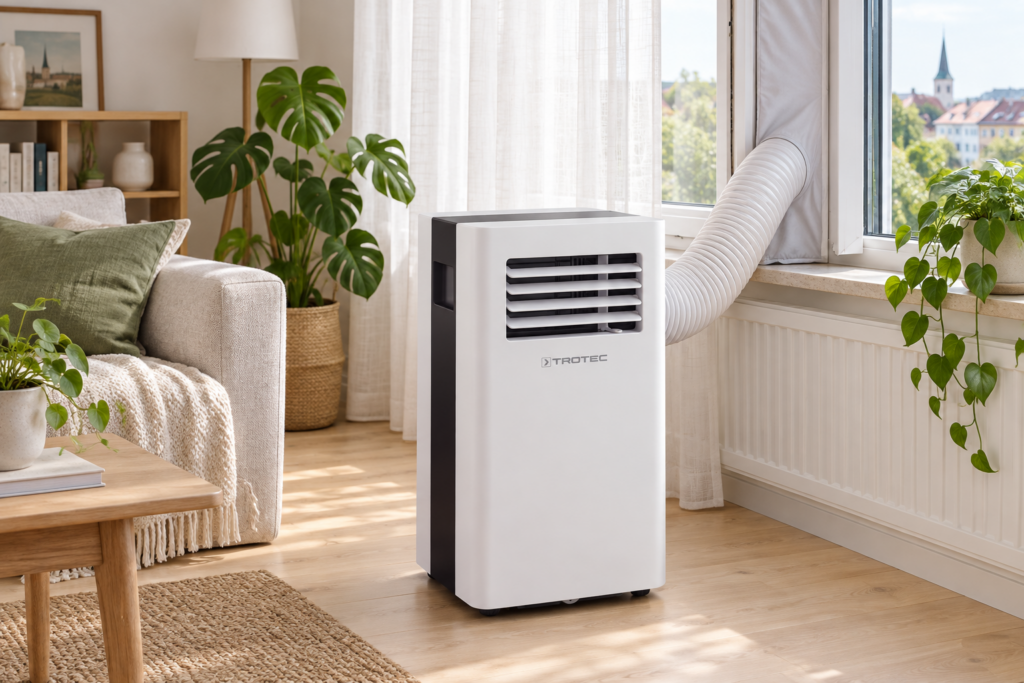
Yes, an air conditioner naturally removes moisture from the air whenever it runs in cooling mode. Because the indoor heat exchanger (the evaporator coil) operates below the dew point of the room, water vapor condenses on its cold surface and drains away. During an Estonian summer, however, this process rarely makes indoor air excessively dry. Thanks to consistently humid outdoor conditions, the relative humidity in an air-conditioned room typically settles into a comfortable, healthy 40–60% range. If you find yourself dealing with dry eyes or a scratchy throat, a cold draft blowing straight at your face is far more likely to blame than parched air. In winter, an air conditioner running in heating mode does not pull any moisture from the air at all—the air simply feels drier because cold outdoor air naturally loses relative humidity as it warms up indoors.
| Mode | Removes Moisture? | When to Use |
|---|---|---|
| Cooling (COOL) | Yes (as a natural byproduct of cooling) | Hot days when your primary goal is bringing down the temperature |
| Dehumidification (DRY) | Yes (with minimal cooling) | Warm, muggy days that are humid rather than scorching |
| Fan only (FAN) | No | Circulating air once the room is already cool enough |
| Heating (HEAT) | No | During the heating season; relative humidity drops only because the air warms up |
How an Air Conditioner Extracts Moisture from the Air
Warm air naturally holds more water vapor than cold air. When room air passes over an evaporator coil chilled below the air’s dew point, the air can no longer hold onto that moisture. The excess vapor condenses into water droplets—the exact same physical phenomenon that causes moisture to bead on the outside of an iced drink.
An air conditioner’s overall capacity is split into two functions: sensible cooling, which lowers the air temperature, and latent cooling, which pulls water vapor out of the air. According to laboratory data from the U.S. Department of Energy, modern residential units allocate about 20% of their total cooling capacity to dehumidification, compared to 25–30% in older systems.
Two technical factors dictate just how much water an air conditioner extracts:
- Startup time. Once powered on, the unit needs several minutes for the evaporator coil to drop below the dew point. A system that short-cycles will cool the room quickly without running long enough to pull significant moisture from the air.
- Part-load operation. When an inverter compressor dials back its output to maintain a set temperature, the evaporator surface stays slightly warmer, condensing less water. As a result, the room remains cool, but humidity can gradually climb.
Split systems channel condensation outdoors through a dedicated drain line. Portable air conditioners either collect condensate in an internal reservoir or vaporize and exhaust it through the hot-air duct. The Trotec PAC 2100 X, for instance, uses collected condensate to cool its condenser coil, evaporating most of it outdoors so the internal tank rarely needs manual emptying.
A Calculation Example: Air in a 26 m² Room on a Hot Day
Picture a typical living room with a floor area of 26 m² and a ceiling height of 2.5 m. This space holds roughly 65 m³ of air, weighing around 78 kg. Outside, conditions sit at 28 °C and 60% relative humidity, which yields a dew point of approximately 19.5 °C.
- If you cooled that room to 24 °C without extracting any water, the relative humidity would climb to roughly 76%. The room would feel cooler, but heavy, damp, and clammy.
- To reach a crisp 50% relative humidity at 24 °C, the dew point must fall to around 13 °C. Achieving this means removing about 5 g of water for every kilogram of air.
- Across the entire room’s air volume, that amounts to roughly 0.4 liters of water.
The air inside a room actually holds very little water at any single moment. The multiple liters of condensate an air conditioner generates over the course of a hot afternoon come from continuous indoor sources: breathing, perspiration, cooking, showers, and humid outdoor air entering through doors, windows, and ventilation gaps. The air conditioner does not strip the room bare; it simply keeps pace with an ongoing influx of moisture.
Estonian summers are naturally moist: according to climate data from the Estonian Environment Agency, average July relative humidity in Tallinn-Harku is 76%. In this climate, residual dampness in an air-conditioned room is far more common than excessively dry air.
Why the Air in an Air-Conditioned Room Feels Dry
According to the ASHRAE Handbook, the optimal relative humidity range for human health and comfort is 40–60%. While ASHRAE does not define a strict lower boundary solely for thermal comfort, it emphasizes that dry air dehydrates the skin and irritates mucous membranes and eyes. Even so, if a hygrometer in your air-conditioned room shows 45–55%, low humidity is not what is causing your symptoms.
Far more often, the discomfort stems from:
- Direct drafts. A study by the Technical University of Denmark found that subjects experienced significantly higher eye irritation when airflow was directed at their faces rather than toward their chests or the ceiling. Moving air strips away the tear film protecting the eyes.
- Aggressive thermostat settings. Chilled air irritates sensitive airways, and a steep temperature drop between outdoors and indoors strains the body. Guidelines from the Barcelona Science Park recommend keeping indoor summer temperatures between 24 and 26 °C, ensuring the indoor-outdoor split does not exceed 10 °C.
- Screen fatigue. When working at a computer, people blink considerably less often. In an air-conditioned environment, this combination rapidly accelerates tear evaporation, triggering or worsening dry eye symptoms.
Dehumidification Mode (DRY) vs. a Dedicated Dehumidifier
In DRY mode, an air conditioner throttles its fan to the lowest setting while cycling the compressor. Air passes over the icy evaporator coil more slowly, squeezing out more moisture without dropping the room temperature as aggressively as standard cooling mode. According to the user manual for the Trotec PAC 2100 X, you cannot adjust the temperature in DRY mode, and the fan locks to low. The unit can extract up to 1.8 liters of moisture per hour, provided room temperatures stay within its 17–35 °C operating window.
That lower temperature limit is critical. Air conditioners are built to cool warm environments. In a cool basement, a chilly garage, or an unheated summer cabin, an AC unit cannot double as an effective dehumidifier. Likewise, an oversized air conditioner that chills a room in minutes and promptly shuts off will not run long enough to pull meaningful amounts of moisture from the air.
This limitation is especially pronounced during shoulder seasons. On damp, overcast days in May or September when heating is off but cooling is unnecessary, an air conditioner will rarely cycle on, leaving indoor humidity trapped. Efficiency matters here, too. The New York State Energy Research and Development Authority (NYSERDA) points out that dedicated dehumidifiers use far less energy than air conditioners for moisture removal because they do not expend power chilling the air. Running an air conditioner solely to dry out a room means paying for cooling capacity you do not need.
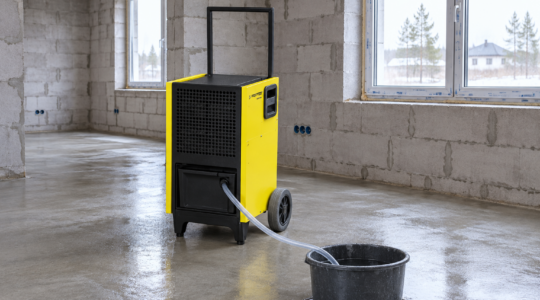
A dedicated dehumidifier uses a built-in humidistat to regulate moisture independently without altering the room’s temperature. For warm rooms, energy-efficient compressor (refrigerant) models are standard. For colder spaces or applications demanding very low humidity thresholds, adsorption (desiccant) dehumidifiers perform significantly better.
Use these rules of thumb to pick the right tool:
- The room stays above 17 °C and humidity only spikes on hot days: an air conditioner’s cooling or DRY mode is more than enough.
- Humidity lingers above 60% even in mild weather, windows frequently fog up, or musty odors appear: invest in a dehumidifier.
- The space is unheated or cool year-round (such as a cellar, basement, or seasonal cottage): choose a desiccant dehumidifier.
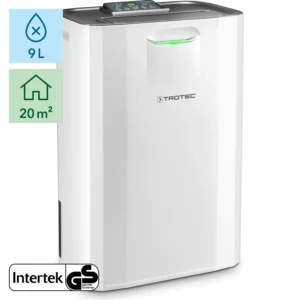
The Trotec TTK 70 HEPA is built for heated living spaces up to 50 m² and cleans indoor air with an integrated HEPA filter. The TTR 57 E, by contrast, is a desiccant model suited for unheated spaces up to 20 m², whereas a standard compressor model remains the more economical choice for a heated living area.

Portable Air Conditioners and the Single-Hose Dilemma
A single-hose portable air conditioner pulls conditioned air directly from the room to cool its hot condenser coil, then vents that exhaust out the window. This creates negative air pressure inside the space, pulling hot, humid outdoor air indoors through gaps under doors and around window frames. Testing by the U.S. Department of Energy showed that air infiltration significantly reduces a portable unit’s real-world cooling efficiency while introducing a continuous stream of humidity the machine must work to remove all over again.
Practical ways to counter this effect:
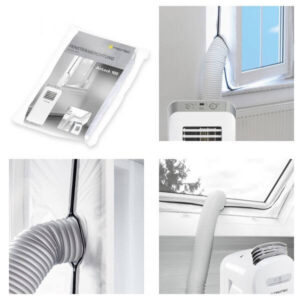
- Seal the open window gap around the exhaust duct using a dedicated fabric seal kit, such as an AirLock.
- Keep internal doors closed so the unit does not draw air from the rest of the house.
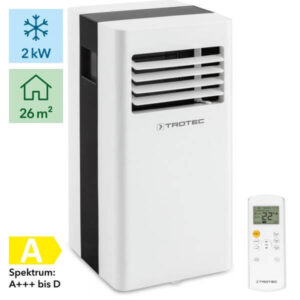
- Size the machine correctly for the space: the PAC 2100 X provides 2 kW of cooling capacity for rooms up to 26 m².
If negative pressure remains a persistent issue, consider a portable split air conditioner. These units use a separate, compact outdoor heat exchanger, ensuring that no indoor air is exhausted outdoors.
Our range of portable air conditioners covers everything from compact bedrooms to expansive open-plan living areas. The PAC 2100 X is well-suited for smaller rooms and home offices, while the PAC 4100 SH WiFi provides enough power for spaces up to 55 m² and features reverse-cycle heating, albeit in a larger, heavier chassis.

How to Maintain Humidity Between 40% and 60%
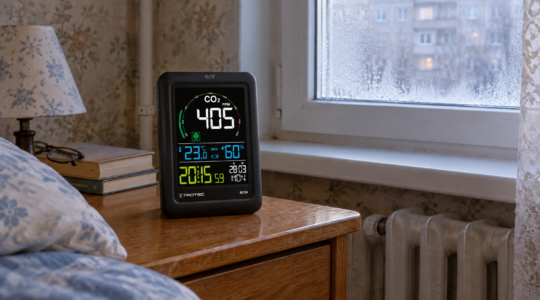
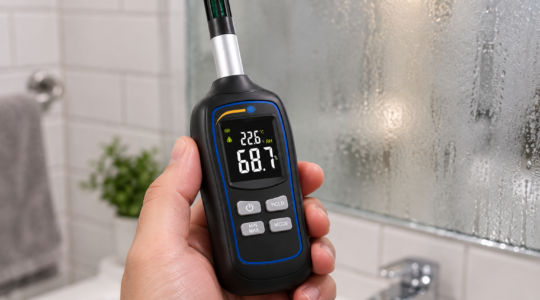
Subjective impressions of dryness rarely reflect reality, so take the guesswork out of the equation. An inexpensive thermo-hygrometer will clarify within minutes whether your discomfort stems from genuine dryness or an aggressive airflow path. Place the meter near the center of the living area rather than right in front of the unit’s supply louvers, where chilled air will distort your readings.

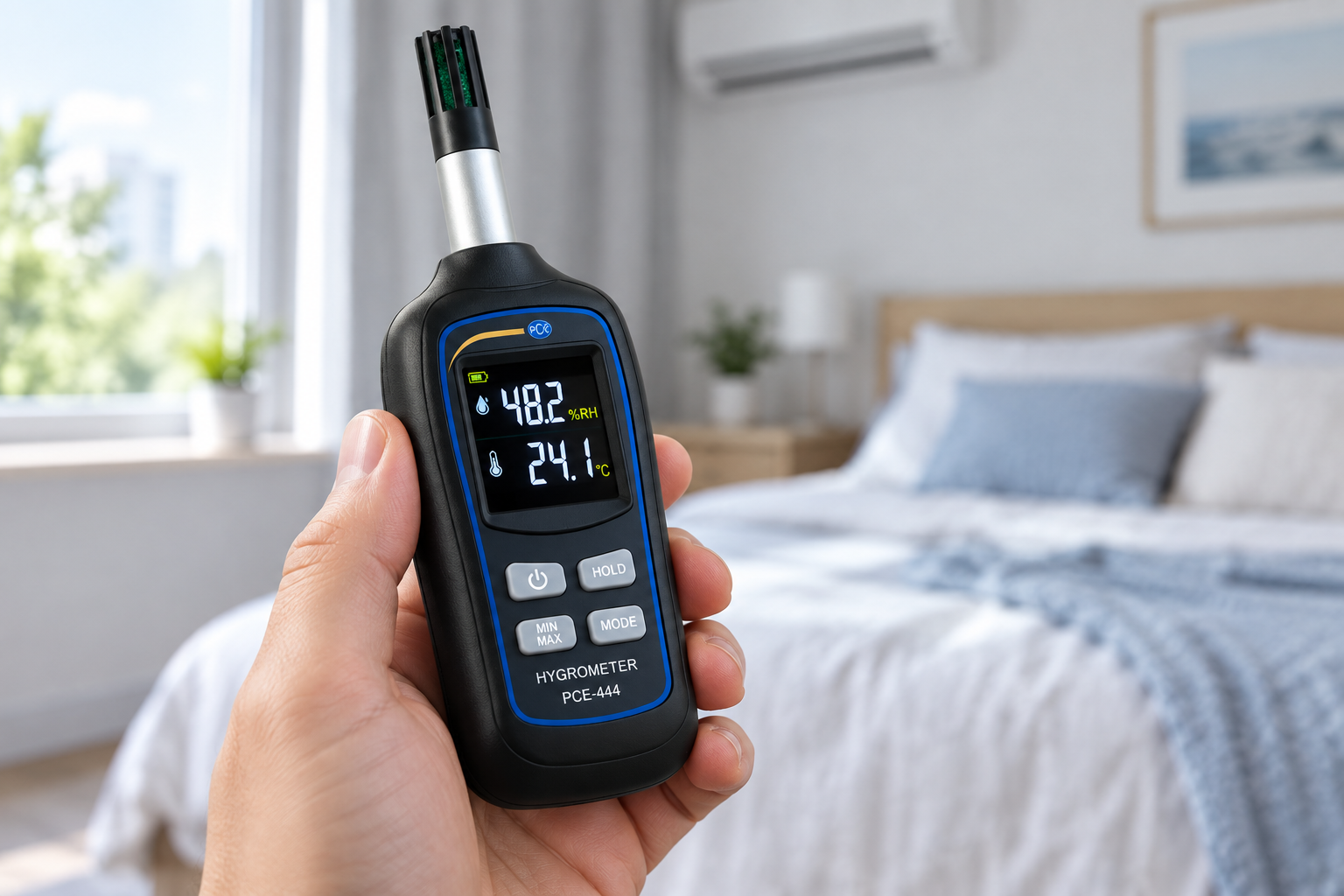
To keep your indoor climate comfortable and balanced:
- Set the thermostat to 24–26 °C. Dialing the temperature down to 18 °C will not cool the room any faster; it will only spike your power bill and leave you shivering.
- Direct airflow toward the ceiling or across the upper walls—never straight at a bed, sofa, or desk.
- Keep the fan on auto mode. If the fan runs continuously while the compressor is idle, air passing over the wet evaporator coil will pick up collected moisture and blow it right back into the room.
- If relative humidity genuinely drops below 40%, bump the target temperature up a degree or two, or cycle the air conditioner off. For persistent seasonal dryness, supplement with an evaporative or ultrasonic humidifier.
A common mistake is engaging DRY mode in a cold, damp basement and expecting it to solve moisture problems. Below 17 °C, the unit operates well outside its intended design envelope: moisture condensation slows to a crawl, and the risk of mold remains high. If you already have visible mold on walls or flooring, contact a building remediation professional to identify the structural source of dampness—air conditioning alone cannot fix building defects.
Finally, remember that a wet evaporator coil and drain pan can harbor mold and bacteria over time. Clean and wash your dust filters regularly following the manufacturer’s guidelines, and let the unit run in fan-only mode for several hours at the end of the summer to thoroughly dry out the internal components before winter storage.
An air conditioner does dry out the air, but in a northern summer, it typically extracts just enough moisture to keep living spaces feeling crisp and comfortable. If you feel uncomfortable, verify the actual humidity on a hygrometer first, then adjust your thermostat and fan direction. And when tackling cool, persistently damp spaces, skip the AC and bring in a dedicated dehumidifier instead.
Frequently Asked Questions
No. When operating in heating mode, the indoor heat exchanger runs hot, meaning moisture never condenses on it. The dry feeling associated with winter heating is caused by physics: cold outdoor air naturally carries very little absolute moisture. When outdoor air at −8 °C and 100% relative humidity leaks inside and warms to 20 °C, its relative humidity plummets to roughly 15%. This happens regardless of your heat source; the only solution is an indoor humidifier.
It depends heavily on indoor humidity, ambient temperature, and fresh-air infiltration. Manufacturers state maximum extraction figures under ideal conditions—up to 1.8 liters per hour for the PAC 2100 X. In cooler or drier weather, the actual volume will be substantially lower because less moisture condenses on the cold coil.
Only partially, and only in warm rooms during hot weather. It cannot replace a dehumidifier in a cool basement, an unheated outbuilding, or when remediating active mold issues. Standard air conditioners cannot target a specific relative humidity setpoint year-round, nor can they operate efficiently in cold ambient temperatures.