

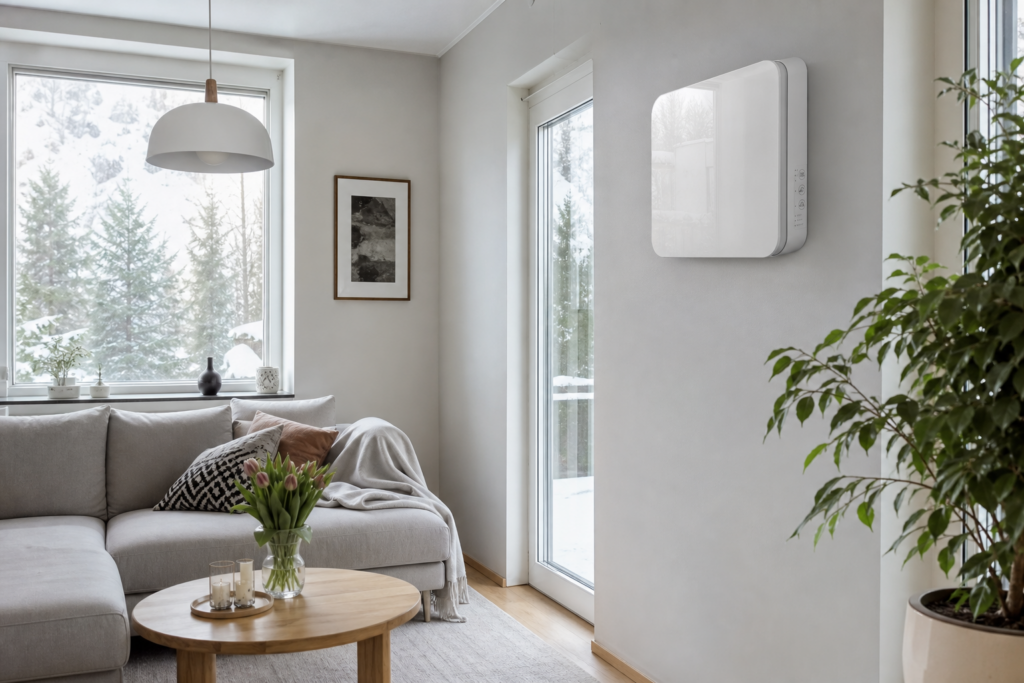
Choosing the right ventilation system is one of the most critical decisions in any building or renovation project. In modern, airtight, and energy-efficient homes, controlled mechanical ventilation is essential to manage humidity, prevent mold, and keep carbon dioxide levels in check. The choice between a decentralized (single-room) and a centralized (whole-house) system hinges on several factors: the property’s structure, your budget, the extent of renovation work planned, and your desired comfort level. Here is a detailed look at how both approaches compare in terms of technical performance, installation complexity, and long-term value.
What Is Decentralized Ventilation and Who Is It For?
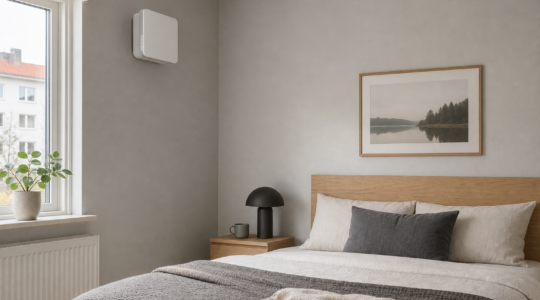
Decentralized ventilation—commonly referred to as single-room ventilation or single-room heat recovery—consists of compact, self-contained units installed directly through core-drilled openings in external walls. Designed to handle air exchange on a room-by-room basis, these units eliminate the need for extensive ductwork. This makes them a practical and minimally disruptive option for properties where structural limitations rule out central ducting.
A standard single-room recuperator with a heat exchanger operates on an alternating cycle. First, the unit extracts warm, stale indoor air, capturing its thermal energy in an internal ceramic heat accumulator. The fan then reverses direction, drawing in fresh outdoor air and warming it using the stored heat. This regenerative cycle recovers up to 97% of thermal energy that would otherwise be lost by opening windows.
Decentralized units are particularly well suited for apartments, retrofits, and older properties where installing central duct runs is structurally impractical or cost-prohibitive. They are especially effective in high-occupancy spaces like bedrooms and living rooms, where CO2 and humidity tend to accumulate quickly. By supplying a steady stream of fresh, filtered air while continuously removing stale air, these systems noticeably improve sleep quality and day-to-day indoor comfort.
-
-18%
 Available
BSK Zephyr Heat Recovery Ventilation Unit, up to 60 m³/h, Wi-Fi/RH%
Original price was: 351 €.288 €Current price is: 288 €.
-
-7%
 Available
Ideal Clima Kers+25 Ultra-Quiet Heat Recovery Ventilator – Fresh Air with Low Energy Consumption
Original price was: 321 €.298 €Current price is: 298 €.
-
 Available
Top-of-the-Line Blauberg VENTO inHOME W 50 m³/h Wi-Fi Heat Recovery Ventilator
369 €
-
 Available
VENTO EXPERT A50C3-1 S8 W V.2 Local Heat Recovery Ventilator for Cold Climates (Ø=160 mm)
592 €
Centralized Ventilation: A Comprehensive Whole-House Solution
A centralized mechanical ventilation with heat recovery (MVHR) system relies on a single central air handling unit connected to a network of supply and extract ducts spanning the entire building. Fresh, filtered air is ducted into habitable spaces like bedrooms and living rooms, while humid, stale air is drawn out of “wet” zones such as kitchens, bathrooms, and utility rooms. This continuous, balanced airflow eliminates stagnant pockets and delivers uniform air quality throughout the property.
A centralized heat recovery ventilation unit is typically housed in a utility room, plant room, attic, or ceiling void. Its primary strength is stable, fully automated whole-house climate control. Centralized systems also simplify routine maintenance: filter replacements take place at a single central unit rather than across multiple rooms. Furthermore, many modern central units can be equipped with enthalpy exchangers to recover moisture alongside heat, preventing dry indoor air during the winter heating season.
Central systems are the standard choice for new builds, where duct layouts can be planned directly into the architectural design. They provide whisper-quiet operation in living areas, as motor and airflow noise is isolated within the plant room or dampened by inline silencers.
-
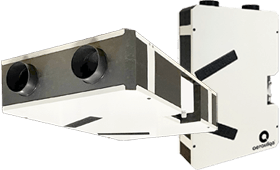 Available
Aerauliqa QR120P-I/QR120P-W Heat Recovery Ventilation Unit, 102 m³/h, with filter
1 266 €
-
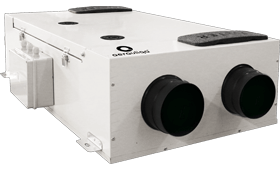 Available
Aerauliqa QR180A Heat Recovery Ventilation Unit, up to 177 m³/h, with filter
1 605 €
-
 Available
Aerauliqa QR230E Heat Exchanger with Humidity Recovery, up to 202 m³/h, filter
2 302 €
-
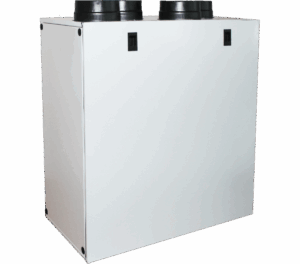 Available
Aerauliqa QR280A Heat Recovery Ventilation Unit, up to 256 m³/h, filter
2 033 €
Installation Process and System Complexity
Installation requirements represent the most significant practical difference between centralized and decentralized ventilation, directly affecting project timelines, labor costs, and the scope of interior finishing needed.
Installing a Decentralized System
Installing a single-room recuperator is straightforward and minimally invasive. The process requires core-drilling an opening—typically between 100 mm and 160 mm in diameter—through an exterior wall. The unit is then inserted, wired to an electrical supply, mounted flush with the wall, and configured to the room’s requirements.
A professional installation usually takes between 1 and 3 hours per unit. Because no internal ductwork is involved, living spaces remain intact, making this an ideal upgrade for finished homes. If you are researching how to improve indoor air quality, decentralized units offer the quickest route to tackling window condensation and stale air without major disruption.
Installing a Centralized System
In contrast, installing a centralized system is a substantial construction undertaking. It requires running insulated supply and extract ducts throughout the building, often necessitating dropped ceilings, dedicated service shafts, or drywall bulkheads to conceal the piping. Inline silencers and precise system balancing are also required to prevent noise transfer between rooms.
In existing properties, retrofitting a central duct network can be disruptive and expensive. Industry data shows that centralized ventilation retrofits are substantially more expensive than new-build installations, often doubling total project costs due to the required demolition and cosmetic repairs. For many renovation projects, a decentralized setup is the far more practical and cost-effective route.
Cost Comparison: Initial Purchase vs. Long-Term Investment
When budgeting for ventilation, it is important to factor in equipment pricing, installation labor, and ongoing maintenance:
- Decentralized ventilation: A high-quality single-room recuperator typically costs between €250 and €750. A standard 3- to 4-room home usually needs 2 to 4 units. Including installation, total costs generally fall between €1,500 and €3,500. A key advantage is modularity: you can start with a single unit in the main bedroom and expand the system over time as your budget permits.
- Centralized ventilation: The central air handling unit alone typically starts around €1,500, with additional costs for rigid or semi-rigid ducting, silencers, diffusers, engineering design, and specialized installation. In Estonia, centralized ventilation installation costs for a typical detached home of up to 150 m² usually range from €4,000 to €6,500, climbing to €9,000 or more for larger or more complex builds.
While centralized systems require higher upfront capital, they maximize long-term property value in new builds and deliver seamless, automated air exchange across all rooms. For retrofits and older homes, however, decentralized systems offer the strongest balance of performance and return on investment.
Energy Efficiency and Indoor Climate Quality
Both system types are designed to minimize heat loss, though their real-world efficiency characteristics differ. Central MVHR units typically utilize counterflow plate heat exchangers, delivering laboratory-tested thermal efficiency ratings of up to 90%. Regenerative decentralized units (such as models from Blauberg or Ideal Clima) achieve comparable lab ratings of up to 97%.
In practice, field-tested performance in real-world conditions tends to settle between 65% and 70%, influenced by outdoor temperatures and pressure differentials. Notably, decentralized systems often show superior specific fan power (SFP). Field studies conducted by the University of Luxembourg revealed that decentralized systems used roughly 50% less fan power on average than centralized alternatives, primarily because air travels straight through the wall rather than through meters of ductwork.
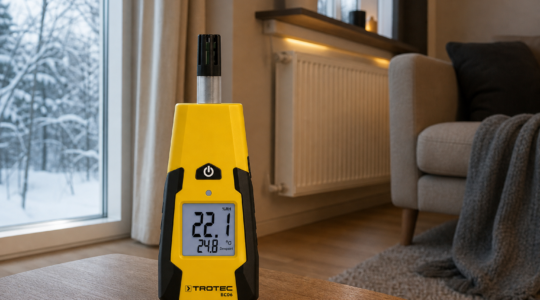
To assess your specific requirements, an indoor air quality measurement can provide objective baseline data on your home’s CO2 levels and relative humidity. When it comes to acoustics, centralized systems offer near-silent operation in bedrooms, as the fan is located remotely. High-end decentralized units operate at whisper-quiet levels (down to 11–13 dB), though exceptionally light sleepers may still notice subtle air movement.
Which Ventilation Solution Should You Choose?
Your choice ultimately depends on the current stage of your property, your overall budget, and your tolerance for construction work.
Choose decentralized ventilation if:
- You are renovating an existing apartment or home and want to avoid lowering ceilings or building soffits for ducting.
- You are working with a phased budget and prefer to install units room by room over time.
- You are addressing a localized problem, such as stuffiness or condensation in a specific bedroom or living area.
- You want a fast, clean installation with minimal mess and no disruption to daily life.
- For detailed equipment comparisons, read our guide on which recuperator to choose.
Choose centralized ventilation if:
- You are building from scratch or conducting a major down-to-the-studs renovation where ceiling and wall cavities are accessible.
- You want absolute silence in all living and sleeping spaces.
- You require fully automated, unified air exchange across the entire property.
- The floor plan includes several internal, windowless spaces (such as utility rooms, walk-in closets, or en-suite bathrooms) requiring continuous extraction.
Both approaches accomplish the same essential goal: delivering continuous fresh, filtered air while conserving heating energy. Centralized systems remain the gold standard for new construction, but modern decentralized units have proven that existing homes do not need to compromise on air quality. With smart controls, high thermal efficiency, and low installation barriers, single-room units offer an exceptional alternative at a fraction of the cost.
Before moving forward, we recommend consulting a ventilation specialist to evaluate your floor plan and determine the best approach for your home. If your main concern is dampness in sub-ground spaces, you may also find our comparison between dehumidifiers and ventilation helpful.
Frequently Asked Questions
Yes, as long as the capacity and number of units are properly matched to the floor area and occupancy. Installing units in synchronized pairs or using dual-flow models ensures effective cross-ventilation and balanced airflow across all living zones.
Central ventilation filters should generally be replaced twice a year: once in spring after pollen season and once in autumn before the winter heating period. Regular filter changes ensure optimal indoor air quality, low energy consumption, and equipment longevity.
No. Incoming air moves at a low velocity and is pre-warmed by the ceramic heat accumulator before entering the room. Quality units distribute air smoothly across the ceiling or walls, preventing noticeable drafts or localized temperature drops.
References: