

Welding is an indispensable process in metal fabrication, yet it inevitably releases hazardous airborne particulates and toxic gases. In modern industrial operations, effective welding fume extraction is far more than a best practice—it is an essential safety control and a strict legal mandate. If your shop floor suffers from visible haze or workers return home with a lingering metallic odour on their clothes, your current ventilation setup is failing to protect them.
Specifying the right extraction and filtration setup requires a clear understanding of your welding processes, base and filler metals, and shop-floor layout. This guide breaks down the engineering solutions needed to maintain clean indoor air, safeguard machinery from abrasive metal dust, and ensure full compliance with rigorous European occupational health standards.
Why Welding Fume Filtration Is Critical
Welding fume consists of an intricate aerosol of fine metal oxides, silicates, and toxic gases. Because these particles are predominantly sub-micron in size (often smaller than 1 µm), they bypass the body’s natural defenses, penetrating deep into the alveolar regions of the lungs and passing directly into the bloodstream. Under European Union directives, all welding fumes are classified as carcinogenic substances under the Carcinogens, Mutagens or Reprotoxic Substances Directive (CMRD). Consequently, any unmitigated exposure constitutes a serious health hazard.
Working with stainless steel presents an even greater risk: the process releases hexavalent chromium (Cr(VI)) and nickel oxides, both confirmed human carcinogens. Chronic exposure to manganese fumes, commonly generated during mild steel welding, can lead to permanent neurological conditions clinically similar to Parkinson’s disease. In the short term, exposure leads to metal fume fever, dizziness, nausea, and acute respiratory irritation—all of which degrade worker well-being, alertness, and shop-floor productivity.
Installing an effective welding fume filtration system is vital to mitigating these risks. The average industrial worker breathes approximately 12,000 litres of air each day, and inside a poorly ventilated metalworking facility, a single cubic metre of air can contain up to 20 million particles. Before selecting hardware, commissioning a professional indoor air quality assessment provides accurate baseline data on particulate loads, ensuring the deployed ventilation solution matches your actual operational demands.
Hierarchy of Controls and Compliance Standards
Managing industrial air quality requires a systematic approach based on the established hierarchy of occupational safety controls, which prioritises source capture over passive protection:
- Elimination and substitution: Switching to lower-emission welding techniques or modified consumables.
- Engineering controls: Deploying local exhaust ventilation (LEV) to capture fumes directly at the weld pool before they reach the breathing zone.
- General ventilation and ambient air cleaning: Providing continuous secondary air exchange to filter any escaped background particulates.
- Personal protective equipment (PPE): Equipping welders with powered air-purifying respirators (PAPR) for tasks where engineering controls cannot fully reduce exposure.
System design and equipment selection must conform to international standards such as EN ISO 21904, which governs capture efficiency and filter separation rates. A critical benchmark under these standards is the W3 classification, denoting a minimum separation efficiency of 99% for hazardous fumes. W3 certification is legally mandatory whenever air is recirculated back into the workshop following the welding of high-alloy steels, preventing the accumulation of toxic compounds in the workplace atmosphere.
Mobile and Portable Extraction Units
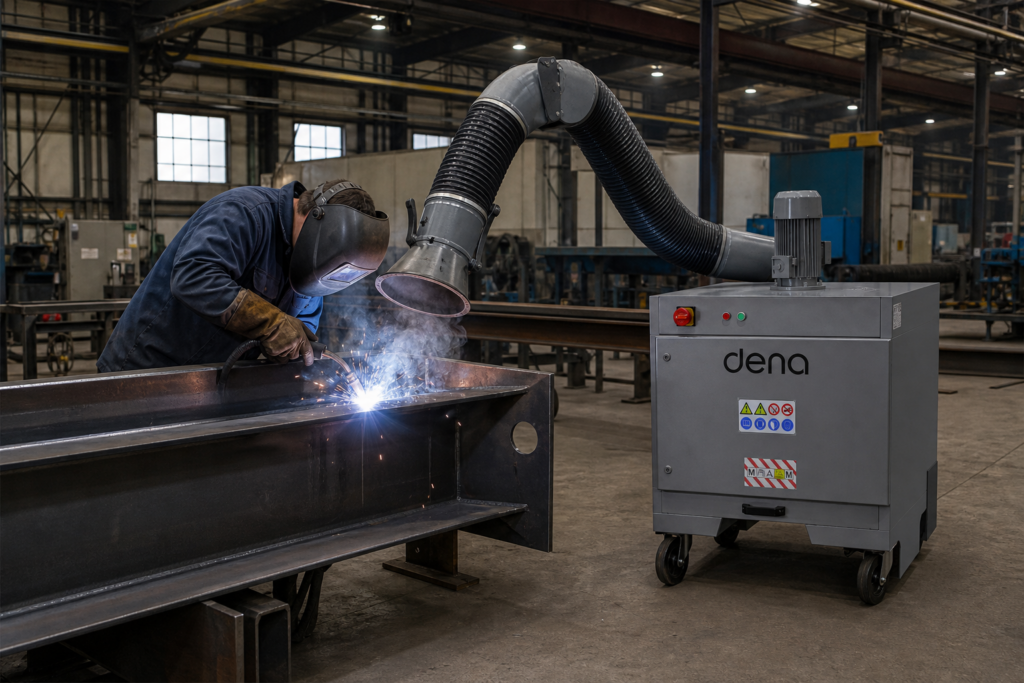
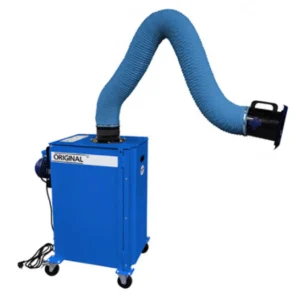
In dynamic workshops where fabricators frequently move between workpieces, mobile extraction units provide the necessary agility. Equipped with fully articulated, self-supporting extraction arms, these units capture fumes directly above the seam. Systems such as the AT1-JET and Plymoth MF HEPA offer high mobility while maintaining continuous industrial-grade filtration.
The MF HEPA unit utilises multi-stage filtration engineered for challenging workshop environments. Coarse particles are separated at the initial stage, while an integrated spark arrestor protects internal media from ignition risks. A final HEPA H13 filter delivers certified W3 efficiency, making it fully safe for recirculating air during stainless steel welding.
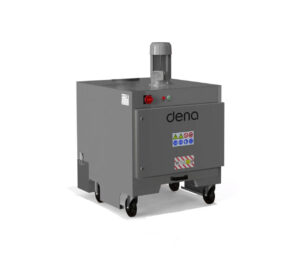
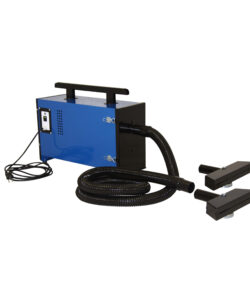
For field service teams, on-site structural repairs, and confined space operations, ultra-portable extractors are essential. Weighing around 15 kg, the Porta-Flex series fits easily into service vehicles and can be carried into tanks, boilers, and tight structural frames. Despite their compact size, they generate strong static suction to clear the welder’s immediate breathing zone.
Welding and Grinding Tables
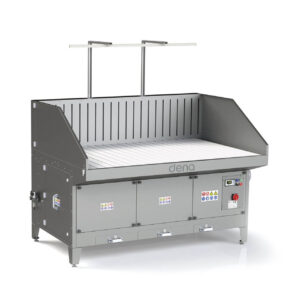
For repetitive fabrication, jig welding, or finishing of small to mid-sized components, a dedicated downdraft and backdraft welding and grinding table offers the most streamlined workflow. Rather than requiring the operator to constantly adjust an overhead hood, these tables draw fumes, smoke, and grinding dust down through the work grating or back into a rear extraction plenum.
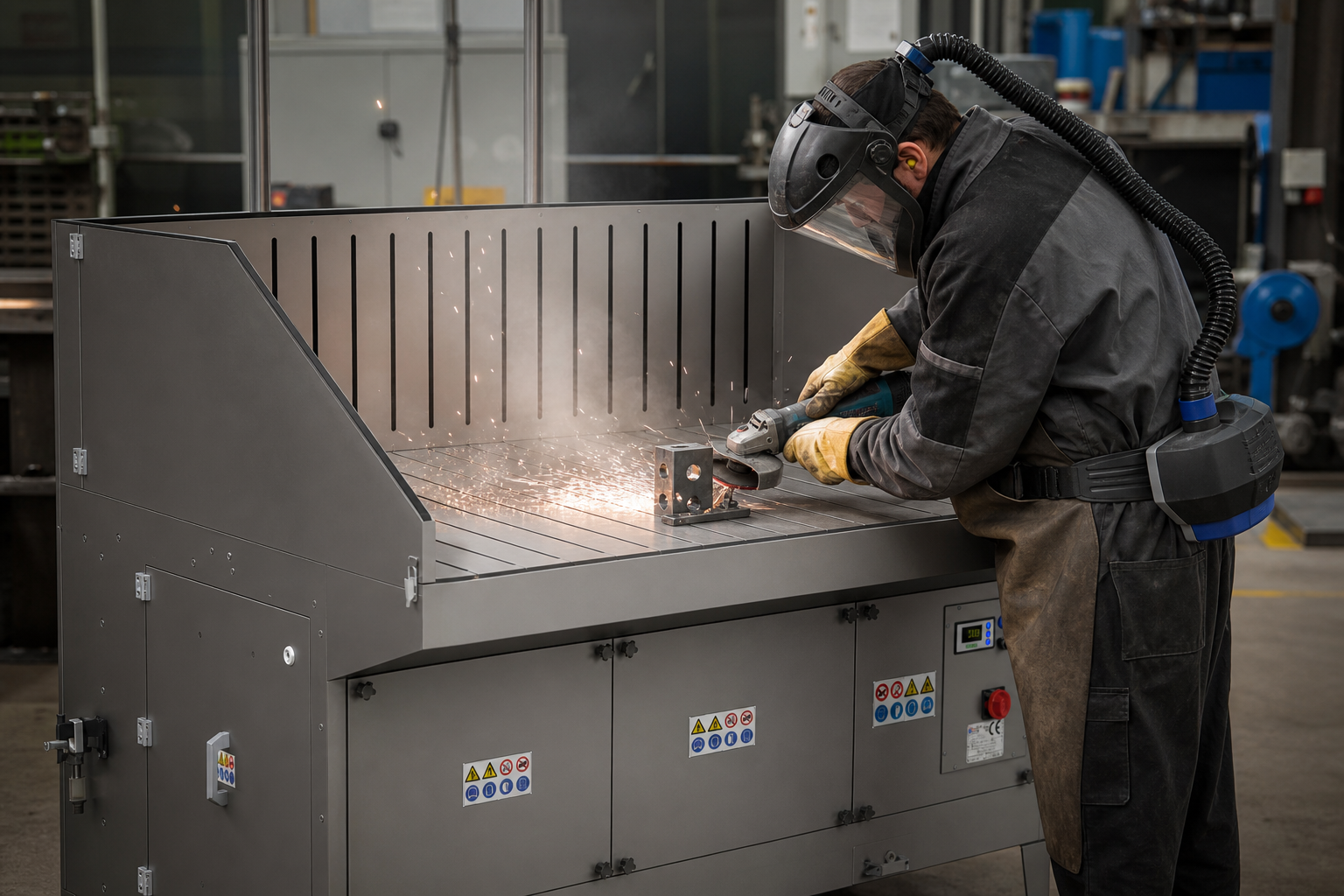
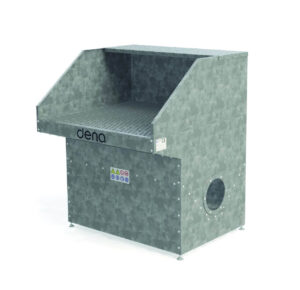
This design draws contaminants away from the operator’s breathing zone without interfering with tooling or parts handling. Heavy-duty units like the DENA BAS series are designed for continuous production, featuring integrated cartridge filters and automated compressed-air pulse cleaning. This automated reverse-pulse cycle prevents filter blinding, ensuring constant suction power even during heavy grinding and deburring operations.
Centralised Systems and Industrial Air Cleaners
For large-scale production halls running multiple shifts across numerous bays, centralised LEV systems offer superior operating efficiency. These installations link several extraction arms, hoods, or robotic cells to a shared ductwork network driven by a central, high-efficiency fan and filter plant. This layout keeps ambient noise off the shop floor and streamlines maintenance by consolidating all filtration and dust collection into a single service area.
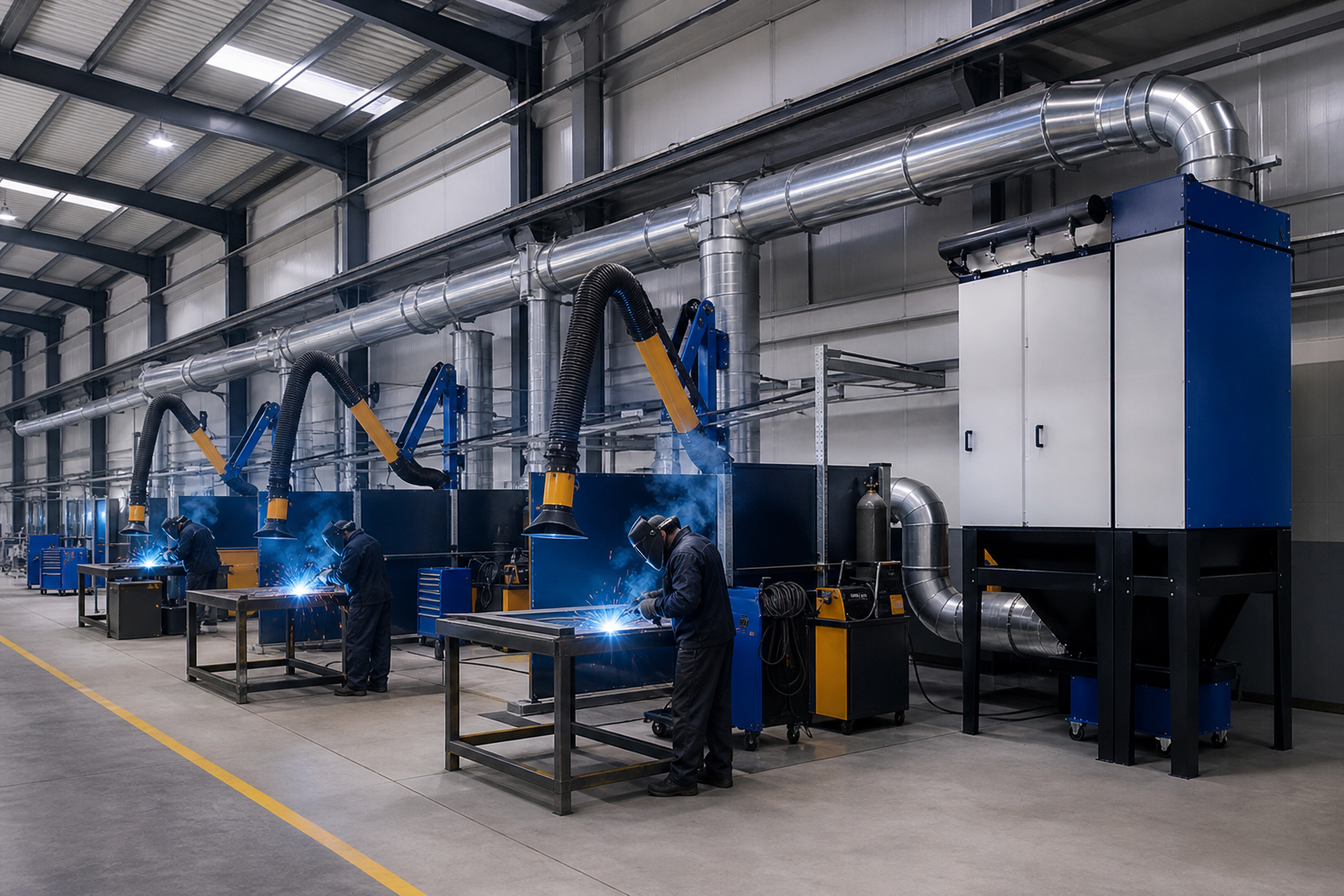
High-capacity systems such as the Plymoth Centra-Flex and DENA Depro series handle volumetric airflows up to 20,000 m³/h. They rely on vertically aligned filter cartridges, which shed dislodged dust far more effectively than horizontal configurations. During automatic pulse-jet cleaning, particulates drop straight into the waste container beneath the hopper, preventing dust re-entrainment and extending cartridge life.
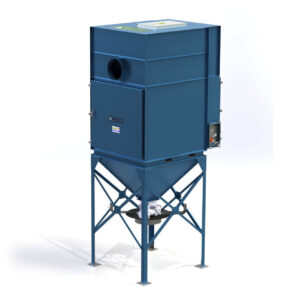
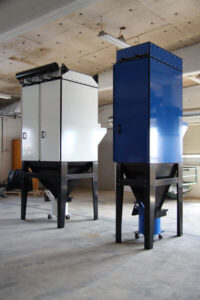
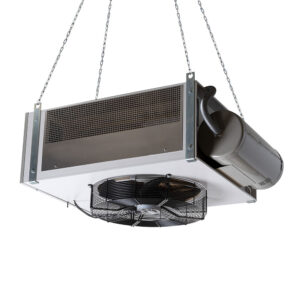
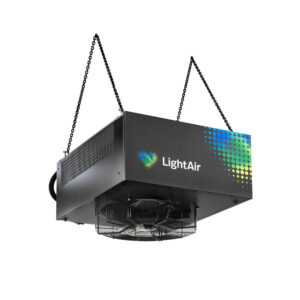
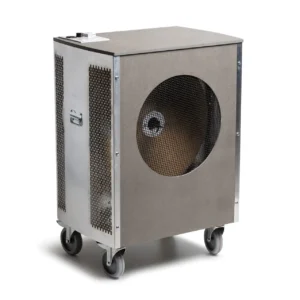
Because even high-efficiency capture hoods cannot intercept 100% of generated fumes, centralised source extraction should be paired with secondary ambient air cleaning. Standalone industrial air cleaners such as the CellFlow 5000 SC and 8500 SC continuously draw in, filter, and recirculate the facility’s ambient air volume. By removing ultrafine particles down to PM0.1, these units prevent ambient haze, protect non-welding personnel throughout the facility, and stop conductive metal dust from settling inside sensitive CNC electronics and automation equipment.
Maximising System Efficiency and Best Practices
Selecting high-quality equipment is only the first step. To ensure sustained compliance and maximum protection, facilities must enforce operational best practices:
- Maintain proper hood positioning: Keep the extraction hood positioned within one hood diameter of the weld point. Suction velocity drops exponentially as the distance from the source increases.
- Manage airflow geometry: Welders must avoid positioning themselves between the fume source and the extraction hood. The extraction airflow should always pull fumes across and away from the operator’s face, never across their body.
- Monitor filter differential pressure: Regularly monitor static pressure drop gauges. While automatic reverse-pulse systems (like those in DENA units) dramatically extend cartridge longevity, media will eventually saturate and require replacement.
- Keep thorough service records: European health and safety regulations mandate periodic testing and documented maintenance of LEV installations. Maintaining detailed service logs ensures audit readiness and dependable system performance.
If your facility operates CNC machining centres alongside welding operations, airborne coolant mist will rapidly saturate standard dry dust cartridges. In these mixed production environments, installing a purpose-built oil mist and smoke filtration system separates liquid aerosols before they can foul the dry cartridge media.
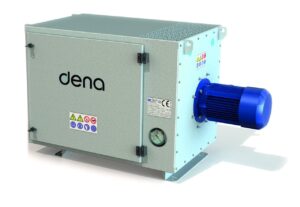
Investing in engineered fume extraction protects both workforce health and operational profitability. A clean, compliant working environment cuts sick leave, protects machinery from conductive dust, and proves invaluable for attracting and retaining skilled fabricators.
No. General dilution ventilation merely mixes airborne contaminants into the wider room volume; it does not pull toxic fumes away from the welder’s breathing zone fast enough to prevent inhalation. Compliance with occupational exposure limits requires local exhaust ventilation (LEV) to capture pollutants directly at the source.
A W3-certified filtration system is mandatory when welding high-alloy steels (such as stainless steels containing nickel and chromium) whenever the filtered air is recirculated back into the workshop environment. The W3 rating guarantees a minimum 99% filtration efficiency for hazardous metal fumes.
Service life depends on the welding method, daily duty cycle, and filter technology. Cartridge units equipped with automated compressed-air pulse cleaning can last several years in continuous production, whereas disposable multi-stage filters in compact mobile units require more frequent changes. Integrated differential pressure gauges provide a reliable indication of when a filter change is due.
References: