

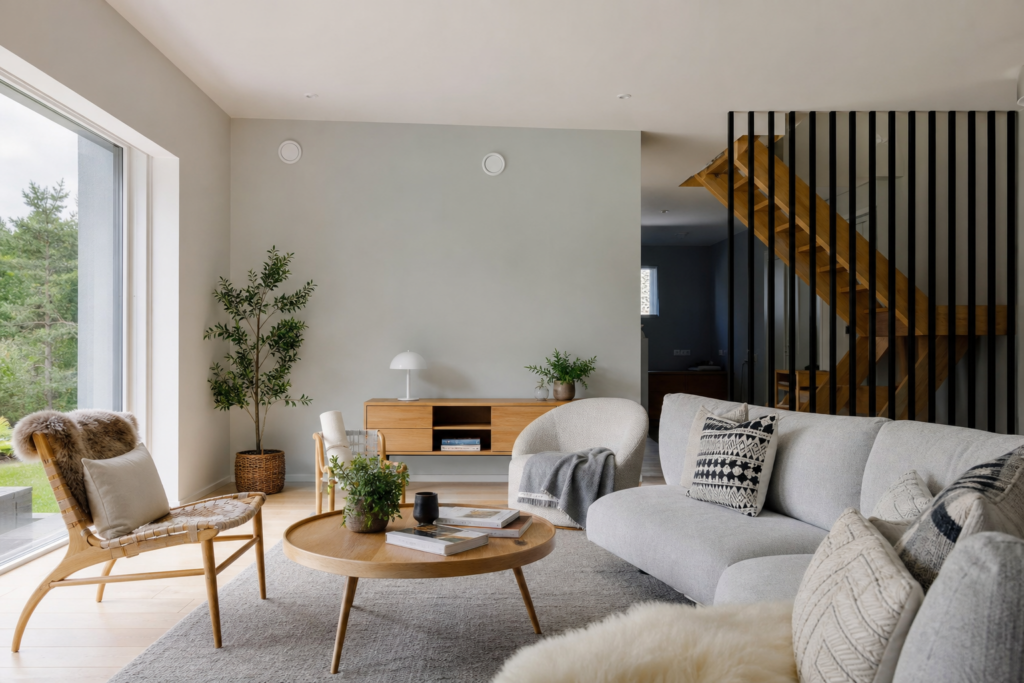
Modern homes are built airtight to maximize energy efficiency. While this keeps heating costs down, insufficient air exchange can quickly compromise indoor air quality. Without an effective ventilation system, moisture, carbon dioxide, and airborne pollutants accumulate indoors, potentially damaging the building’s structure and jeopardizing the health of its occupants. Choosing the right ventilation solution is an essential investment in long-term comfort, structural durability, and well-being.
Today, homeowners increasingly seek ventilation solutions that:
- eliminate the need for complex, invasive ductwork,
- deliver high energy efficiency,
- run quietly in the background, and
- integrate seamlessly into renovation and retrofit projects.
In these scenarios, decentralized heat recovery ventilation represents one of the most practical and effective options available.
Pro Air OÜ provides premium decentralized ventilation units, including top-performing models like the Blauberg inHOME and Ideal Clima KERS, designed specifically for detached homes, apartments, and retrofit applications.
Why Proper Ventilation Matters
Indoor air is often significantly more polluted than outdoor air. Biological contaminants—such as mold spores and dust mites—combine with volatile organic compounds (VOCs) off-gassing from building materials, paints, and furniture to degrade indoor environments. Given that the average person breathes roughly 12,000 liters of air daily, air quality directly affects physical health, sleep quality, and daily energy levels.
Common warning signs of inadequate ventilation include:
- persistent indoor humidity and window condensation,
- morning fatigue and unexplained headaches,
- aggravated allergies and respiratory irritation,
- mold growth in corners or along window frames, and
- lingering, stale odors throughout living areas.
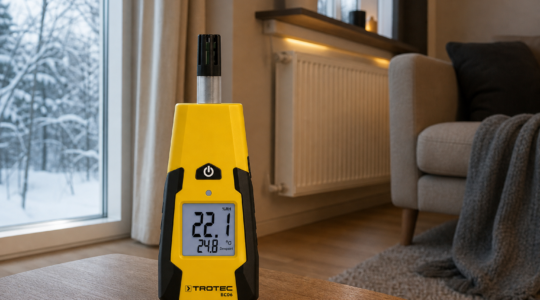
In Estonia and across Northern Europe, elevated soil radon levels present an additional concern, as this colorless, odorless gas can seep into living spaces through building foundations. Active mechanical ventilation is one of the most reliable ways to dilute and reduce indoor radon concentrations. To evaluate your home’s current conditions, consider scheduling a professional indoor air quality assessment to measure CO2 and pollutant levels accurately.
How Heat Recovery Ventilation Works
Simply bringing fresh air indoors is not enough—it must be done without wasting energy. Heat Recovery Ventilation (HRV) systems capture thermal energy from stale outgoing exhaust air and use it to precondition incoming fresh air. Modern high-efficiency units recover up to 95–97% of this heat, drastically reducing winter heating costs compared to opening windows for ventilation.
Heat recovery systems typically rely on one of two technologies:
- HRV (Heat Recovery Ventilator): Recovers heat only. This is ideal in climates and seasons where excess indoor humidity is the primary concern.
- ERV (Energy Recovery Ventilator): Recovers both heat and moisture. This helps prevent indoor air from becoming excessively dry during winter while reducing air conditioning loads in summer by keeping outdoor humidity outside.
A properly balanced ventilation system maintains indoor relative humidity between 30% and 50%—the ideal range for comfort and respiratory health—ensuring that issues like condensation on windows are permanently resolved.
Decentralized vs. Centralized Ventilation
Homeowners generally choose between two primary system architectures depending on whether they are designing a new build or upgrading an existing property.
Decentralized Heat Recovery Units
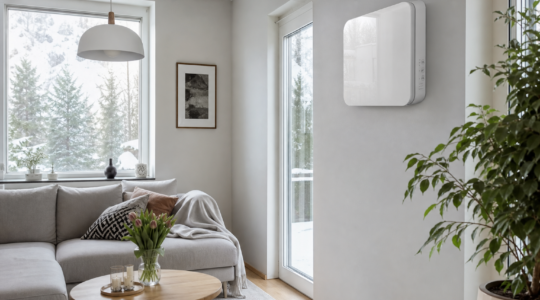
Decentralized ventilation units (single-room heat recovery units) are the ideal choice for existing homes where retrofitting bulky ductwork is impractical, costly, or architecturally disruptive. Each unit is installed directly through an exterior wall to serve a specific room or zone.
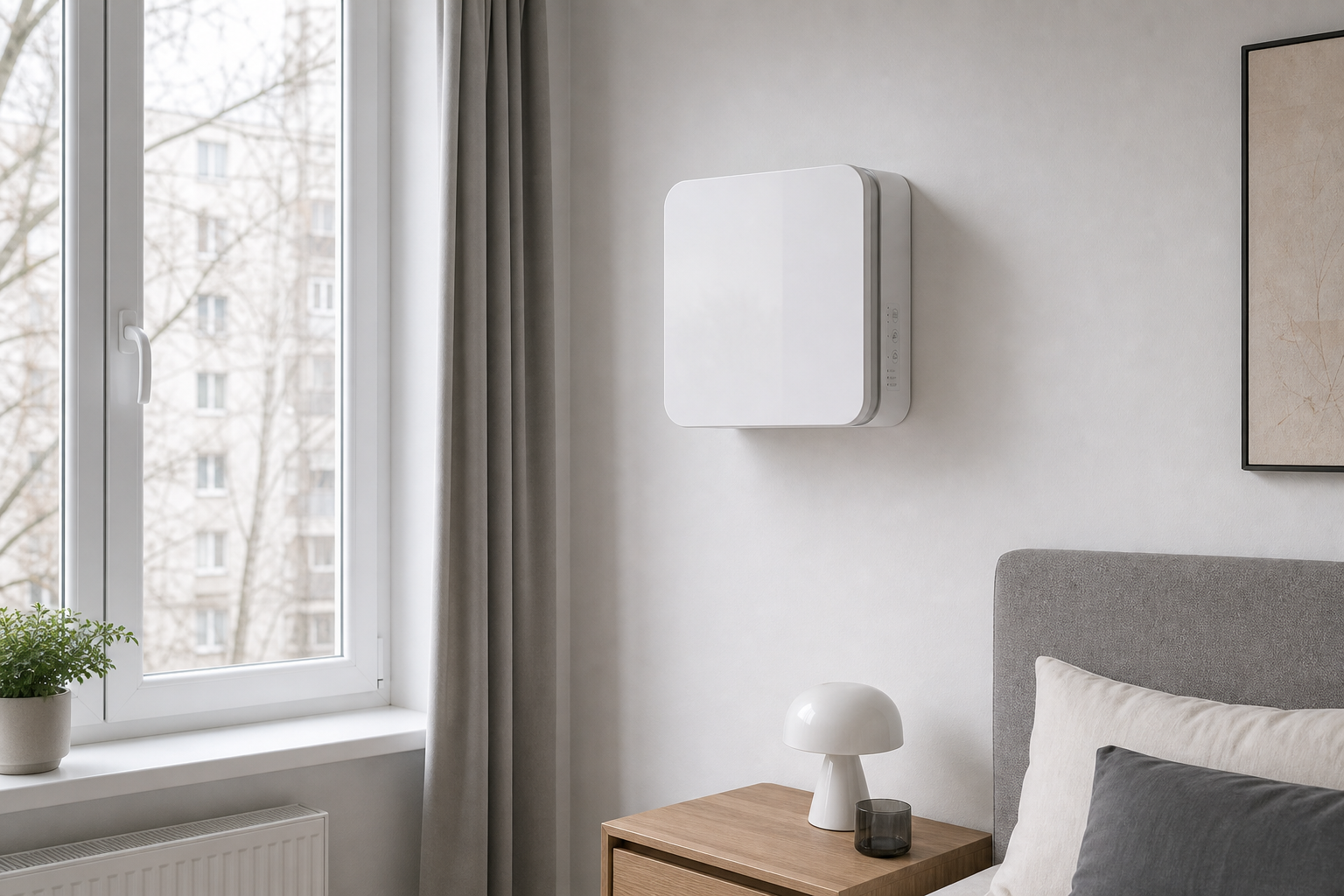
Key advantages of decentralized systems include:
- fast, straightforward installation with minimal disruption to finished walls and ceilings,
- lower initial investment costs,
- independent, room-by-room airflow and temperature control, and
- zero ductwork to clean, inspect, or maintain over time.
Pro Air OÜ offers two industry-leading decentralized models. The Blauberg inHOME achieves up to 95% thermal efficiency, operates with whisper-quiet sound levels, and features integrated Wi-Fi controls alongside an energy-efficient EC motor—making it an excellent choice for bedrooms, living areas, and home offices. The Ideal Clima KERS is a high-capacity unit offering up to 97% heat recovery; its powerful, continuous airflow is engineered for larger living spaces, high-moisture zones, and light commercial settings.
As a general guideline: select the Blauberg inHOME for bedrooms and quiet spaces, and the Ideal Clima KERS for open-plan living rooms or moisture-prone areas.
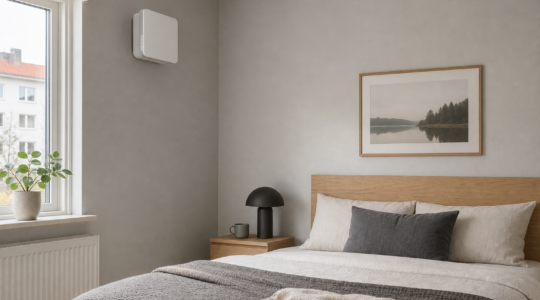
Decentralized heat recovery units are especially popular for master bedrooms and home offices, where uninterrupted fresh air is essential for restorative sleep and focus.
-
 Available
Blauberg VENTO Expert DUO A30-1S10WV.2 Heat Recovery Ventilator for Humid Rooms
559 €
-
-18%
 Available
BSK Zephyr Heat Recovery Ventilation Unit, up to 60 m³/h, Wi-Fi/RH%
Original price was: 351 €.288 €Current price is: 288 €.
-
-7%
 Available
Ideal Clima Kers+25 Ultra-Quiet Heat Recovery Ventilator – Fresh Air with Low Energy Consumption
Original price was: 321 €.298 €Current price is: 298 €.
-
 Available
Top-of-the-Line Blauberg VENTO inHOME W 50 m³/h Wi-Fi Heat Recovery Ventilator
369 €
Centralized Ventilation Systems
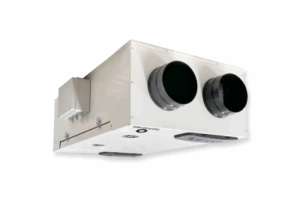
For new construction and extensive full-home renovations, centralized ventilation systems remain the gold standard. These systems distribute fresh, conditioned air throughout the entire house via a concealed duct network. They maintain balanced airflow by extracting warm, humid air from kitchens, bathrooms, and utility rooms while continuously supplying filtered outdoor air to bedrooms and living spaces.
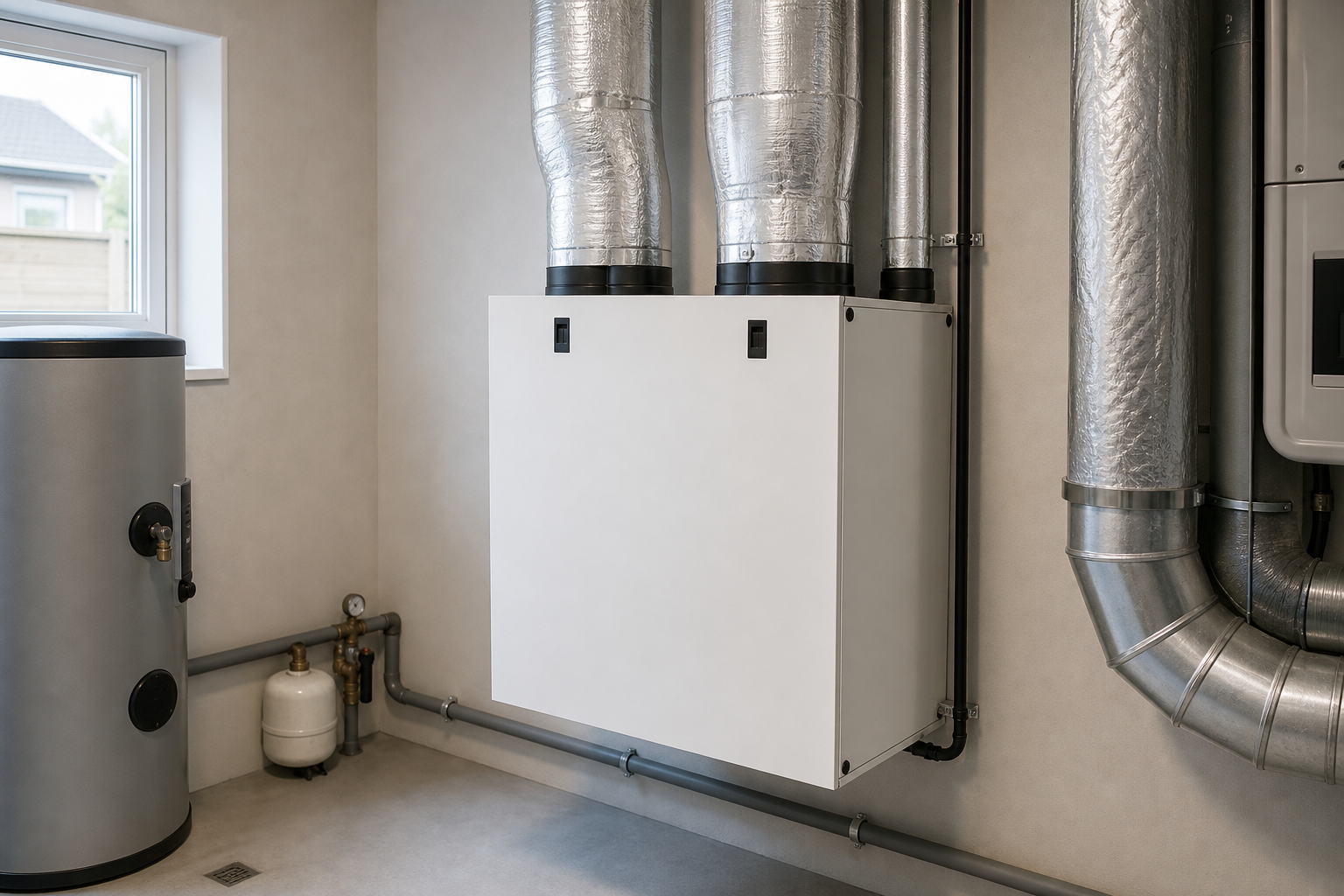
For centralized systems, careful equipment placement and acoustic duct design are critical to ensuring silent operation. The Aerauliqa units in the Pro Air OÜ lineup are renowned across Europe for their robust engineering, long-term reliability, and exceptional thermal recovery efficiency.

Moisture Control and Mold Prevention
Excess moisture presents a severe threat to indoor air quality and building materials. When relative humidity stays above 60%, conditions become prime for mold and mildew growth—particularly in bathrooms, laundry rooms, and basements. Homeowners often weigh the choice between a dehumidifier and a dedicated ventilation system. While a dehumidifier extracts water from the air, it cannot replace a ventilation system, which supplies essential oxygen and removes CO2 and indoor pollutants.
For localized wet areas or as a supplementary measure, dedicated extraction units are highly effective. Modern exhaust fans feature integrated humidity sensors that activate automatically whenever moisture levels spike during showers or baths.
Installation and Maintenance Best Practices
A ventilation system’s long-term performance and efficiency depend heavily on proper installation and routine maintenance. Even premium equipment will underperform if filters become clogged or airflow rates are poorly balanced.
Best practices for optimal operation:
- position fresh air intakes well away from potential pollution sources, such as chimneys, driveways, or waste bins,
- use MERV 13 (F7) or higher-grade filters to capture fine airborne particles, pollen, and allergens,
- replace air filters at least twice a year to maintain optimal airflow and indoor air purity, and
- schedule periodic professional inspections and airflow balancing to match your household’s actual usage patterns.
Pro Air OÜ delivers complete indoor climate solutions, spanning diagnostic assessments, equipment supply, and certified installation. Our portfolio features proven European manufacturers—including Blauberg, Ideal Clima, and Aerauliqa—and our team brings extensive experience in designing both decentralized and centralized setups for residential and commercial spaces. From calculating your building’s precise air exchange requirements to providing ongoing maintenance and technical support, we ensure your living environment remains healthy, comfortable, and energy-efficient.
A healthy home starts with the air you breathe. The right ventilation system promotes better sleep, protects your family’s health, and preserves the long-term value of your property.
Frequently Asked Questions
Yes. Modern units like the Blauberg inHOME operate in night mode at noise levels as low as 11–13 dB(A)—virtually imperceptible and quieter than a gentle rustle of leaves.
Decentralized single-room units are relatively straightforward to install, requiring a standard core-drilled exterior opening and an electrical connection. For centralized systems, however, professional installation is essential to guarantee properly balanced ductwork, optimal efficiency, and silent operation.
A heat recovery ventilation system can reduce space heating costs by 25–30% compared to natural ventilation (such as opening windows), as incoming fresh air is pre-warmed using recovered exhaust heat rather than cold outdoor air.