

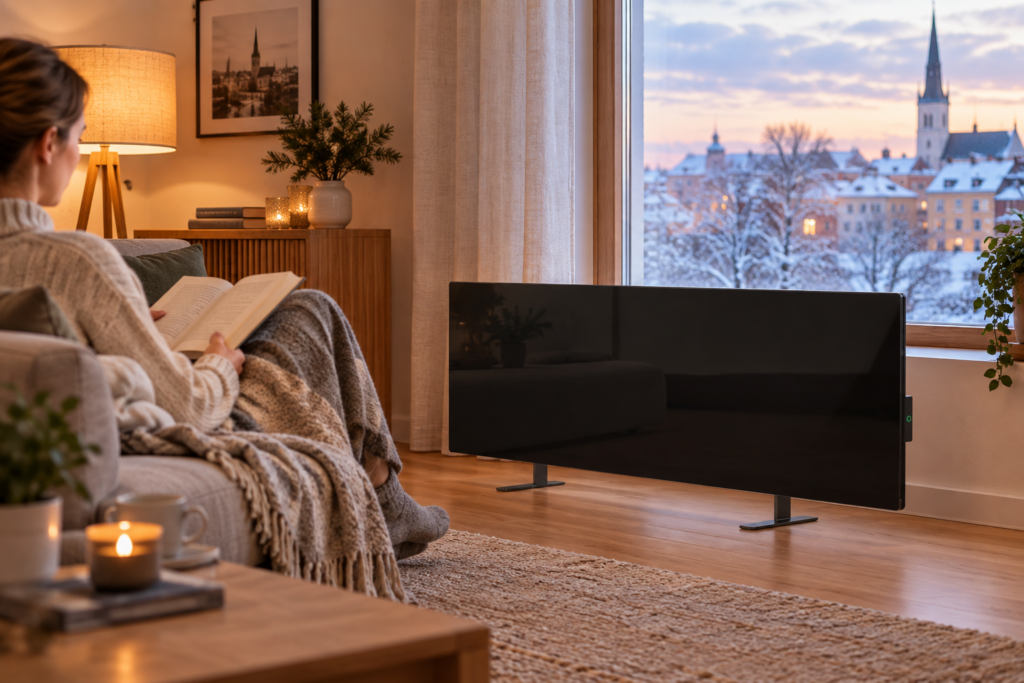
At a glance: convection heating warms the air, whereas infrared heating warms people and surfaces directly. If a room is in constant use and you want consistent, wall-to-wall warmth, a convection heater is usually the way to go. On the other hand, if you heat a space intermittently, need targeted zone heating, or are dealing with high ceilings, drafts, or frequently opened doors, infrared heating delivers the same perceived comfort faster and at a lower air temperature. Both convert electricity into heat at virtually 100% efficiency—meaning the real difference in running costs comes down to how much air volume you actually need to heat.
| Convection Heating | Infrared Heating | |
|---|---|---|
| What it heats | Circulating ambient air | People, furniture, floors, and walls |
| When you feel the heat | Once the room’s air volume has warmed up | Instantly, as soon as you step into the beam path |
| Temperature distribution | Even; warm air naturally pools near the ceiling | Warmest directly facing the panel; cooler behind obstructions |
| Best suited for | Continuous primary and background heating | Spot/zone heating, high ceilings, workshops, covered patios |
| Not suited for | Tall, open, or drafty spaces | Uniform background warmth in cluttered or partitioned rooms |
| Electricity-to-heat conversion | Approx. 1:1 (100% efficient) | Approx. 1:1 (100% efficient) |
How Convection Heating Works
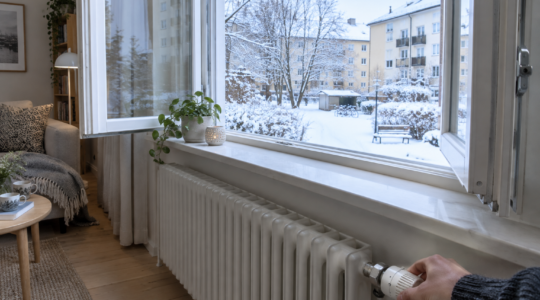
A convection heater works by warming the air immediately surrounding its internal heating element. As this warm air expands and rises toward the ceiling, cooler air is pulled in from below to replace it, establishing a continuous convective loop. Interestingly, even standard wall-mounted “radiators” are misnamed: conventional wall-mounted radiators emit 80–90% of their heat via convection and only 10–20% through actual thermal radiation.
The clear advantage of convection is uniform heat distribution. Because warm air circulates freely, it travels behind sofas, wraps around furniture, and reaches floor areas that direct radiant heat cannot see. Convector heaters are quiet, cost-effective to buy, and excel at holding a steady room temperature when paired with an accurate thermostat.
Their major downside is thermal stratification in tall spaces, alongside an acute vulnerability to drafts. In a room with standard ceiling heights, stratification is negligible: in a near-zero-energy test facility at Tallinn University of Technology, the vertical temperature gradient in a radiator-heated room averaged just 0.13 °C per meter. In high-ceiling industrial or commercial halls, however, that gradient often climbs to 0.5–1 °C per meter. In an 8-meter-tall warehouse, that means the air near the roof can sit 4–8 °C higher than at floor level—wasting substantial energy heating empty air. Worse still, every open bay door allows that reservoir of trapped heat to spill straight outside.
How Infrared Heating Works
An infrared heater emits electromagnetic thermal radiation that travels straight through the air without heating the atmosphere itself. When these infrared waves hit a solid object—such as human skin, a floor, or a desk—their energy is absorbed and converted into heat. Those warmed surfaces then gently radiate heat back into the surrounding room air. In flat infrared panels, radiant heat accounts for at least two-thirds of the total heat output.
Why does this cut energy use? Human thermal comfort is governed by “operative temperature.” In still air (speeds under 0.2 m/s), operative temperature is roughly the midpoint between ambient air temperature and the mean radiant temperature of surrounding surfaces. For instance, an air temperature of 22 °C with 18 °C surfaces feels identical to 18 °C air with 22 °C surfaces—both register as an effective 20 °C to your body. Because infrared panels elevate surface temperatures directly, you can dial down the air thermostat while enjoying identical comfort.
For everyday living spaces, far-infrared “dark” or zero-light panels (which produce no visible red glow) are standard. Outdoor patios typically rely on quartz or carbon medium-wave infrared heaters for a more concentrated, weather-resilient heat beam. Meanwhile, uninsulated construction sites and large industrial bays frequently turn to diesel-fired infrared units.
Which Is Cheaper to Run?
At the point of use, all direct electric resistance heaters convert 1 kWh of electricity into roughly 1 kWh of usable heat, regardless of whether they rely on convection or infrared rays. To put that in perspective, a 2025 UK government study on infrared heating noted that a modern heat pump delivers roughly 3 kWh of heat for every 1 kWh of electricity consumed. If you have access to a heat pump, neither direct electric option will beat it on operational cost; both are primarily intended for targeted zone heating or supplementary use.
Infrared heating saves money only when applied strategically: either by allowing a lower overall ambient thermostat setting or by heating solely occupied zones. According to the European Commission, turning down the thermostat by 1 °C saves approximately 7% on heating energy. Real-world findings reflect this sensitivity to application: in a 2010 commercial office trial, radiant ceiling panels used up to 39.1% less energy per day than portable oil-filled radiators while maintaining equivalent comfort. Conversely, independent testing by a New Zealand consumer advocacy group revealed that running costs for 450 W infrared panels were practically indistinguishable from other standard electric heaters when asked to heat entire rooms.
A realistic example: Imagine a 15 m² home office occupied for 8 hours a day. Maintaining 21 °C with a standard convection heater might require an average draw of 600 W, consuming 4.8 kWh over the workday. With a properly positioned infrared panel, you might achieve the same personal comfort at an ambient temperature of 19.5 °C. That 1.5 °C thermostat reduction trims energy demand by roughly 10%, saving around 0.5 kWh per day. At an all-inclusive electricity rate of €0.20/kWh (covering grid fees and taxes), you save roughly €0.10 a day—or €2 to €3 a month. The savings are real, but modest.
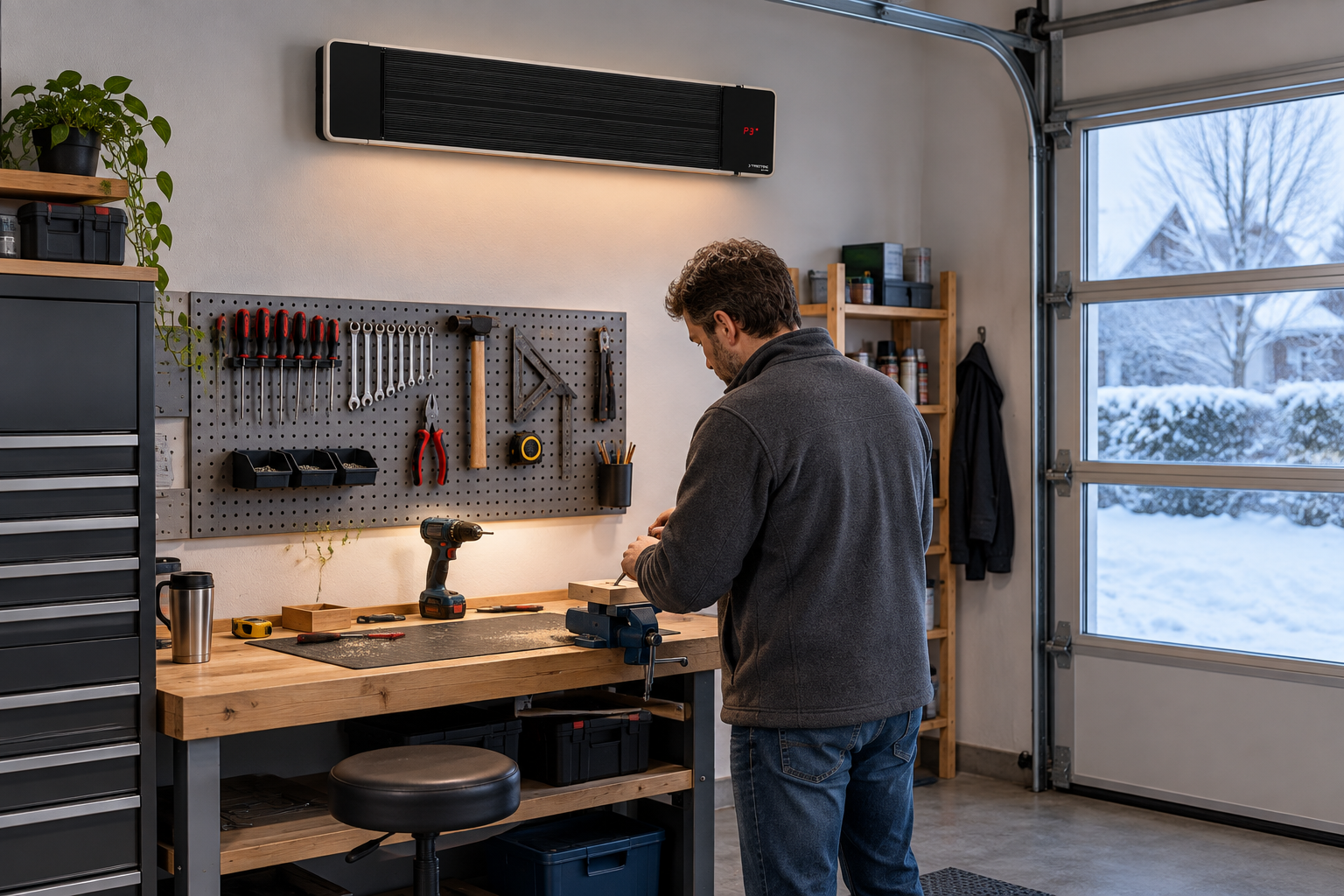
Now imagine a garage workshop used for two hours an evening. A convection heater would need to run for an hour beforehand to warm thousands of cubic feet of cold air—only to lose that heat whenever the garage door cracks open. A 1,200 W infrared panel mounted over the workbench warms you within moments of flipping the switch and draws zero power the rest of the day. In that scenario, energy savings are substantial.
When to Choose Infrared Heating
Infrared heating is usually the superior option if:
- Ceilings are higher than 3 meters (10 feet). Radiant energy targets the living and working plane rather than collecting uselessly at the ceiling.
- The room is used intermittently. If you only occupy a space for an hour or two, instant radiant warmth removes the need for wasteful preheating.
- Doors open frequently or the space is drafty. Air movement sweeps warm air away in seconds, but does not disrupt radiant heat transfer.
- You only need spot or zone heating. It is ideal for warming a single desk, an assembly bench, a dining table, or an outdoor patio seat without heating the surrounding volume.
- You want to avoid airborne dust. Because infrared panels do not rely on strong convective drafts, they minimize dust circulation—a major benefit for allergy sufferers.
For industrial workshops and job sites with limited electrical service, fuel-fired radiant heaters fill the gap. In Veltron diesel infrared heaters, for instance, combustion gases pass through ceramic-coated internal manifolds that emit clean radiant heat, drawing electricity purely for the burner fan, ignition, and control board. When operating any fuel-burning equipment indoors, always ensure adequate fresh-air ventilation in line with manufacturer guidelines and install an operational carbon monoxide alarm.
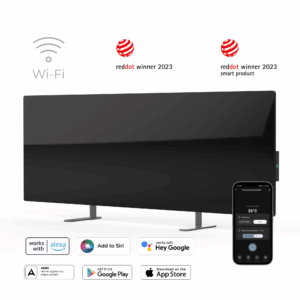
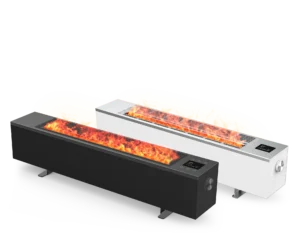
Proair carries an extensive line of indoor infrared heaters suited for both home living areas and light-duty workspaces. The AENO Premium Eco Smart Heater features an ultra-slim glass housing managed via a Wi-Fi smartphone app. Its surface operating temperature can be dialed anywhere between 60 °C and 120 °C, while an integrated cord-mounted sensor tracks room air temperature. The manufacturer rates it for spaces up to 30 m². In households with small children, setting the surface limit to 60 °C prevents contact burns. Alternatively, the Trotec IRD 1200 is an architectural dark radiant strip heater offering 400 W to 1,200 W across three output settings. Engineered with an IP55 ingress protection rating against dust and water jets, it is equally at home in a dusty garage or under an outdoor covered veranda. Wall and ceiling brackets are included in the box.

When Convection Heating Is the Better Option
Convection heating remains the gold standard when you need steady, uniform conditions throughout an enclosed room:
- The room is continuously occupied, and warmth must reach every corner—such as a nursery or playroom where toddlers spend hours on the floor.
- You require reliable frost protection. In a summer cottage or outbuilding, a convector with a built-in thermostat can safely idle unattended at +5 °C to keep pipes from freezing.
- The space is irregularly shaped or heavily furnished. Radiant heat travels strictly by line of sight; large furniture pieces, partitions, and L-shaped corners create cold “shadows.”
- Upfront equipment budget is tight. Convection units offer some of the lowest initial purchase costs per watt of heat output.
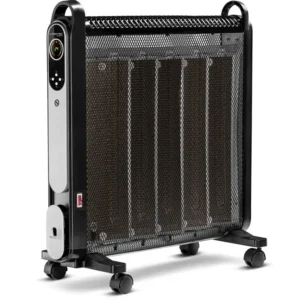
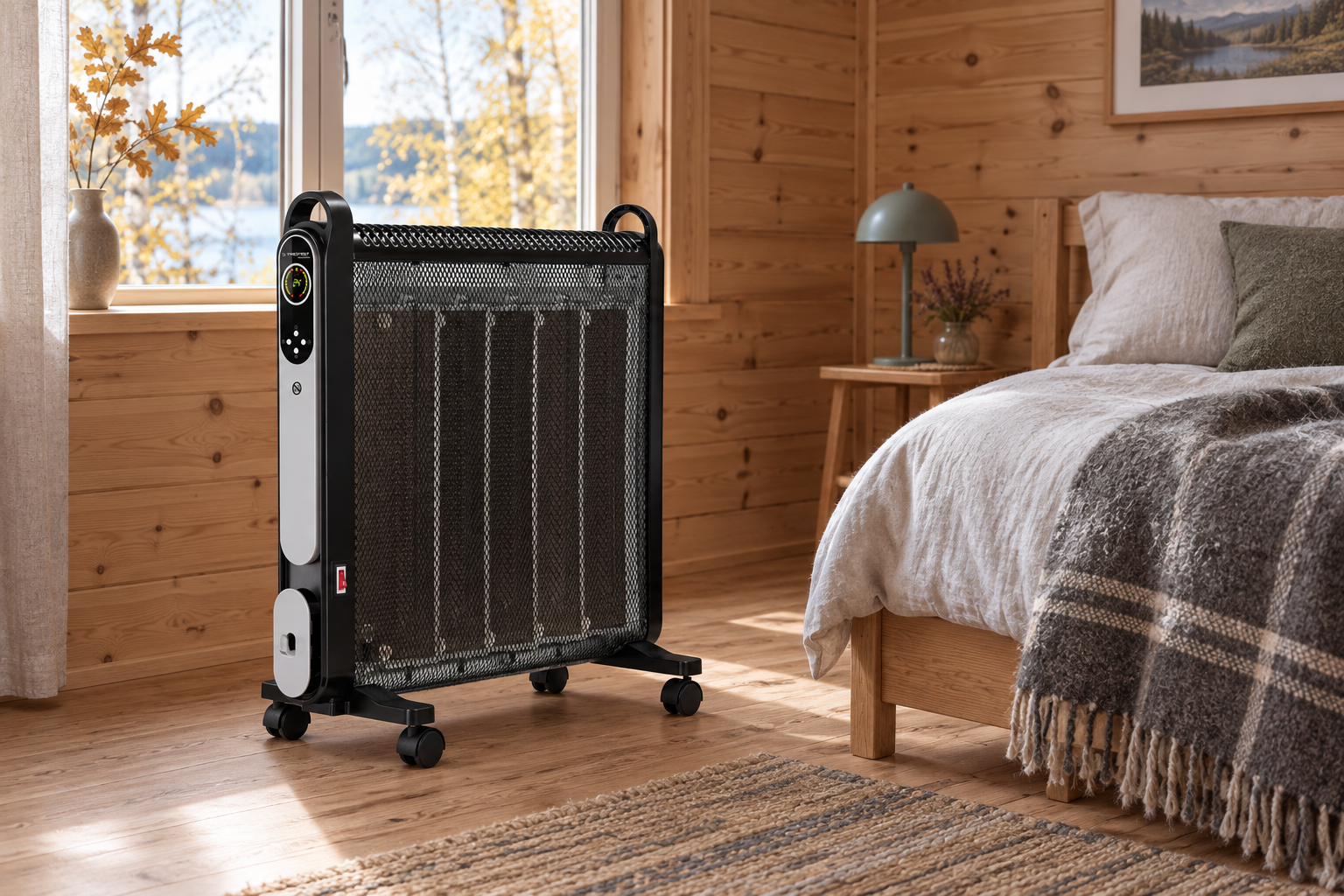
Proair’s catalog of convection radiators includes versatile options like the Trotec TCH 2050 E hybrid convector. It uses a mica heating element that pairs traditional convective airflow with a subtle component of radiant warmth. With 1,200 W and 2,000 W operating stages, it easily heats rooms up to 24 m² (approx. 60 m³) and rolls smoothly from room to room on integrated casters. As of publication (October 2026), it retails for €89. For those seeking modern smart controls and higher thermal capacity, the AENO Premium ECO Smart SPACE Heater delivers up to 2,000 W of app-managed output.
Installation and Sizing Guidelines
When calculating size for convection heaters, follow traditional room-volume rules of thumb: for the TCH 2050 E, plan for roughly 80 W per square meter in standard residential settings. Sizing infrared panels is more variable, ranging anywhere from 25 W/m² in well-insulated modern homes up to 100 W/m² in drafty older buildings or rooms with high ceilings. Because of that spread, physical placement matters far more than blanket square-meter formulas when setting up radiant heat.
- Direct the infrared beam toward occupied zones, never toward exterior windows or uninsulated outer walls where energy will simply bleed away.
- Observe ceiling mounting clearances. Most manufacturers specify installation heights between 2.5 and 4 meters, keeping higher-output commercial units further overhead.
- Maintain clear perimeter space. Never drape laundry over a convection heater, and ensure both convection and radiant heaters maintain safe clearances from curtains and upholstery.
- Verify IP ingress ratings. Bathrooms, washrooms, and outdoor areas demand certified moisture protection. Bathroom installations should always be completed by a licensed electrician.
- Check the Ecodesign product fiche. Under EU Regulation 2015/1188, manufacturers must state whether products feature electronic room-temperature controls and daily or weekly programmable timers. Leveraging a well-programmed schedule will almost always save more energy than the choice of heating element alone.
Common Mistakes That Cancel Out Savings
Running the thermostat at your old convection setting. If you leave your room thermostat set to 22 °C after installing an infrared panel, you lose the primary efficiency advantage. Drop the air setpoint by 1–2 °C and let the radiant surface effect do the work.
Blocking the line of sight. Mounting an infrared panel behind a high-backed sofa or beside a wardrobe means you are heating the back of your furniture rather than the people in the room.
Expecting an infrared panel to thaw a freezing room instantly. If an uninsulated cabin has dropped to 0 °C, the frozen thermal mass of the floor, walls, and furniture will soak up radiant energy long before you feel comfortable. A convection heater or fan heater is far better equipped to push bulk air temperature up from near-freezing; once the room is habitable, an infrared heater can step in to hold comfortable working zones.
Relying on lightweight extension cords. A heater pulling 2,000 W places continuous demand on an electrical circuit. Plug units directly into a dedicated wall outlet, or use a certified heavy-duty extension lead with sufficient wire gauge.
In many spaces, the smartest setup is a hybrid: a convector provides a low, cost-effective baseline temperature for the entire room, while a well-aimed infrared panel delivers instant personal comfort right where you sit. If you need temporary warmth for an ongoing renovation or commercial job site, you can also rent heating equipment through Proair before committing to a permanent system.
Frequently Asked Questions
Yes. Infrared radiation is completely natural; it is the exact same type of thermal warmth emitted by the sun and ceramic wood stoves, free of harmful ultraviolet rays. The main safety factor is surface heat: glass panels can reach 120 °C during peak operation. In homes with young children or pets, mount panels high on walls, suspend them from ceilings, or choose models with adjustable surface temperature caps.
Technically, yes—especially in an airtight, highly insulated home. However, direct electric resistance heating provides a strict 1:1 ratio of electricity to heat output. A modern heat pump yields roughly 3 to 4 times more thermal energy per unit of consumed power. As a result, heat pumps remain vastly more economical as a whole-house primary heat source, leaving infrared panels best suited for supplemental, shoulder-season, or targeted zone heating.
Strictly speaking, neither heater extracts moisture from the atmosphere. However, relative humidity naturally drops as air temperature rises. Because infrared heating allows you to feel comfortable at a slightly lower ambient air temperature, it generally preserves higher relative humidity levels than convection heaters, helping reduce dry-air irritation in winter.