

An air conditioner delivers refreshing cool air during hot summer months while keeping indoor humidity at comfortable levels. However, without routine maintenance, cooling capacity degrades, energy bills climb, and the circulating air can quickly become contaminated with dust and bacteria.
Regular professional servicing keeps your system running at peak energy efficiency, prevents unexpected breakdowns during peak cooling season, and significantly extends the lifespan of the compressor and other vital components. This guide covers what comprehensive maintenance entails, why simply topping off refrigerant will not fix underlying faults, and how to properly care for both residential and commercial cooling systems.
Why Air Conditioners Require Routine Maintenance
Every hour of operation, an air conditioner draws hundreds of cubic meters of ambient air across its heat exchanger coils. That air carries dust, pollen, grease particles, and other airborne contaminants. Over time, this debris settles on the filters and coil fins, creating an insulating layer that restricts airflow and impairs heat transfer.
Neglecting air conditioner maintenance can trigger several costly issues:
- Increased energy consumption: Dirty heat exchangers cannot transfer heat effectively. To compensate, the compressor must run longer and work harder to achieve the set temperature, driving up electricity costs.
- Premature compressor failure: Continuous strain and improper operating pressures cause the compressor—the system’s most expensive component—to overheat and wear out ahead of its time.
- Degraded indoor air quality: The dark, damp environment inside the indoor unit’s condensate pan creates an ideal breeding ground for mold and bacteria, resulting in unpleasant, musty odors.
- Refrigerant leaks: Vibration, corrosion, or deteriorated seals can create micro-leaks that eventually lead to a total loss of cooling performance.
Properly maintained, high-efficiency split-system air conditioners and cooling units provide dependable climate control with minimal operating expenses.

Essential Air Conditioner Maintenance Tasks
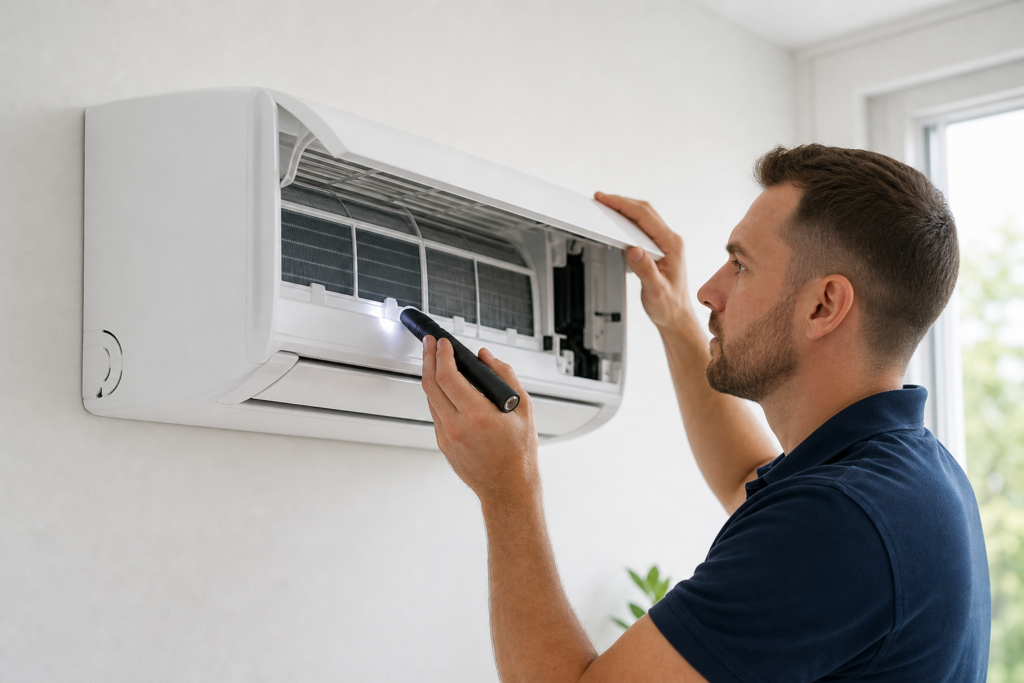
Air conditioning maintenance consists of two distinct parts: routine user upkeep and comprehensive technical servicing performed by a certified technician. Balancing both ensures reliable, trouble-free operation year after year.
Filter Cleaning and Replacement
Filters trap coarse dust, pet hair, and airborne allergens before they can reach the delicate evaporator coil. When filters become clogged, airflow drops sharply, which can cause the indoor coil to freeze over.
- Residential systems: Wash pre-filters in lukewarm water every 2 to 4 weeks during the peak cooling season.
- Offices and commercial spaces: Inspect filters monthly; clean or replace them as needed based on foot traffic and dust levels.
- Specialty filters: Replace active carbon, HEPA, or nano-silver filters according to manufacturer specifications—typically every 6 to 12 months.
Chemical Cleaning and Disinfecting Heat Exchangers
Both the indoor evaporator and outdoor condenser coils require a thorough cleaning at least once a year. Standard vacuuming cannot remove the stubborn organic film and grease that settle deep between the thin aluminum fins.
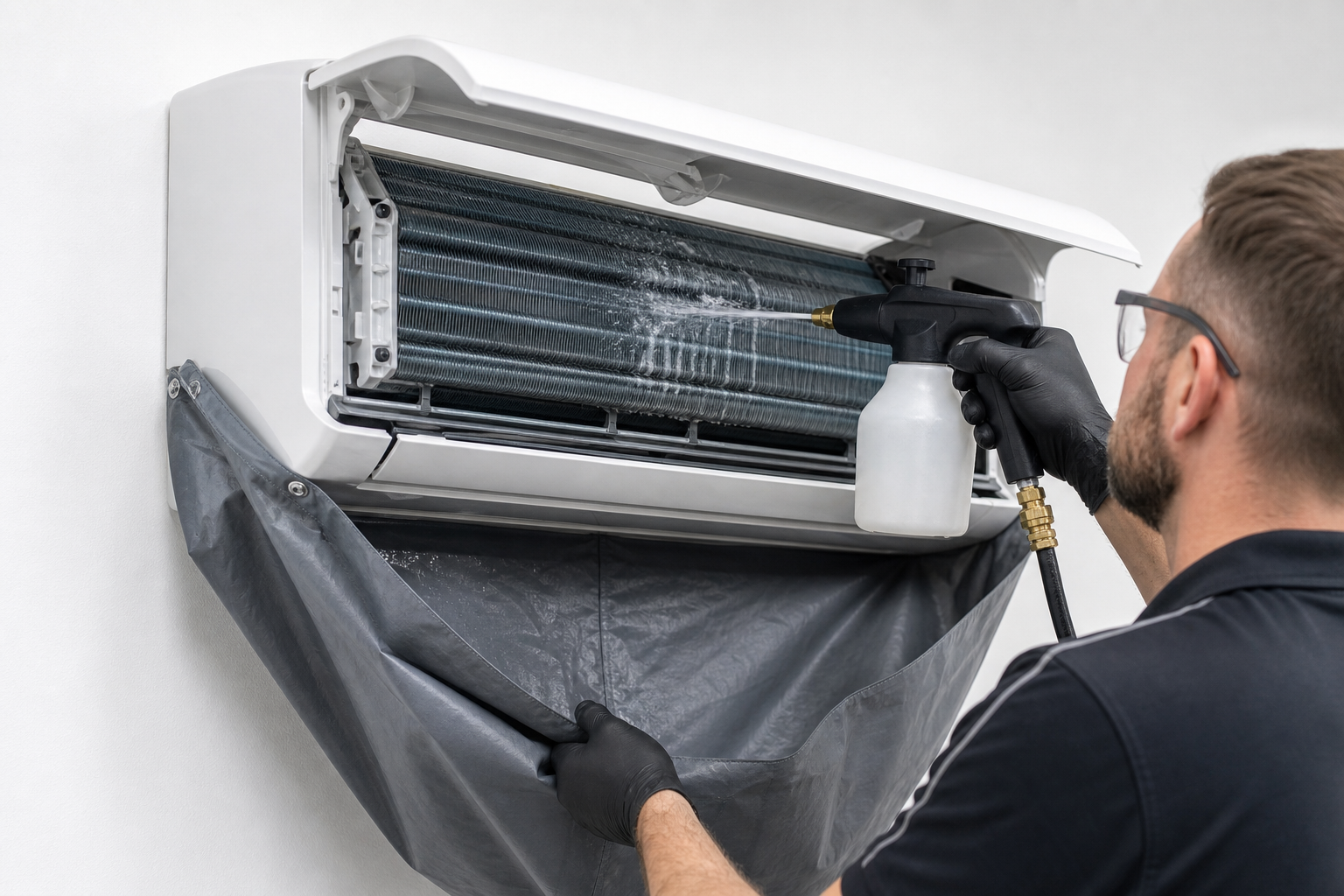
Professional servicing relies on specialized, coil-safe antibacterial detergents to:
- Dissolve embedded dirt and grime between the fins.
- Eradicate mold spores, bacteria, and odor-causing organic matter.
- Restore original heat transfer rates and airflow dynamics.
For the outdoor condenser unit, technicians also clear away leaves, dirt, and debris from the intake grilles and verify that the fan rotates smoothly and without obstruction.
Flushing the Condensate Drainage System
As warm indoor air cools across the evaporator coil, moisture condenses and collects in the drain pan before exiting through the drainage line. When airborne dust mixes with this standing water, it forms a gelatinous sludge over time.
A clogged drain line causes water to back up and overflow, resulting in leaks down interior walls or onto floors. During maintenance, technicians inspect the drain pan slope, flush the line under pressure with antimicrobial solution, and test the condensate pump and float switch where fitted.
Electrical and Mechanical Diagnostics
Operating vibrations can gradually loosen terminal connections, leading to voltage drops, arcing, or unexpected system trips. A service technician inspects all electrical wiring, checks compressor running currents, assesses fan motor bearings for wear, and tests control electronics for responsive operation.
To evaluate your broader indoor environment alongside HVAC performance, a professional indoor air quality assessment can accurately identify humidity imbalances and airborne pollutant concentrations.
Refrigerant Leaks and Recharging: Why “Topping Off” Is Not a Fix
A common misconception is that air conditioners consume refrigerant over time, much like a car burns fuel. In reality, an air conditioning system is a closed, hermetically sealed circuit. If refrigerant levels are low, there is an active leak that must be identified and repaired.
Common signs of a refrigerant leak include:
- Weak cooling output: The unit blows lukewarm or weakly conditioned air and fails to reach the setpoint temperature.
- Continuous compressor runtime: The compressor runs non-stop at full capacity trying to make up for the lost cooling effect.
- Ice on lines and coils: Low suction pressure causes the refrigerant’s boiling point to drop below freezing, leading to heavy frost or ice accumulation on the service valves and evaporator coil.
- Hissing or bubbling noises: Audible hissing near the pipework often signals pressurized gas escaping through a fissure or loose flare fitting.
- Surging utility bills: Extended runtimes and continuous compressor strain translate directly into higher electricity usage.
Recharging refrigerant without repairing the leak wastes money and violates environmental regulations. A qualified technician must locate the leak using electronic sniffers or nitrogen pressure testing, repair the affected joint, pull a deep vacuum to remove moisture, and recharge the exact weight of refrigerant specified on the manufacturer data plate.
For spaces where permanent line sets are impractical, factory-sealed portable units offer a self-contained alternative—explore practical advice in our guide on choosing the right portable air conditioner for your apartment.
-
-13%
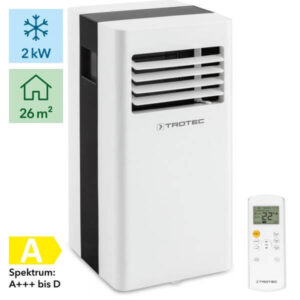 Available
PAC 2100X Portable Air Conditioner
Original price was: 399 €.349 €Current price is: 349 €.
-
-14%
 Available
PAC 4600 Split Mobile Air Conditioner
Original price was: 2 099 €.1 799 €Current price is: 1 799 €.
-
 Available
Quiet PureAirPro DuoClima 35 Portable Split Air Conditioner/Heat Pump
1 098 €
Regulatory Compliance and Mandatory Inspection Intervals
Cooling equipment installed in commercial facilities, server rooms, and industrial sites is subject to strict EU F-Gas regulations. Owners and operators of stationary refrigeration equipment must ensure regular leak inspections based on the total CO₂ equivalent of the refrigerant charge:
- 5 to under 50 metric tons of CO₂ equivalent (or at least 1 kg of F-gas): Leak check required at least every 12 months (or every 24 months if an automated leak detection system is installed).
- 50 to under 500 metric tons of CO₂ equivalent: Leak check required at least every 6 months (or every 12 months with an automated leak detection system).
- 500 metric tons or more of CO₂ equivalent: Leak check required at least every 3 months (or every 6 months with an automated leak detection system).
Following any leak repair, regulations mandate a follow-up inspection by a certified technician no sooner than 24 operating hours later and within one calendar month. For standard residential systems, scheduling a professional inspection at least every two years ensures optimal safety and efficiency.
Specialized Maintenance for Commercial and Industrial Cooling
High-capacity systems serving server rooms, production facilities, and retail environments often operate around the clock. Servicing these mission-critical installations requires a rigorous, data-driven approach.
Key components of commercial cooling maintenance include:
- Calibrating automation and BMS integration: Verifying control settings prevents simultaneous heating and cooling, which leads to major energy waste.
- Evaluating fan dynamics and static pressure: Measuring volumetric airflows and duct pressures ensures balanced ventilation and effective heat dissipation.
- Maintaining equipment logbooks: Documenting all repairs, refrigerant additions, and routine checks ensures regulatory compliance during environmental audits.
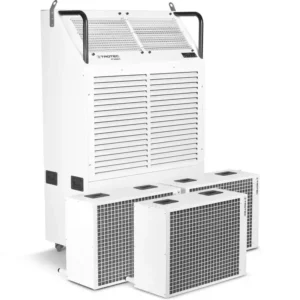
Demanding environments rely on heavy-duty commercial air conditioners and air coolers built for continuous operation and straightforward serviceability.
How to Keep Your Air Conditioner Operating Efficiently
In addition to scheduling professional service visits, you can preserve equipment performance by adopting a few practical operating habits:
- Maintain outdoor clearance: Ensure at least 50 cm of unobstructed space around the outdoor unit. Keep the condenser coil and fan grille clear of leaves, grass clippings, dirt, and winter snowdrifts.
- Clean dust filters on schedule: Never allow a heavy dust crust to build up on the filters. Rinse them clean under lukewarm running water and let them dry completely before reinstalling.
- Set sensible thermostat targets: Keeping indoor temperatures around 22–24 °C delivers excellent comfort without placing excessive strain on the compressor.
- Test the system before hot weather arrives: Run your air conditioner in cooling mode for a short test cycle in the spring. If you notice weak airflow, strange noises, or poor cooling, schedule a service call before seasonal technician schedules fill up.
Find the ideal setup for your property among our broad selection of air conditioners and heat pumps.
Frequently Asked Questions
For residential units, dust filters should be rinsed every 2 to 4 weeks during regular use. A full professional service—including chemical coil cleaning, electrical checks, and pressure testing—should be performed once a year before the cooling season. Commercial systems with heavy runtimes typically require servicing 2 to 4 times per year.
Musty odors stem from a buildup of moisture, dust, bacteria, and mold inside the indoor evaporator coil and condensate drain tray. A thorough chemical cleaning and antibacterial disinfection by a professional will eliminate the contamination and restore fresh airflow.
No. An air conditioning system is a sealed, hermetic circuit that does not consume refrigerant during normal operation. If the refrigerant level drops, there is a leak in the system. The leak must be located and permanently repaired before the correct amount of refrigerant is recharged into the unit.