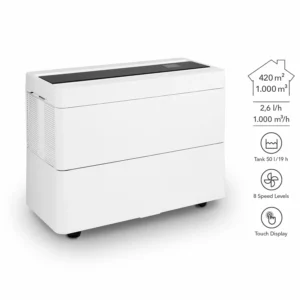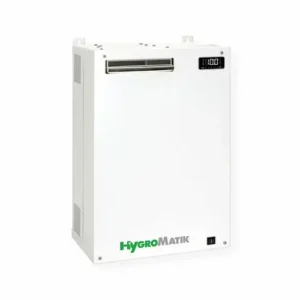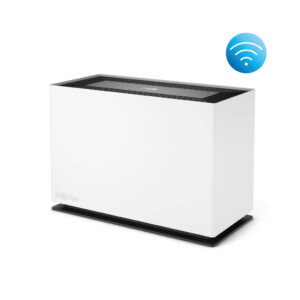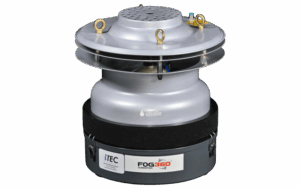





HygroMatik StandardLine 3.3 – 67 kg/h Air Humidifier
StandardLine Air Humidifiers.
Reliable and economical.
HygroMatik StandardLine is a solution for reliable steam humidification that offers a particularly attractive cost-to-performance ratio. A steam humidifier featuring high-quality workmanship, a well-designed structure, and ease of maintenance. Depending on the water quality, you can choose between electrodes and heating elements of the heating body type.
A cost-effective, affordable solution of the highest quality.
All the benefits at a glance.
- Reliable steam cleaning at an affordable price
- Compact and space-saving
- Extremely easy to maintain
- Corrosion-resistant stainless steel sink
- Automatically Adaptive Water Management
- Hygienic humidification with mineral-free steam
One humidifier—two options.
StandardLine can be ordered either as an electrode or as a steam humidifier with a heating element.
Full-surface electrodes
Electrode steam humidifiers are the optimal solution when simple and reliable steam humidification is required. Thanks to their substantial material thickness, HygroMatik’s solid full-surface electrodes are particularly durable and well-suited for use with tap water. The electrodes need to be replaced less frequently, which in turn keeps maintenance costs low.
Heating Element
Steam cylinders with resistance heating elements made of a highly corrosion-resistant alloy are suitable for a wide range of water qualities, particularly treated water. They offer extremely high control accuracy and ensure virtually continuous and maintenance-free operation.
Application:
In the printing and paper industries, controlling humidity is essential to ensuring the high quality of materials and processes, as both are highly sensitive to changes in humidity levels.
Since wood is a natural raw material that absorbs and releases moisture depending on the surrounding environment, indoor humidity levels can significantly affect the use of wood and the manufacturing process.
Electrostatic discharge (ESD) is more likely to occur when the air is too dry (relative humidity below 45%). Maintaining the proper humidity level can prevent costly damage to sensitive components or disruptions to the production process.
In data centers, electronic components—and processors in particular—generate a great deal of heat while in operation. Regulating indoor humidity is a highly effective and cost-efficient way to cool the air back down to the required indoor temperature.
Optimal humidity reduces the risk of yarn fraying and breaking during the production process. Humidification also helps maintain machine speed and productivity levels.
Friction can cause plastic materials to become electrostatically charged. Precise and consistent humidity ensures better conductivity of the ambient air, which helps prevent production downtime and damage.
Laboratories and clean rooms.
Temperature and relative humidity play a crucial role in laboratories and cleanrooms, as these environments require stable and controllable atmospheric conditions to ensure comparable and consistent results.
The quality and freshness of food products can only be achieved through optimal humidity. The right humidity level can prevent food from drying out and losing weight. At the same time, ideal humidity promotes the ripening process of certain foods.
Healthy growth in agricultural areas depends largely on the right level of humidity. Low air humidity can cause stress in plants, leading to slower growth or even damage.
The development and manufacture of medical products require controlled humidity to ensure maximum quality and efficiency while maintaining a hygienic process without disruption
Offices and conference rooms.
Employee performance depends largely on motivation, focus, and a healthy lifestyle. A pleasant indoor environment with optimal humidity levels can provide the ideal foundation for improving performance and saving energy costs.
Hotels and conference centers.
A healthy and user-friendly environment plays an important role in hotels and conference centers, as ensuring a pleasant experience for guests is one of the most important aspects.
Comfortable learning environments make people more receptive and better able to focus on their work. However, in a large room with many people, a feeling of fatigue can set in quickly. Optimizing humidity levels can provide relief in such cases.
The climate and atmosphere of a location can significantly influence the shopping experience. People prefer to spend more time in a pleasant atmosphere, which can be achieved through optimal humidity levels.
Humidification is essential in museums and galleries, as they often house priceless artifacts that require a controlled and consistent indoor climate to prevent damage.
Since the primary focus in hospitals and doctors’ offices is on patient care and recovery, a healthy environment plays a crucial role in the quality of the services provided by a medical facility.
Cruise ships and the open sea.
Cruise ships require a large amount of cooling for their air conditioning systems. Adiabatic cooling systems are an efficient and cost-effective solution. Controlled humidity creates a pleasant and healthy environment on board.
Libraries and used bookstores.
Regulating indoor humidity in libraries and bookstores helps prevent damage and slows down the aging of books. Depending on the temperature, paper absorbs and releases moisture into the outside air. Dry air can make paper brittle and weak, causing it to tear easily and more quickly