

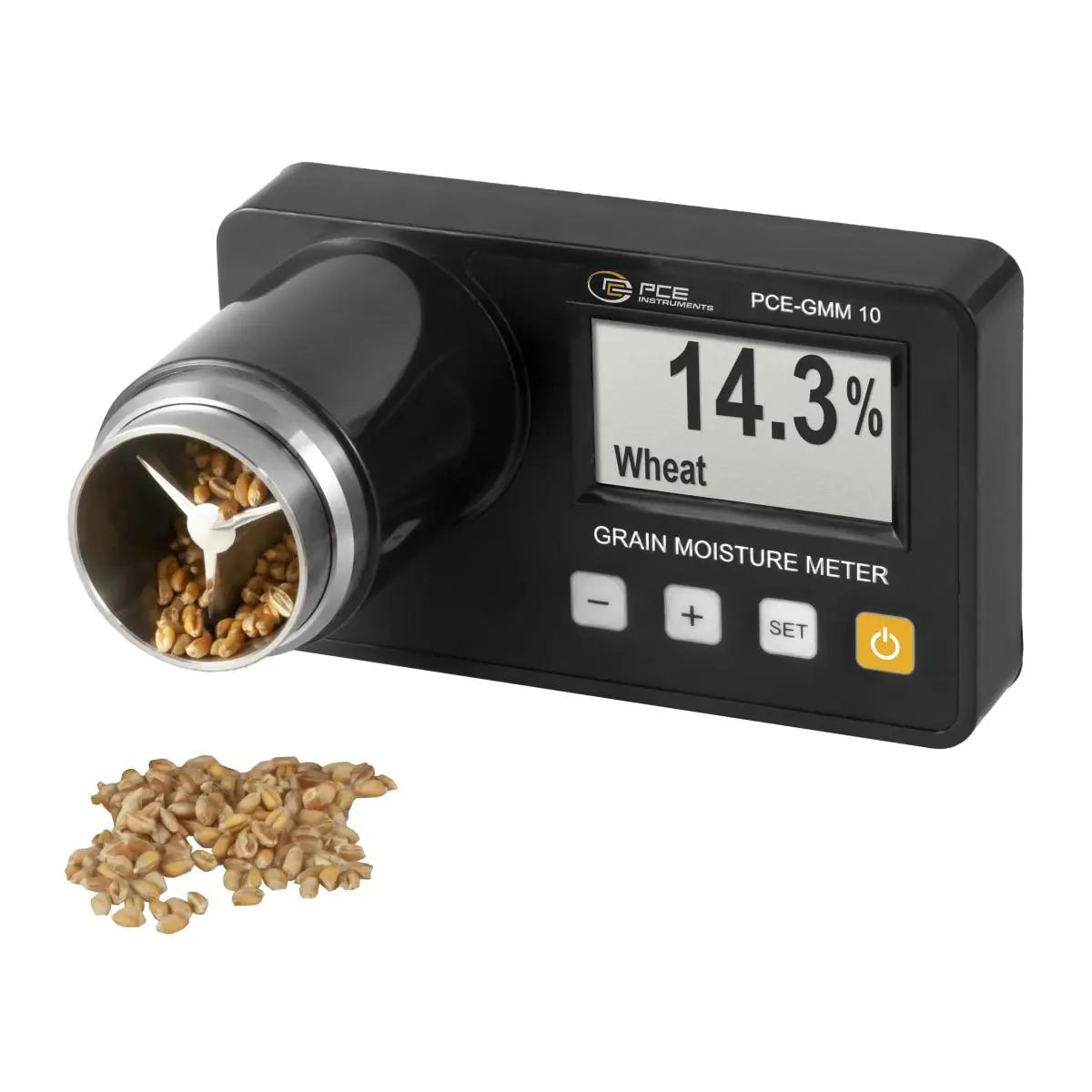
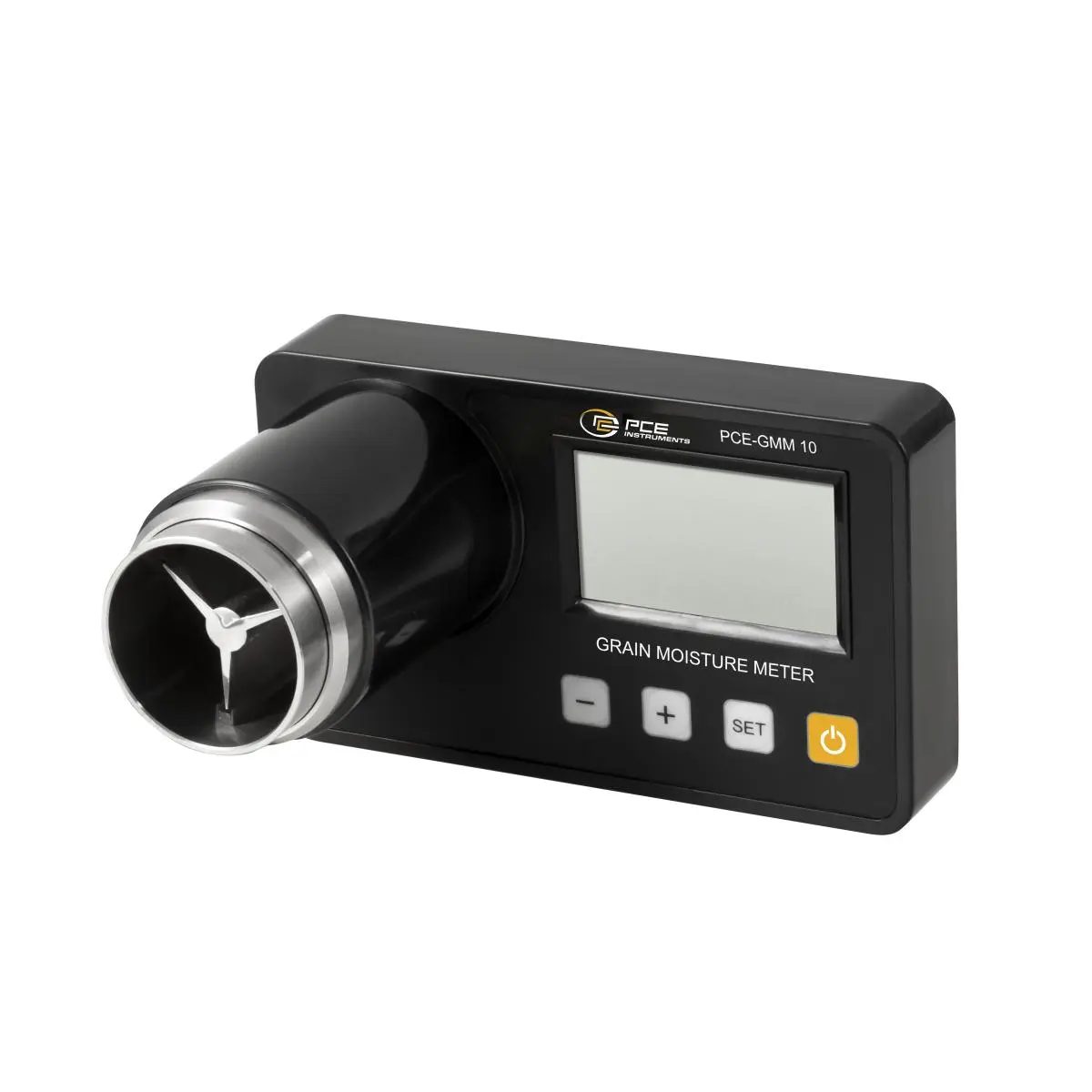
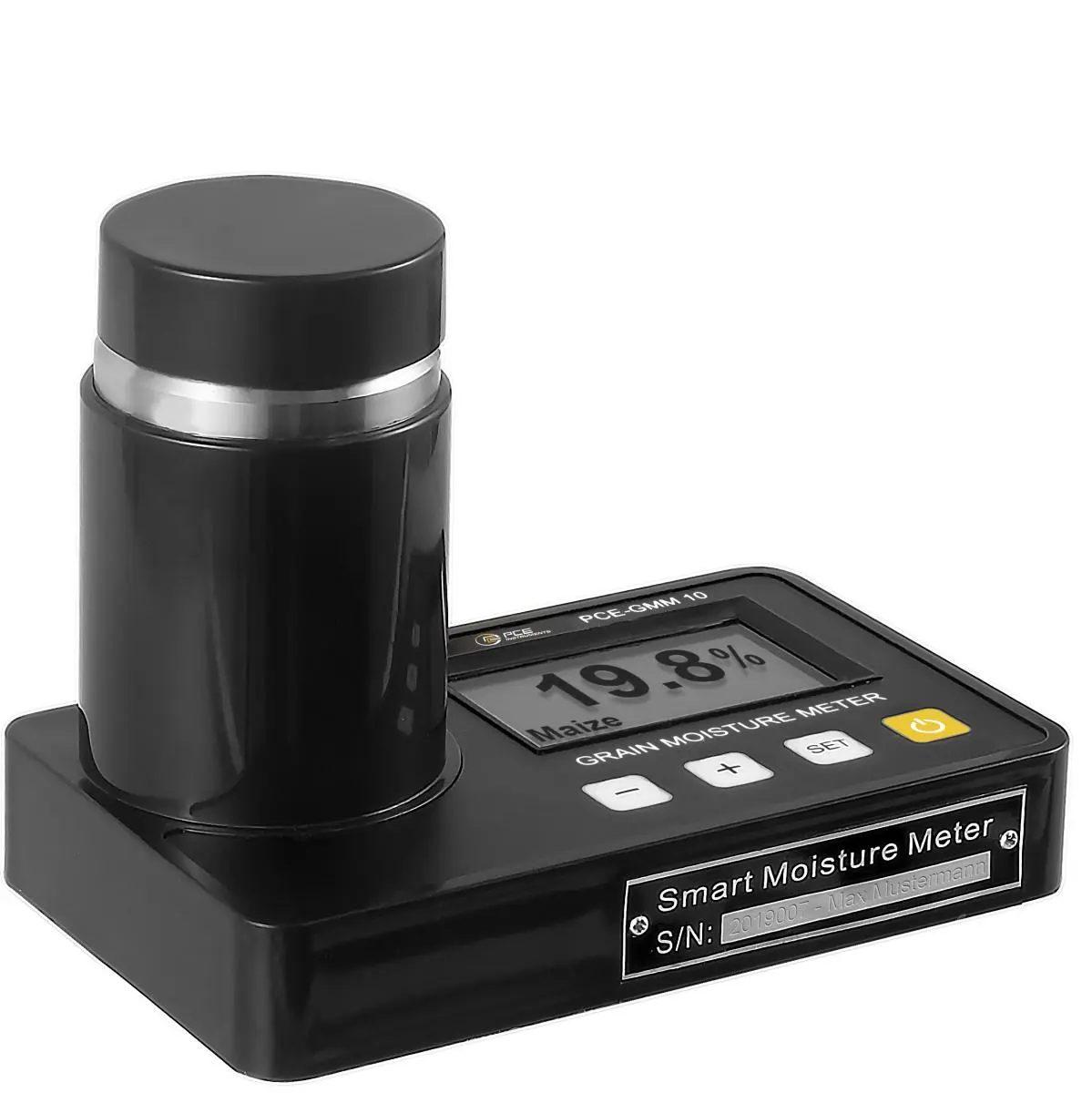
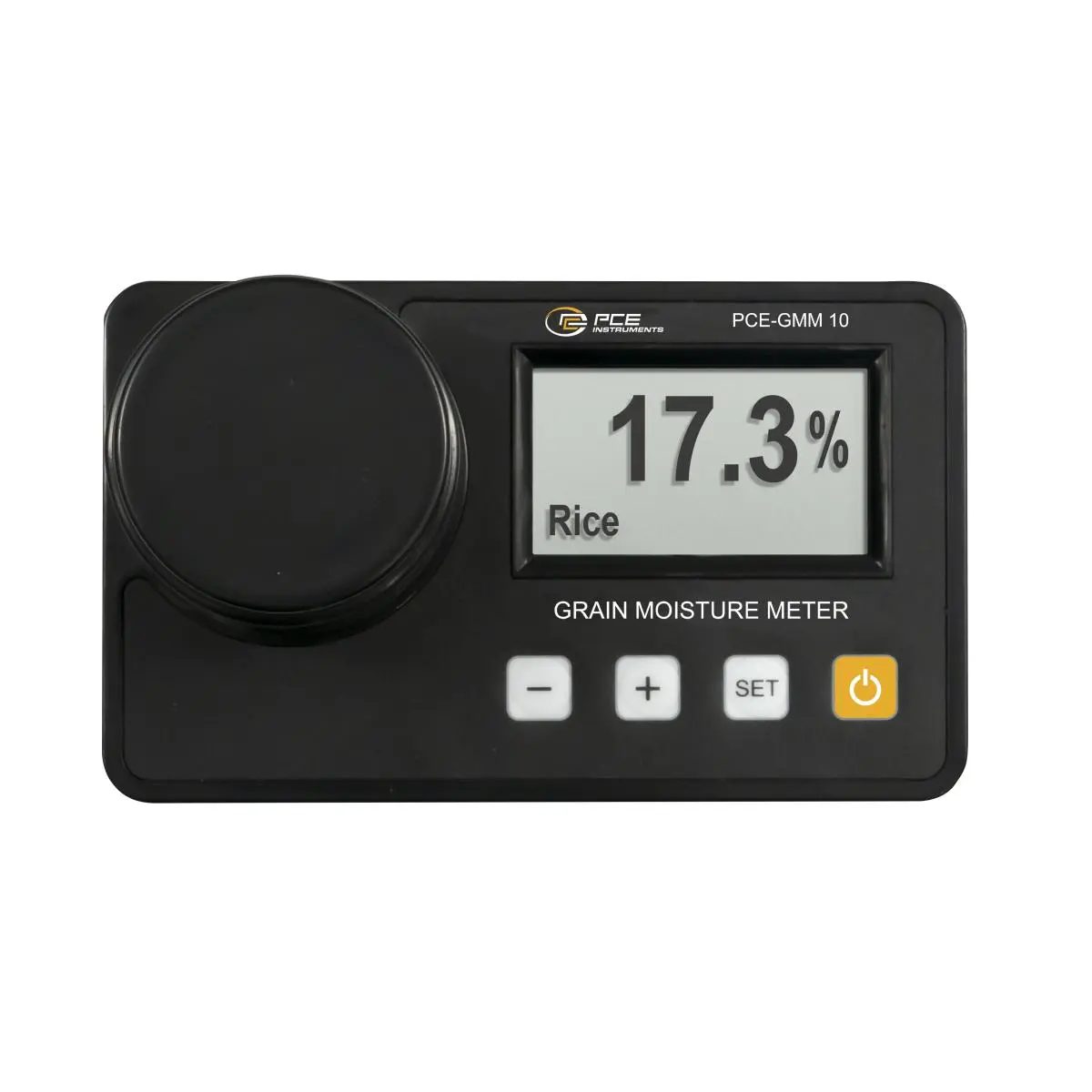



Moisture Meter / Grain Moisture Meter PCE – GMM 10
grain moisture meter for 18 different types of grain / small sample amount / LC display automatic temperature compensation / manual measurement correction possible / whole grain measuring device
When it goes about the storage, shelf life and quality of the grain, the moisture of the grain plays a crucial role. Therefore, care and monitoring of the condition of the grain is essential before, during and after the storage. An ideal help here is the grain moisture meter from PCE Instruments. With the grain moisture meter, the moisture can be measured easily, conveniently and particularly accurately and thus the bulk material can be protected from spoilage. The grain moisture meter was specially developed to reliably determine the moisture content in 18 different types of grain (wheat, maize, japonica rice, Indian rice, soybeans, rice, sorghum, rapeseed, millet, peanuts, barley, sunflower seeds, coffee beans, cocoa beans, sesame, almond, linseed). Grain is a basic food for humans and animals and is e.g. also used as a raw material for the production of such products as spirits.
In order to store wheat, corn, millet and other types of grain without the grain being damaged, it must first be dried. Grains can only be stored when the moisture content reaches 14.5 percent. However, since it is often harvested in a damp weather, a subsequent drying process is required. This is the only way to remove the excessive moisture from the grain. If the grain contains too much moisture during the storage, there is a high risk of the fungal attack, which makes the grain unusable. Moisture can be determined quickly and easily with the grain moisture meter from PCE Instruments, a whole grain moisture meter. Basically, the following applies: the drier the grain, the less likely it is that bacteria and fungi will spread. The measuring range of the grain moisture meter is big and goes from 4.5 to 40 percent depending on the grain type. After drying, depending on the application case, the grain is partially moistened again to 16 to 17%. This is done when the grain is to be ground. 14% moisture is too low for grinding, so, the grain moisture meter can also be used to determine the boundary between storable and grindable grains.
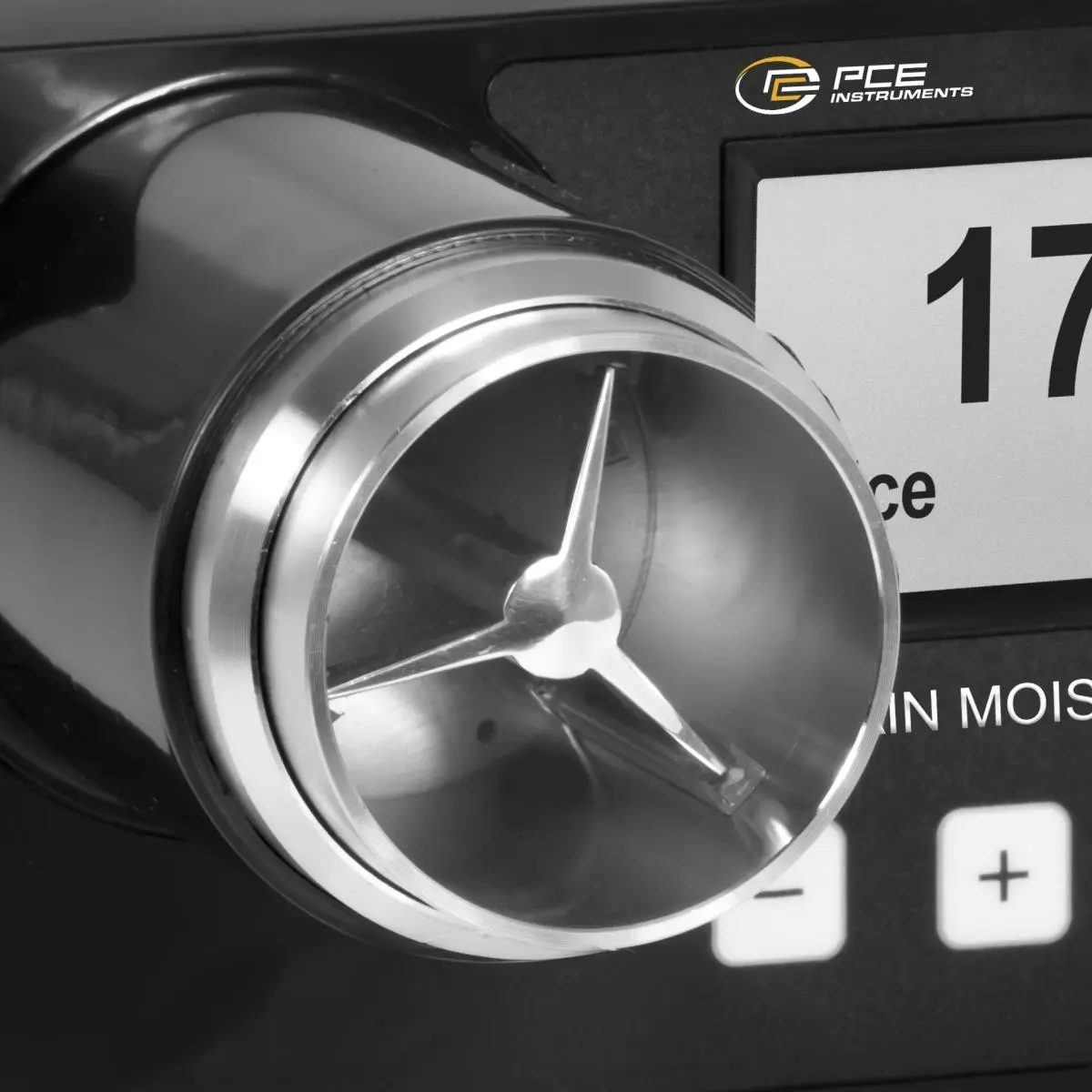
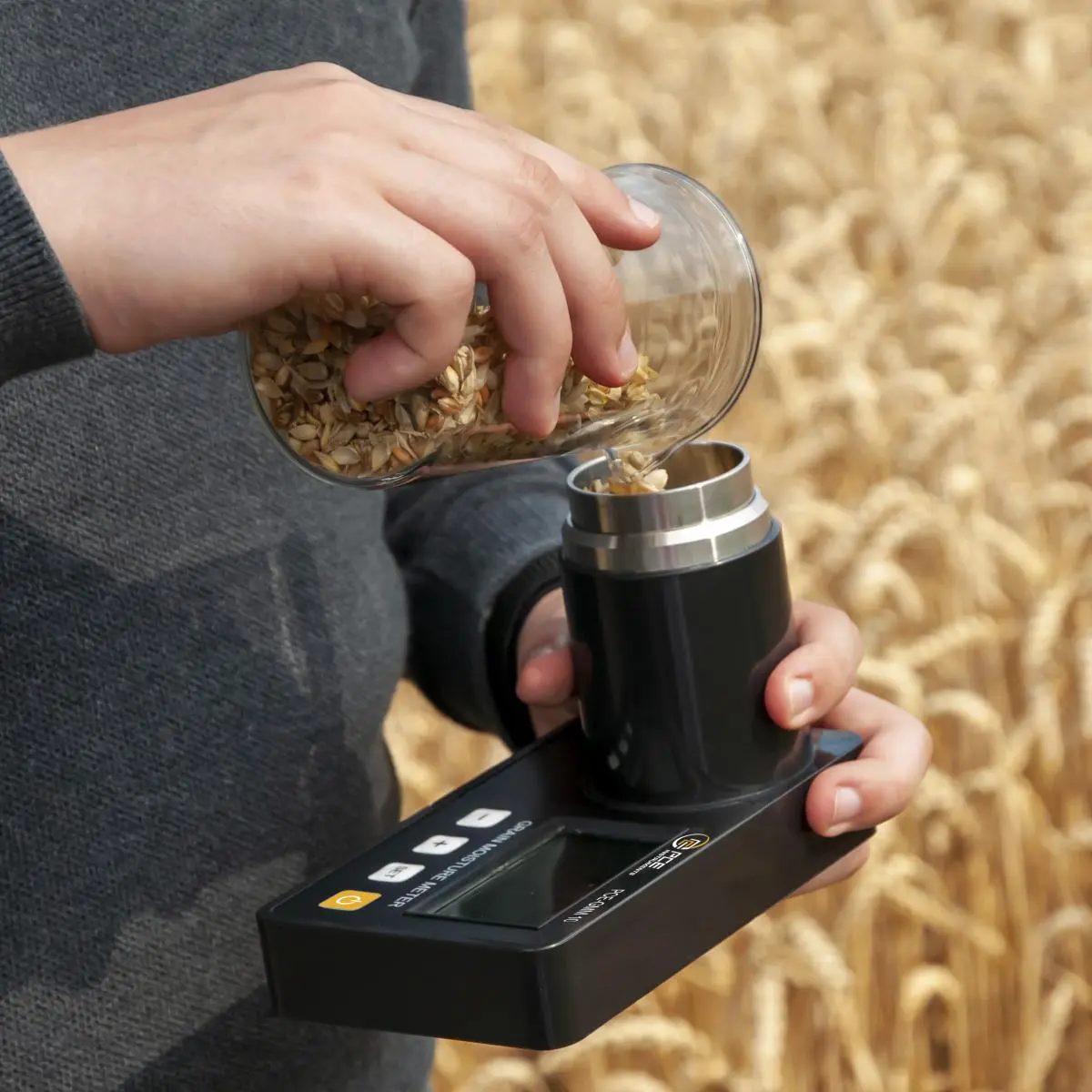
To measure the moisture content, the grain moisture meter only requires a very small sample volume of around 65 millilitres. For determination of the moisture content, the grain sample is filled into the small measuring container of the grain moisture meter, which can be cleaned quickly and easily after use. Grain crushing is not necessary to measure the moisture content. The grain moisture meter automatically performs temperature compensation during the measurement. The grain moisture meter shows the measurement results directly on the large LC display. The battery-powered grain moisture meter is extremely easy to operate with just four buttons. To protect the battery, the grain moisture meter automatically switches to sleep mode after three minutes of non-use. In addition, the grain moisture meter has a practical adjustment option in order to carry out the recalibration of the device.
Areas of Application for Grain Moisture Meter
The user-friendly grain moisture meter is ideal for the reliable determination of moisture in 18 different types of grain. The compact and handy design as well as the battery operation of the grain moisture meter guarantee flexible, location-independent application. Due to its small size, one can always carry the grain moisture meter and thus have an overview of the grain moisture any time, be it during storage, drying or threshing. The grain moisture meter from PCE Instruments is ideal for determining the important indicators for the grain storage and its quality. The grain moisture meter from PCE is also an important auxiliary device in the mills and grain stores or in the grain and legumes processing industries.
Furthermore, the grain moisture meter is a helpful tool for carrying out regular quality controls in the field of grain cultivation. With this moisture meter, one can decide directly on the field whether the grain harvesting at an appropriate time already makes sense or not. Thus, the waiting times for the results of the external service providers can be reduced, which on the one hand saves the costs and on the other hand reduces the downtimes of the harvesting machines. The grain moisture meter can thus help to reduce the costs and increase the efficiency during the grain harvesting and processing.
Highlights
- small amount of sample
- for 18 types of grain
- possibility of adjustment
- temperature compensation
- easy handling
- graphic display
Technical specifications
Absolute moisture Material Agricultural commodities Measuring range 4,5 … 40 % Resolution 0,1 % Accuracy 0.2 % General technical data Repeat accuracy 0,2 % Temperature compensation automatic Display type LCD graphic display with backlight Display size 2,8 Inch Automatic power-off 3 min Sample quantity ca. 65 ml Menu language English, English (GB) Protection class (device)IP20 (Rechargeable) battery 1 x 9 V 9V block , Alkali-manganese Capacity 640 mAh Operating conditions 0 … 40 °C , 0 … 90 % RH Storage conditions 0 … 40 °C , 0 … 90 % RH Dimensions ( L x W x H )160 x 95 x 120 mm Weight 816 g
Delivery scope
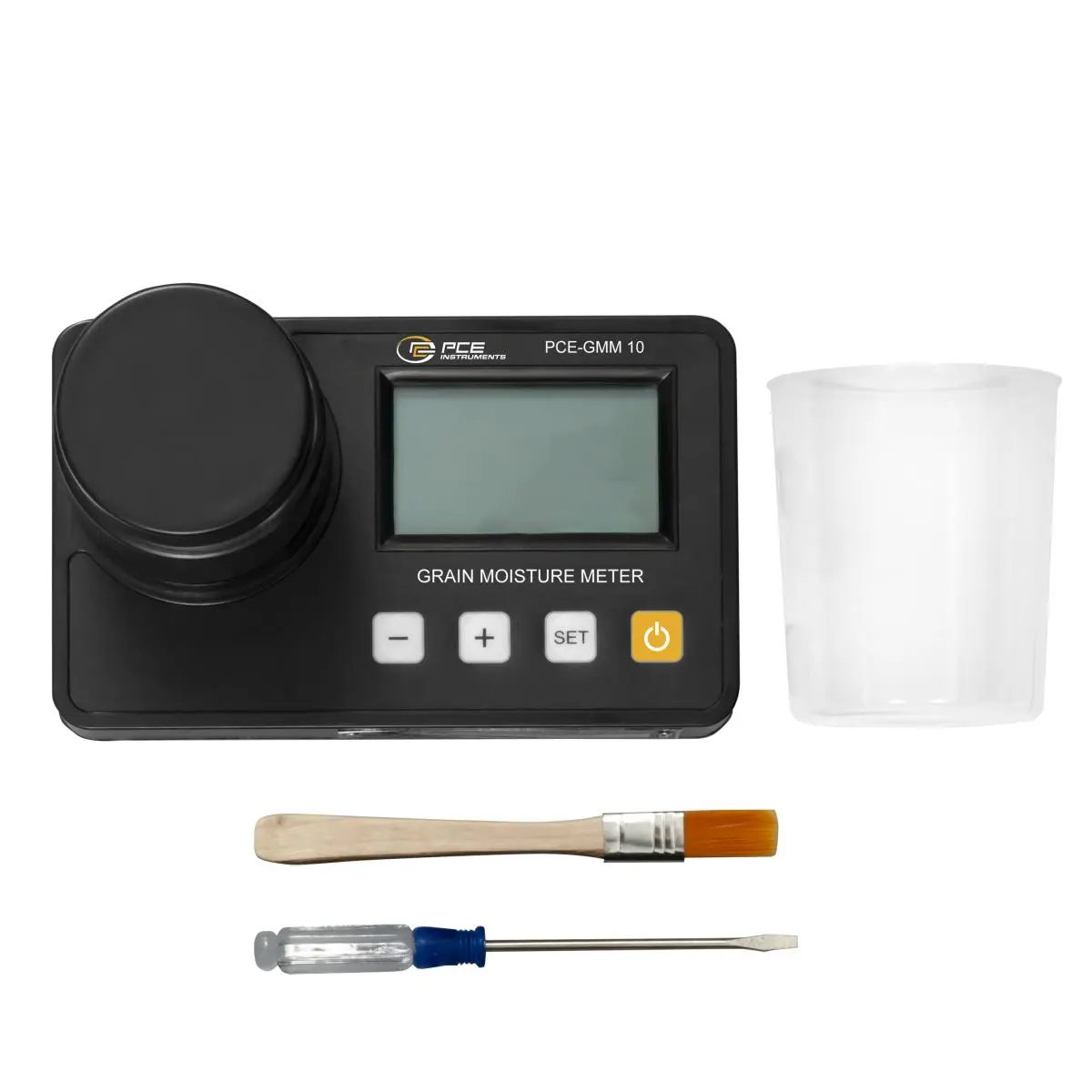
1 x Absolute Moisture Meter PCE-GMM 10 1 x Carrying case 1 x Cleaning brush 1 x Screwdriver 1 x 9V block battery 1 x User manual