


Save on heating costs! Many people are following this motto this winter. The heating thermostat remains turned off for as long as possible. What starts out as a well-intentioned effort to reduce consumption can quickly backfire. If you lower the temperature too much without understanding the relationship between room temperature and humidity, you risk mold growth and health problems.
How does mold grow in the home?
This issue was discussed in detail at this year’s mold conference, organized by the Federal Association for Mold Remediation (BSS). “In many cases, more powerful ventilation cannot compensate for reduced space heating. This does not mean that mold cannot be prevented with less heating, but if you are unaware of these connections, a miscalculation can create a mold risk despite intensive ventilation,” warns the Federal Association for Mold Remediation .
“When it’s damp, mold always grows,” says Wolfgang Lorenz of BSS. When the humidity is below 60%, mold usually doesn’t stand a chance. However, if the humidity in a room is regularly higher, mold spores find an optimal surface on which to spread.
Why does a low room temperature promote mold growth?
The amount of water that indoor air can hold depends on the room temperature. At 19 degrees, the air can hold significantly more water than at 12 degrees.
The cooler the room, the greater the risk of mold growth. In cool rooms where humidity is consistently above 70 percent, excess moisture condenses on the inside of window panes, walls, or furniture—creating mold colonies. The risk of mold is particularly high in unheated sunrooms and bedrooms, where temperatures are usually cooler.
How can you identify the risk of mold?
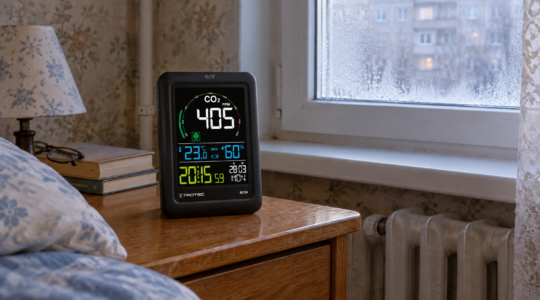
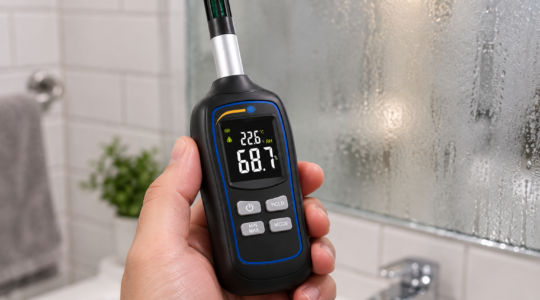
If you want to understand and reduce the risk of mold in your home, you should monitor the room temperature and humidity. Preventing mold is cost-effective and easy.
How can you prevent mold?
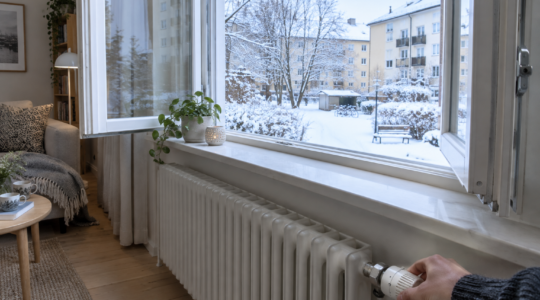
Regular ventilation is part of mold prevention. This allows the warm, humid indoor air to be replaced by the generally cooler outdoor air. But be careful: average humidity is about 85% in the summer and 70% in the winter. Values that deviate from these are not uncommon. If you ventilate a room with high humidity by opening a window to the outside, the humidity problem can sometimes get even worse.
Dehumidifiers reduce the risk of mold growth
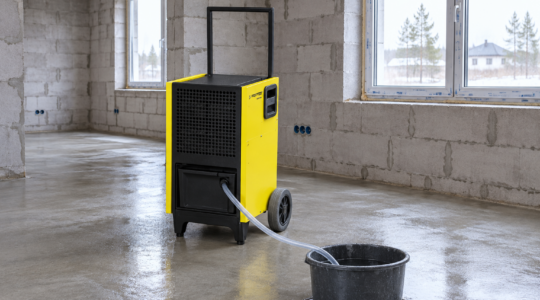
Indoors, Trotec portable dehumidifiers—available in various designs (adsorption dehumidifiers, Peltier dehumidifiers) and are suitable for rooms of all sizes. These dehumidifiers work fully automatically to ensure that the natural moisture generated by cooking, breathing, washing, or drying does not condense on window panes, walls, or furniture.
How much electricity do dehumidifiers use?
Should you connect an additional electrical appliance to save on energy costs? Is it worth it?
Trotec comfort dehumidifiers use surprisingly little energy thanks to their hygrostat-controlled automatic moisture removal. The unit’s intelligent sensors constantly monitor the room’s humidity. Only when the humidity threatens to exceed the preset target value does the unit turn on and dehumidify the room air. Once the desired room humidity level is reached, the unit automatically turns off again. Thanks to this energy-efficient automatic dehumidification system, the operating costs of the dehumidifier are typically significantly lower than the costs that would be incurred by continuously running the room’s heating system to reduce the risk of mold growth.