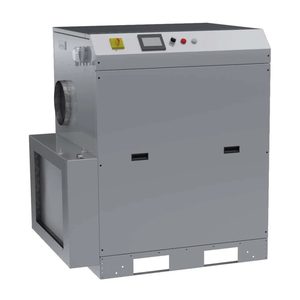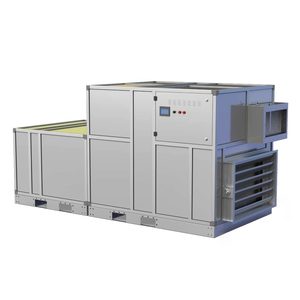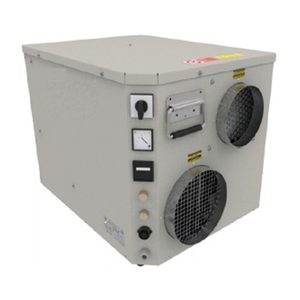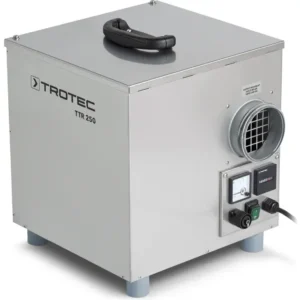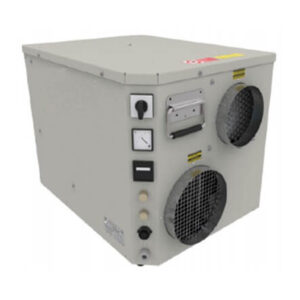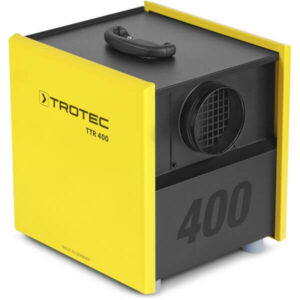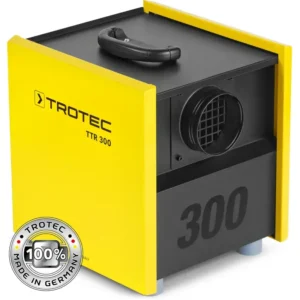






TTR 13500 Adsorption Air Dryer
TTR13500 Adsorption Air Dryer—the most powerful unit on the market—manufactured in Germany.
Advantages:
- Professional quality “made in Germany” — Original Troteci products
- High moisture removal performance even at low dew points
- Sturdy steel body, galvanized and painted
- Reliable silica gel sorption rotor
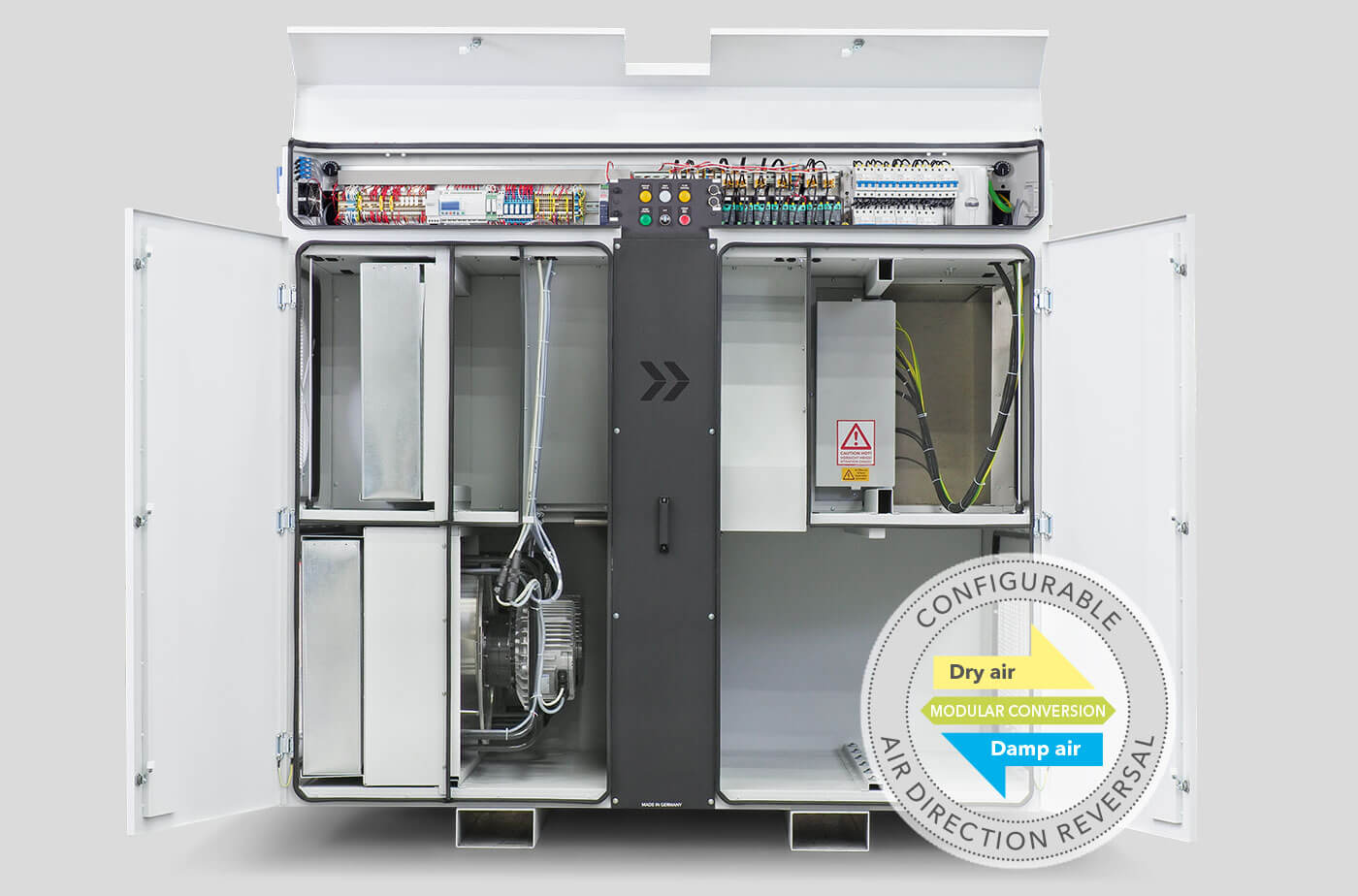
- Configurable airflow direction adjustment (easy adjustment)
- Dual-fan control – the performance of each fan can be adjusted separately using a potentiometer
- Millennium PLC Controller
- Flowmatic control unit for maintaining a specified volume flow or a constant target pressure
- TTR Trisorp dual-principle system with separate routing of process and regeneration air for pressure-neutral circulating air operation
- Electric Regenerative Heating System
- Filter Monitoring (Airflow and Collective Warning Light)
- Thanks to its many configuration options, it can be customized for almost any application
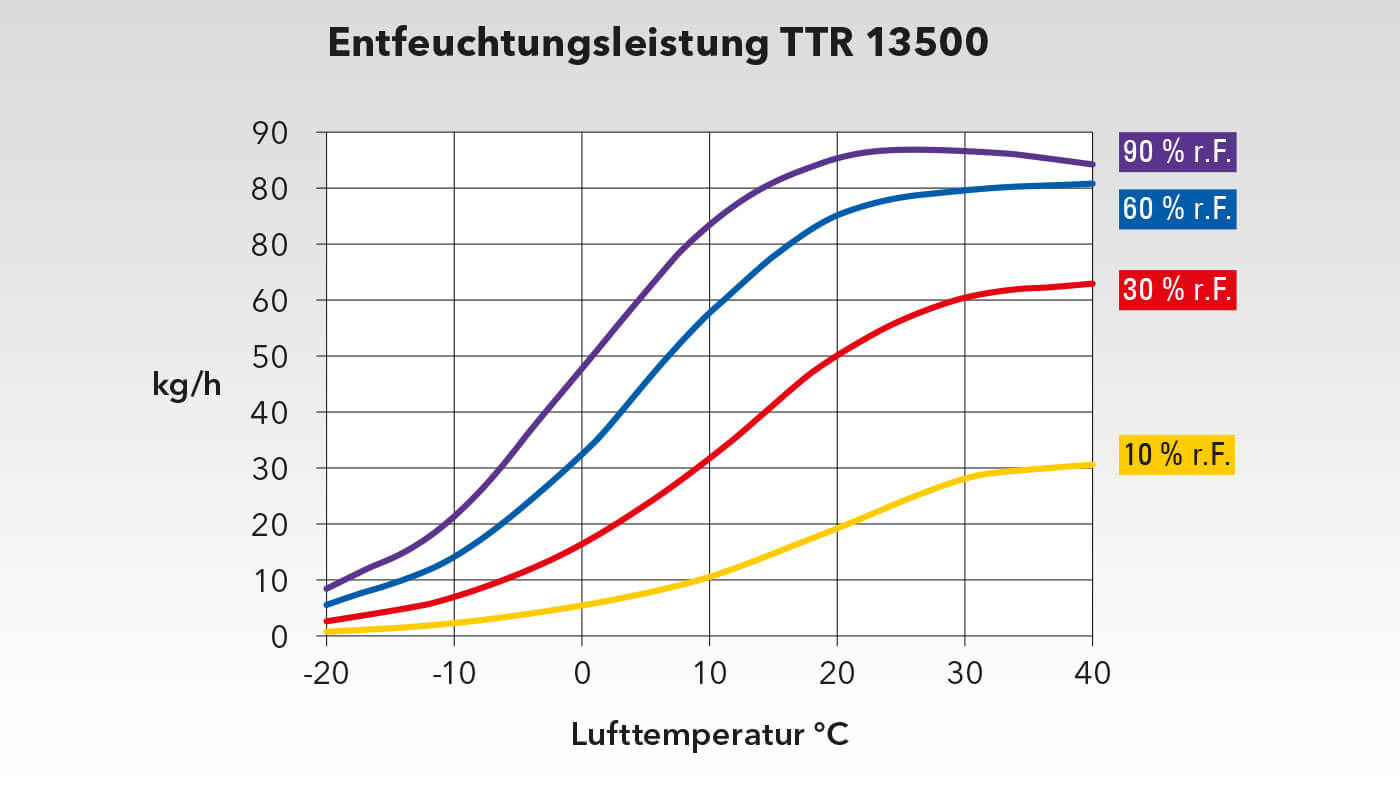
The TTR 13500 adsorption air dryer has a nominal drying capacity of approximately 1,790 kilograms per day and a nominal air flow rate of 13,300 cubic meters of dry air per hour at a static pressure of 400 Pa. The TTR 13500 dehumidifier is optimally equipped to generate very high volumes of dry air even in cool environments (low dew point).
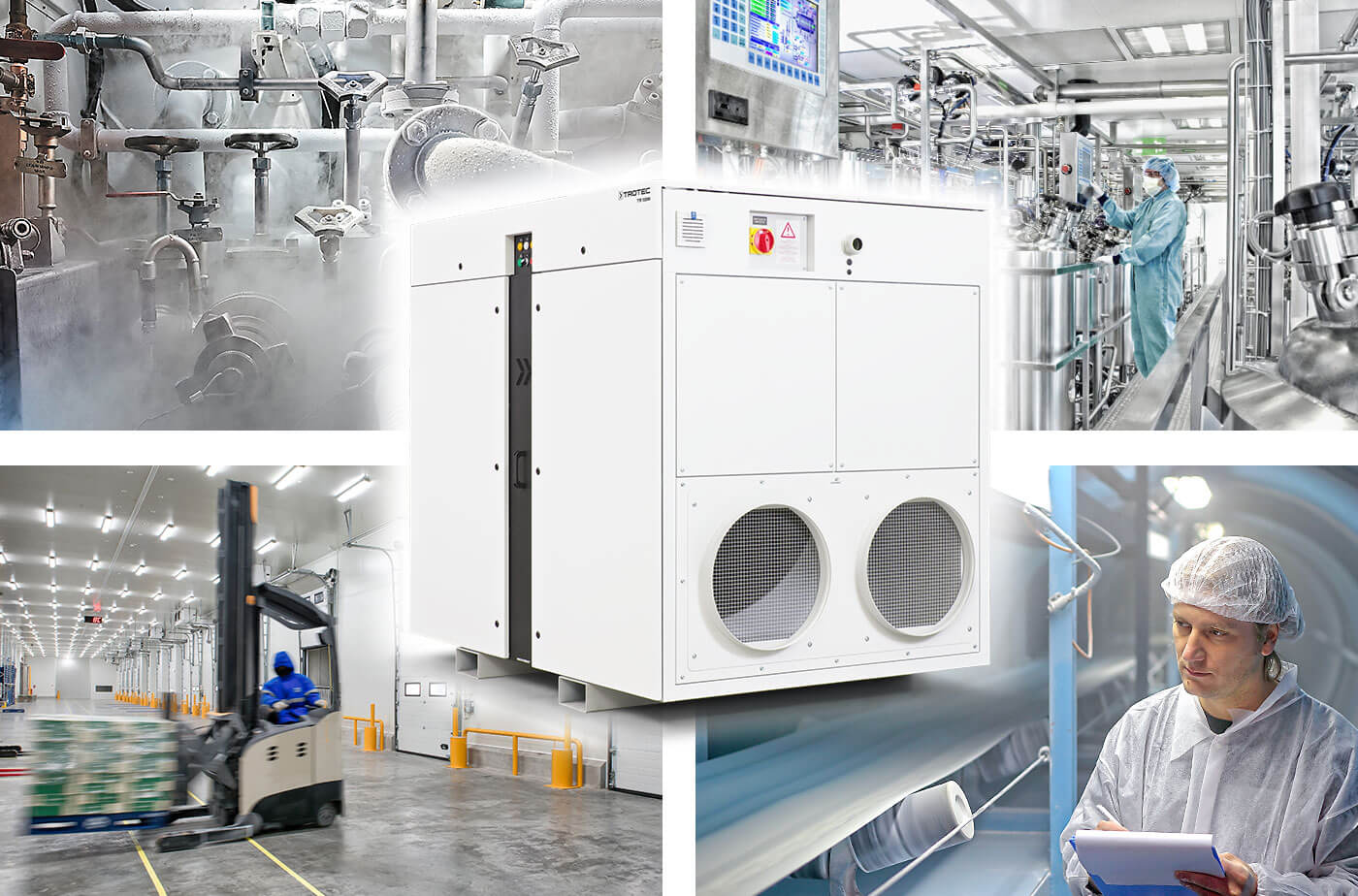
Optimal conditions, for example, for maintaining a constant dry state or for generating dry air in the chemical, pharmaceutical, and food industries, as well as in mechanical engineering, as well as for protecting machinery, equipment, and buildings from corrosion, condensation, or mold growth, for example, in water systems or electrical control centers.
High performance – made in Germany
The TTR 13500 boasts a durable and low-maintenance design and an exceptionally long service life—after all, it is an adsorption dryer, which has been developed and manufactured in Germany according to Trotec’s highest original equipment manufacturing quality standards, incorporating exclusively efficient, branded components featuring the latest technology from leading component manufacturers.
The TTR 13500 high-performance fans are powered by energy-efficient EC motors, whose speeds can be adjusted independently of one another using the Duoventic controller.
Thanks to this integrated Duoventic airflow control, you can quickly configure the TTR 13500 dehumidifier to suit your needs without any modifications: very dry air with a low airflow, larger volumes of dry air, or maximum recirculation air capacity with a moderate airflow. Dry air ratio.
Flowmatic S reliably maintains the flow rate within the target range
The TTR 13500 adsorption dryer comes standard with a Flowmatic-S flow regulator, which automatically detects and compensates for pressure drops using sensors. The volume flow or pressure can be adjusted as needed via a control signal. As soon as the Flowmatic S detects deviations, it neutralizes them, thereby ensuring that the specified volume flow or pressure is maintained. This means you always have a steady flow of dry air in the required quantity.
The TTR series adsorption dryers use a vapor pressure gradient between the humid air and the hygroscopic sorbent—which has an ultra-large surface area and is built into the drying wheel—to dry the air. This process ensures high moisture removal performance even at low humidity and low air temperatures.
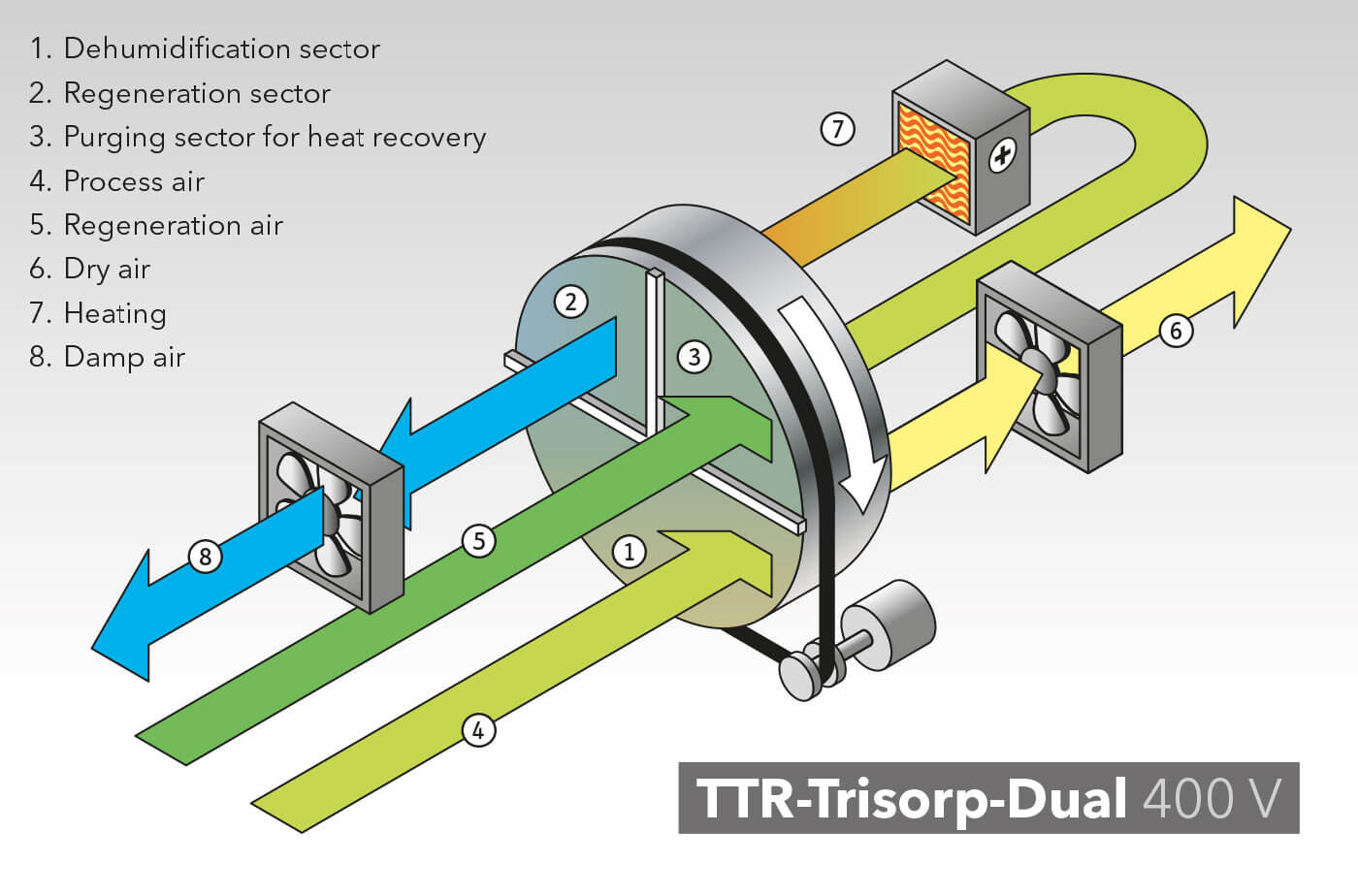
TTR Trisorp’s Dual Principle
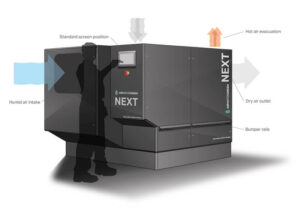
The TTR 13500 has two separate air ducts for process air and regeneration air, each equipped with a fan. The process air to be dried is drawn in by a fan and flows through the drying sector of the continuously rotating drying wheel, where the moisture it contains is removed by being bound to the sorbent, and it then flows out as dry air through the air outlet.
Regeneration air is also drawn in by a separate fan and directed through the rinsing section. Since the desiccant wheel heats up due to the heat of adsorption and the heat of regeneration, the desorption section is used to recover heat and cool the desiccant wheel, which also reduces the required energy input and improves moisture removal efficiency, especially at lower set points.
As the air flows through the heating register, it warms up and its relative humidity is greatly reduced, so that as the air passes through the regeneration section, it can reabsorb the moisture bound in the silica gel and be discharged outside through the moist regeneration air outlet.