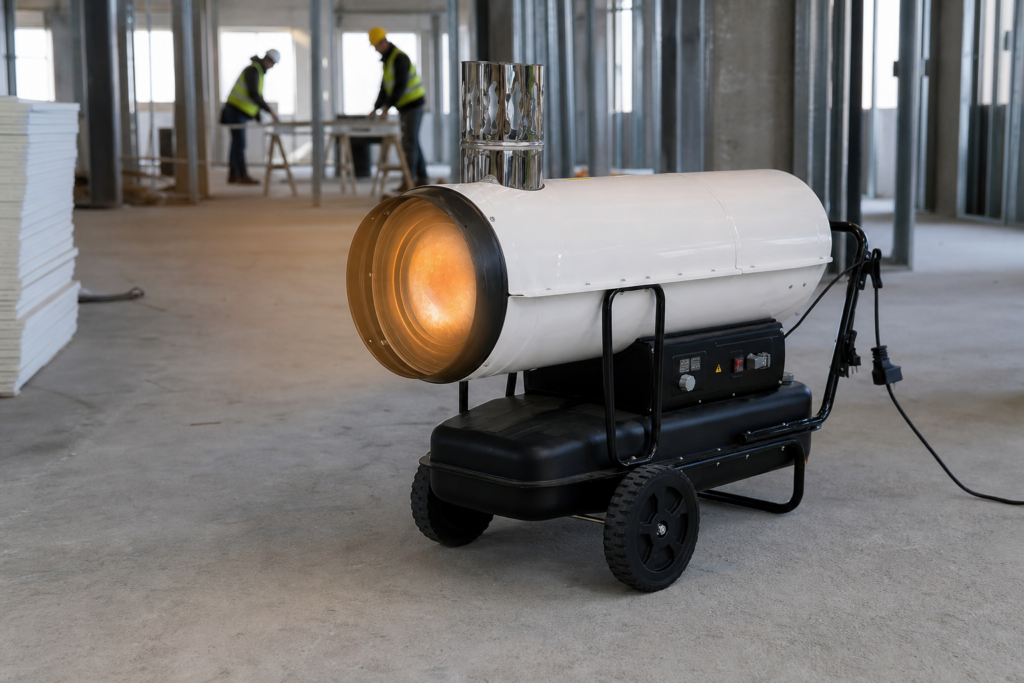
When sourcing heating equipment, businesses and homeowners face a fundamental question: is it better to buy outright or rent? Whether you need to dry out a construction site, heat an industrial warehouse, supplement office heating, or warm an outdoor patio, making the wrong call can tie up working capital in depreciating assets or lead to unnecessary overhead.
The right decision hinges on three key factors: expected duration of use, required heating output, and ongoing maintenance and storage costs. Below, we break down the economics of renting versus buying and look at the best equipment options across various applications.
When to Choose Heating Equipment Rental
Renting heating equipment is typically the most cost-effective approach for short-term, seasonal, or one-off requirements. If you only need heating for a few days up to a couple of months, renting avoids large capital expenditures and eliminates the hassle of post-season maintenance and storage.
Key scenarios where fan heater rental offers the greatest savings include:
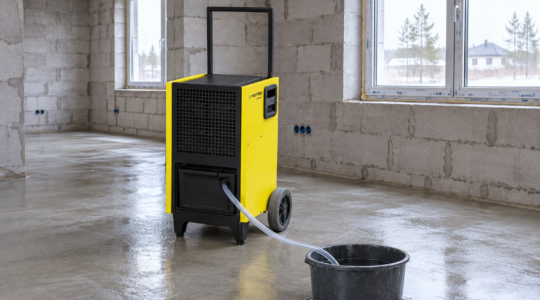
- Construction and renovation projects: Curing concrete, drying screed, or setting plaster requires intense heat for a limited window. Once the work is finished, the equipment is no longer needed.
- Emergency heating and boiler breakdowns: When primary heating systems fail, temporary units provide immediate heat to prevent frozen pipes and avoid costly operational downtime.
- Events and outdoor venues: Supplying temporary heating for marquees, party tents, trade fairs, or autumn gatherings over a single weekend.
- Winter peak-load management: Providing supplemental heat when primary systems cannot keep up with extreme sub-zero cold snaps in large warehouses or production facilities.
Renting also delivers clear financial predictability. Rental fees are classified directly as operating expenses (OpEx), freeing you from asset depreciation, pre-season servicing costs, and the need to allocate valuable storage space during warmer months.
When Is Buying Heating Equipment Worth It?
Purchasing heating equipment makes financial sense if you need reliable heating on an ongoing basis or throughout the winter season year after year. If you expect to run a unit for more than 2–3 months annually over multiple seasons, cumulative rental fees will quickly surpass the initial purchase price and routine maintenance costs.
Key advantages of buying include:
- Immediate on-site availability: Equipment is permanently on hand in your workshop, warehouse, or facility—ready to deploy without delivery lead times or rental paperwork.
- Long-term cost efficiency: Once the initial investment is amortized, ongoing expenses are limited solely to fuel or power consumption and routine maintenance.
- Custom specification: You have complete freedom to select a tailored heating setup sized precisely to your facility’s dimensions, insulation levels, and ventilation requirements.
Heating Solutions and Equipment Recommendations by Application
Every building and working environment presents unique heating challenges. To ensure reliable warmth and optimum fuel efficiency, choose equipment engineered for your specific space and ventilation conditions.
Construction Sites, Warehouses, and Industrial Facilities: Diesel Fan Heaters
For high-volume, open, or semi-open spaces, diesel fan heaters deliver the highest output and thermal efficiency. They fall into two main categories: direct-fired and indirect-fired models.
Direct-fired diesel heaters, such as the IDX series, release heat and combustion byproducts directly into the heated space. They operate at 100% thermal efficiency, making them ideal for well-ventilated industrial halls, open construction sites, and structural drying.
Indirect-fired diesel heaters, such as the IDE series, utilize an internal heat exchanger and exhaust flue. Combustion gases are vented outdoors via a flue pipe, delivering only clean, dry, fume-free warm air into the room. This makes indirect-fired heaters the go-to solution for enclosed workspaces, workshops, and event tents where people are present.
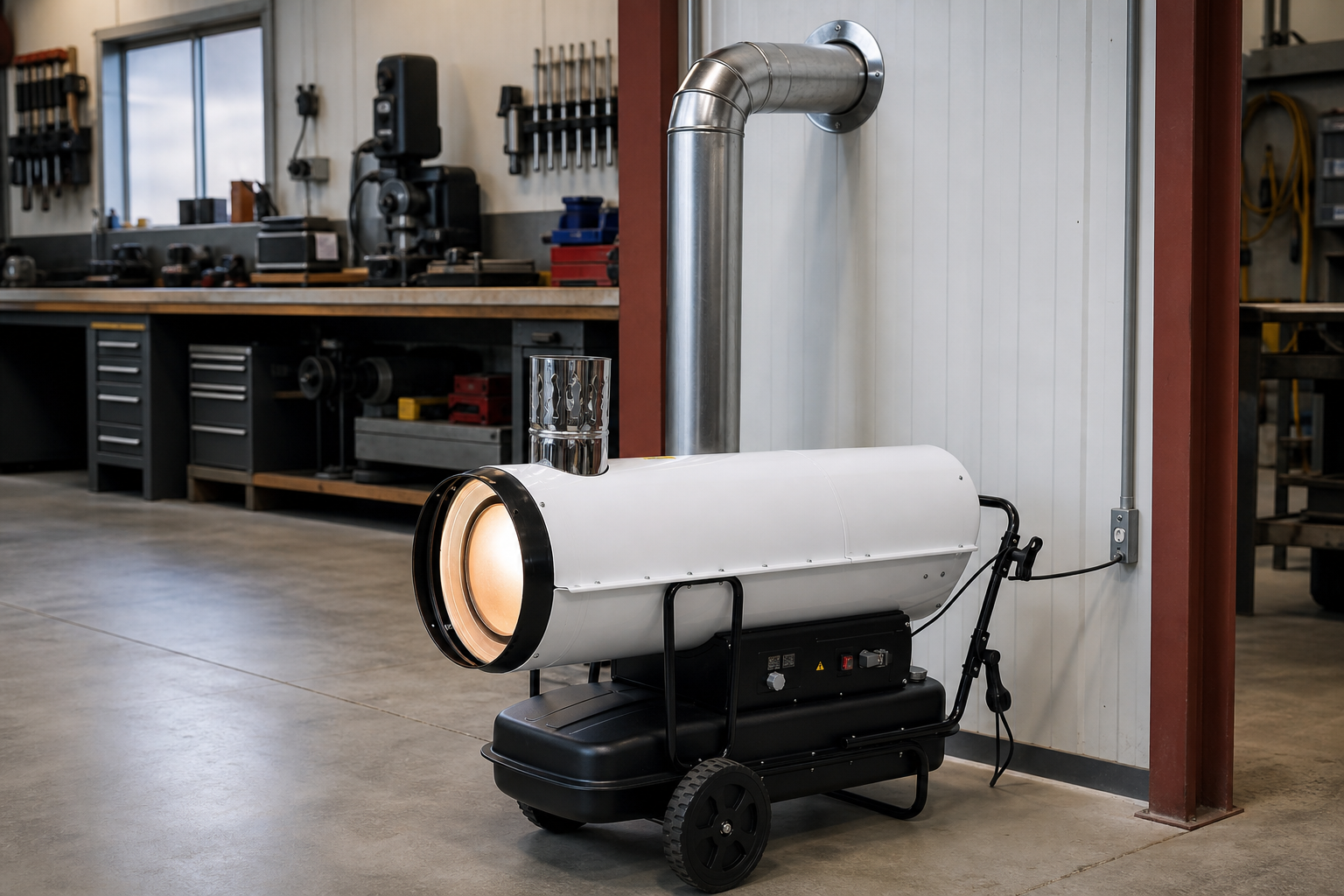
Designed for heavy-duty commercial environments, commercial and industrial heating equipment ensures a dependable heat supply even in buildings with substantial heat loss.


Workshops and Dust-Free Zones: Infrared Oil Heaters
Conventional fan heaters rely on forced-air convection, which constantly stirs up ambient dust. In environments dedicated to painting, varnishing, or fine finishing, airborne particles compromise surface quality and extend curing times.
Infrared oil heaters solve this problem by generating radiant heat. Instead of blowing air, they project thermal energy directly onto surfaces, walls, and equipment. This eliminates dust circulation while delivering targeted warmth—even in drafty workshops with open bay doors. For clean indoor spaces, dark infrared panels offer a discreet, completely odorless alternative.


Offices, Workspaces, and Living Areas: Ceramic and Smart Heaters
Work environments must maintain compliant, comfortable indoor conditions. For sedentary desk work, temperatures should ideally range between 20 °C and 25 °C. For detailed guidelines, read our guide on workplace temperature and thermal comfort in offices and workspaces.
Traditional coil heaters can dry out room air and create unpleasant burnt-dust odors. A superior indoor climate is achieved with ceramic fan heaters, which utilize PTC ceramic heating elements for rapid heat response, quiet operation, and improved energy efficiency.
For modern office and residential spaces, slim smart infrared panels can be paired with digital thermostats or mobile apps, automatically adjusting power consumption based on occupancy and operating schedules.


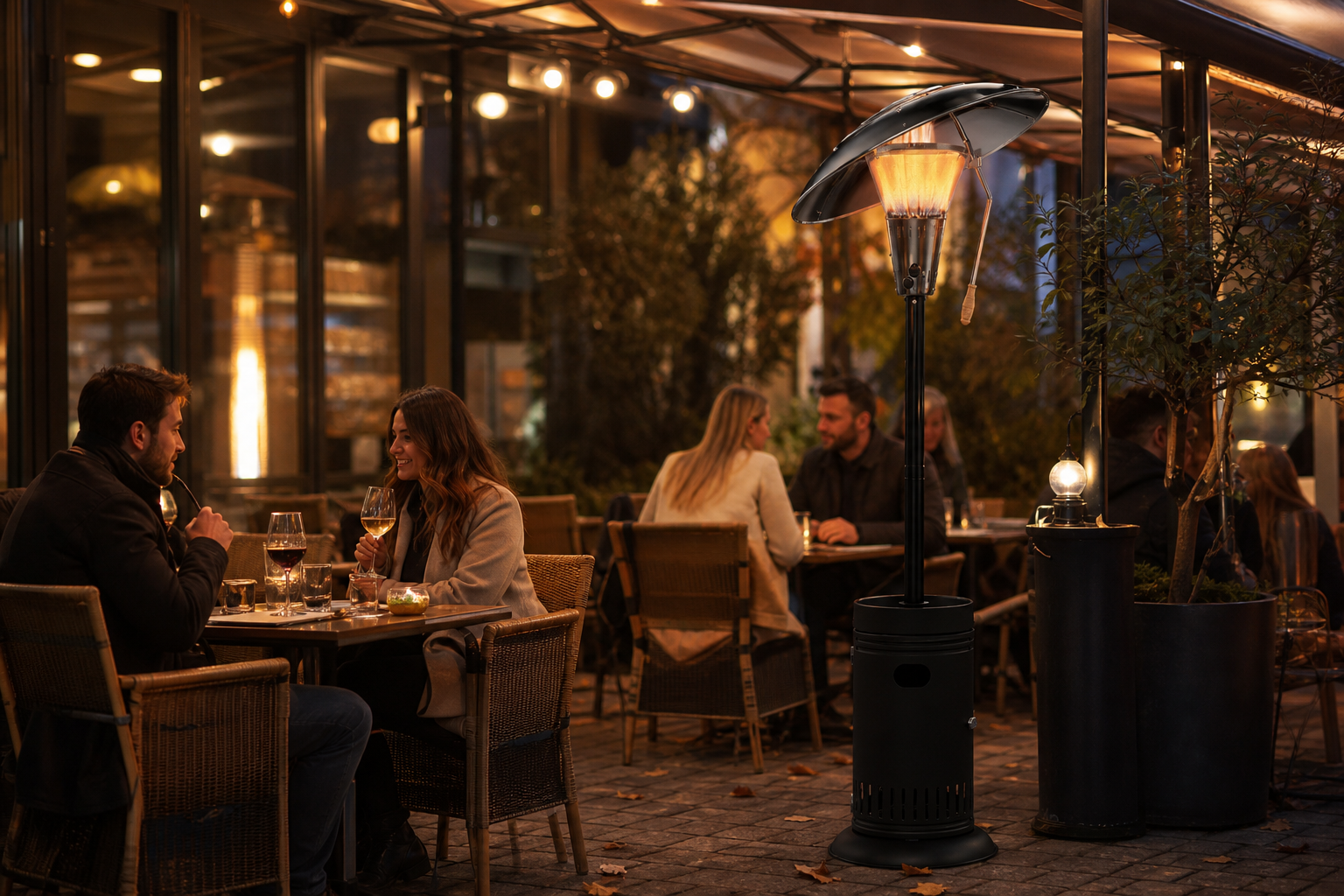
Patios, Outdoor Cafes, and Semi-Open Areas: Gas Heaters
Where electrical access is limited or unavailable, mobile gas heaters provide a powerful, self-contained heat source. Fueled by propane or butane, these units are ideal for outdoor terraces, canopies, and well-ventilated semi-open work areas, warming zones of 16–20 m² quickly and efficiently.

Decision Matrix: Renting vs. Buying
Use this direct comparison to evaluate your project requirements:
- Duration of use: Renting is best for short-term needs from 1 day to 2 months. Buying is more economical for permanent installations or seasonal use exceeding 2–3 months each year.
- Upfront capital: Renting requires minimal initial outlay (rental rate plus deposit). Buying involves a full upfront capital investment.
- Maintenance and servicing: Rental equipment is supplied pre-inspected and tested, with faults covered by the rental provider. Purchased equipment is maintained by the owner, backed by manufacturer warranties.
- Storage requirements: Rented units are simply returned when the project wraps up. Purchased units require dedicated, dry storage during the off-season.
- Flexibility: Renting allows you to scale heating capacity up or down as site conditions evolve. Purchased units have fixed performance parameters.
Finding the Right Heating Solution for Your Site
For temporary structural drying, unexpected breakdown coverage, or one-off events, renting delivers operational agility while keeping expenses strictly controlled. If, on the other hand, you need consistent heating for a production facility, workshop, or office year after year, purchasing equipment is the smarter, more cost-effective long-term investment.
Pro Air OÜ supplies a comprehensive range of high-performance heating equipment for both sale and rent. If you need assistance selecting equipment, our specialists can calculate the exact heating capacity required for your space to ensure dependable, energy-efficient performance.
Frequently Asked Questions
Buying generally becomes more economical when your operating requirements exceed 60 to 90 days per year, or when equipment is used consistently across multiple winter seasons.
Direct-fired heaters discharge heat and combustion exhaust directly into the heated space, requiring continuous, robust ventilation. Indirect-fired heaters use an internal heat exchanger and chimney flue to exhaust combustion gases outdoors, blowing only clean, fume-free warm air indoors.
The hirer is responsible for proper daily operation, general cleanliness, and supplying the correct fuel or electrical power. Routine technical maintenance, safety inspections, and resolving mechanical faults remain the responsibility of the rental provider.