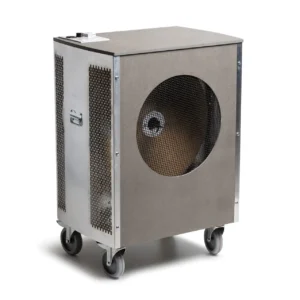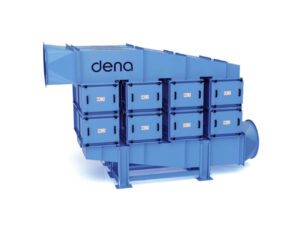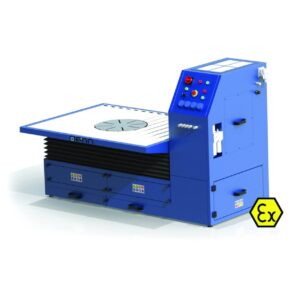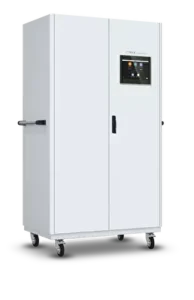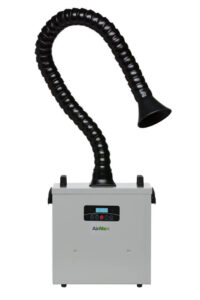





SNE CAP Air Duct Sterilization Unit (up to 2000 m³/h)
The SNE CAP air purification system sterilizes and purifies the air by removing airborne substances, odors, and microorganisms such as bacteria, viruses, and fungal hyphae and spores.
This device has been developed for use in HVAC and ventilation systems. Dirt accumulates in HVAC and ventilation systems, and microorganisms grow there, which then enter indoor spaces and harm our health.
The use of ultraviolet light in combination with photocatalysts kills airborne microorganisms, oxidizes odors, and breaks down volatile organic compounds. The use of several different photocatalyst materials significantly increases the devices’ effectiveness against various pollutants.
NASA developed this technology and used it at the space station to remove ethylene gas. Today, it is known as MCI technology.
An HVAC system in a building is comparable to the human respiratory system. The system supplies the people inside the building with treated air (heated, cooled, or ventilated), just as the respiratory system supplies a person with oxygen through the bloodstream. Both systems are essential for the body or for people at work.
However, contamination may be present in the air ducts of an HVAC system. Dark and damp air ducts allow many microorganisms (bacteria, fungi, viruses, spores) to survive and multiply. They can also cause unpleasant odors and other types of contamination (unpleasant odors, volatile organic compounds, bacteria, and the byproducts of their metabolic activity).
Building materials and interior design elements—such as furniture, paint, particleboard, and carpeting—are sources of volatile organic compounds, such as formaldehyde, benzene, toluene, and xylene, especially when they are relatively new.
Ventilation in a building. Polluted air inevitably causes health problems and illness; some examples of symptoms include the following:
- Irritated airways
- The spread of viruses, such as the influenza virus
- Irritated Eyes / Contact Lenses
- Headache
- Greater susceptibility to colds and allergens
- Fatigue
- Feeling unwell
These health complaints related to the work or living environment are known as “Sick Building Syndrome.”
Just as the human respiratory system is equipped with an air filter, an HVAC system must also be equipped with a filtration system. To this end, filters are typically used that are highly effective at trapping airborne contaminants such as dust, larger pollen grains, pet dander, and skin flakes. They also remove a large proportion of microorganisms from the air.
Filters do not capture most microorganisms because their pore size is larger than that of fine dust and microorganisms. The biological material collected in the filters (such as bacteria and fungi) is able to multiply due to the large amount of nutrients that the filter collects. This leads to the formation of a colony of microorganisms in the filters, a large portion of which eventually passes through the filter and enters the air. When replacing filters, they must be treated as a biological hazard. Airborne particles, however, pass through the filter and are not reduced to any extent.
Ventilation systems do not use HEPA or ULPA filters, which capture microorganisms and emit ultrafine airborne solid particles.
An alternative is an air purification system that actively oxidizes and sterilizes air pollutants. Not only does the purification system clean the air, but it also generates oxidizing agents that spread through the air and eliminate the pollutants there.
SNE has developed MCI air disinfection technology, which is used in air circulation systems, such as air conditioning units and ventilation ducts. By using ultraviolet light in combination with photocatalysts, microorganisms in the air are killed, and odors and volatile substances are oxidized. The technology used was developed and patented by SNE itself.
Ultraviolet light penetrates the cell wall of an organism and reacts with its DNA. The C=C carbon bonds in the organism’s molecules are broken. This causes cell death, which means that the organism can no longer grow or reproduce.
In combination with UV light, optical catalysts are used; which are combinations of substances that, when exposed to UV light, undergo a catalytic reaction to produce gaseous hydrogen peroxide (H₂O₂), hydroxyl radicals (OH), negative ions (O3-), ozone ions (O3), and superoxides (O2-).
The emission of these oxidizing agents triggers an oxidation process in which bacteria, viruses, microorganisms, and fungi are oxidized, while the oxidizing agents are simultaneously oxidized into oxygen and hydrogen. The system is also effective against volatile substances such as formaldehyde, smoke, and unpleasant odors. Pollutants and oxidizing agents balance each other out, resulting in clean, odor-free air.
The SNE MCI (Multi-Catalytic Oxidation) system uses high-quality UV-C lamps from the German manufacturer (Heraeus), which—partly due to the use of quartz glass—consume 30–60 percent less energy compared to standard UV lamps of the same length. For different applications, you can choose between lamps that produce ozone (natural quartz, 184 and 254 nanometers) and lamps that do not produce ozone (synthetic glass, 254 nanometers only).
Different types of optical catalysts produce different types of catalytic reactions, and they all have different advantages; The MCI system uses two different optical catalysts to effectively combat a wide range of pollutants.
The MCI air conditioning product line consists of various models equipped with one or two UV lamps or optical catalysts (MCI cells) of different lengths, combined with various compatible UV lamps.
TECHNICAL SPECIFICATIONS FOR DUCT-MOUNTED AIR PURIFIERS
| Cleaning Elements | UV lamp, photocatalytic cell |
| Suitable for air volume
Power consumption |
400–2,000 m³/h
5 W |
| Voltage | 220–240 volts / 50 Hz |