Our children deserve better prospects for the future. Our care, clean food, and, of course, clean air!
The issue of air pollution has recently come to the forefront in a significant way. Why is that? The answer is simple. Factors contributing to air pollution have begun to be studied in greater depth, particularly from a health perspective. The World Health Organization (WHO) and the scientific and health journal *Environment International* conducted two such studies. The results are quite similar: people, especially young children, are affected by air pollution, which is a cause for concern.
The WHO concluded that air pollution affects children’s neurological and cognitive development. It may also lay the groundwork for the development of asthma, allergies, or cancer in childhood. In addition, children exposed to high levels of air pollution are more likely to suffer from chronic diseases later in life, such as cardiovascular diseases.
Environment International studied children and linked them to ASD (autism spectrum disorder). The conclusion was clear: children exposed to lower levels of air pollution had a 78% lower risk than children exposed to higher levels of air pollution (Environment International, 2018).
Children breathe faster than adults, and therefore consume more air, which means that when the air is polluted, the inner surface of a child’s lungs is exposed to more pollutants than that of an adult. A child’s brain and body are constantly developing and growing; polluted air plays a crucial role in a child’s development and can affect the child’s future prospects.
We assume that our air is clean, especially compared to Asian countries. Of course, it’s true that our air is less polluted. However, there are still pollutants in our air. It has long been a known fact that indoor air is 5 to 25 times more polluted than outdoor air. Skeptics might ask, “How is that possible? That can’t be true.”
But let’s think about it for a moment. Our interiors are covered with building materials, the rooms have furniture, and the walls are painted. So let’s take a look at what our household consists of:
- Glue (for furniture, for example)
- Varnish (floors, furniture)
- Plastic (petroleum product)
- Laminate (petroleum product)
- Chemicals (cleaning, etc.)
- Building materials (various chemical compounds)
The list is long, and I could go on. Did you know that adhesives, varnishes, household cleaning products, and building materials contain chemicals that aren’t permanent but evaporate from surfaces over time (formaldehyde, VOCs—volatile organic compounds)? This is what we come into contact with every day in our homes and offices.
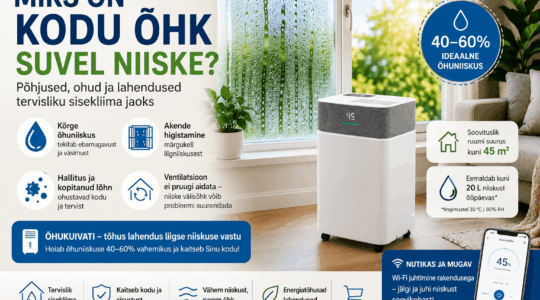
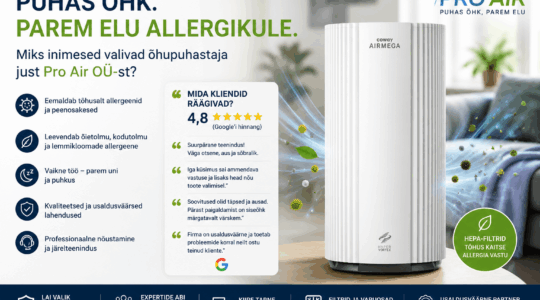
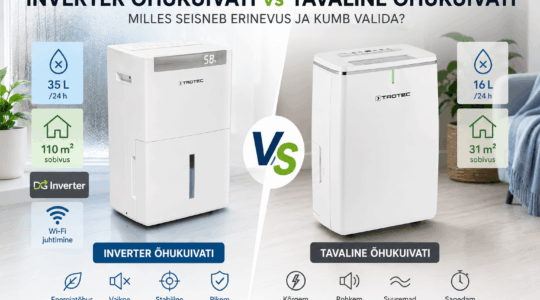
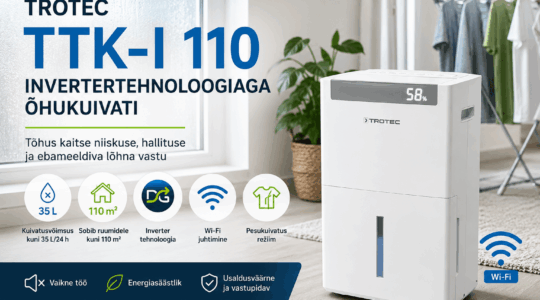
It is possible to prevent indoor air pollution. The best solutions for this are air purifiers equipped with an activated carbon filter and a so-called TRUE HEPA filter. Of course, it would be ideal if the air purifier also had an anti-allergenic filter. We definitely recommend COWAY, a top brand in air purifiers, which is dedicated to developing products that make our lives healthier and more comfortable.
A more detailed overview:
https://www.eea.europa.eu/et/eka-signaalid/signaalid-2013/artiklid/siseohu-kvaliteet
Research findings (World Health Organization, 2018):
- Air pollution affects the development of mental and motor skills (cognitive impairments).
- Air pollution impairs children’s lung function, even when they are exposed to lower rather than high concentrations of pollutants
- 93% of children under the age of 15 are exposed to particulate matter (PM2.5) levels that exceed WHO air quality standards.
- More than 40% of people worldwide, including 1 billion children under the age of 15, have been exposed to increased air pollution.
- 2016. In that year, approximately 600,000 children under the age of 15 died as a result of exposure to both indoor and outdoor air pollution.
- Air pollution is playing an increasingly significant role among the leading threats to children’s health, accounting for nearly one in ten deaths among children under the age of five.
The extent to which air pollution plays a role has become clear through research and new findings.
When it comes to outdoor air, there isn’t much we can do as individuals (though certainly to some extent); when it comes to indoor air, however, we can definitely make a difference—at home, at work, and for our children at school and in daycare.