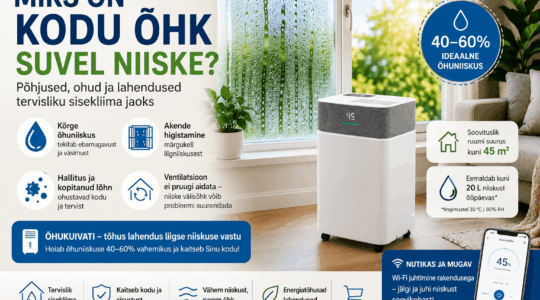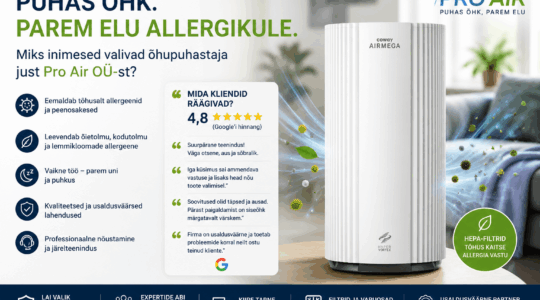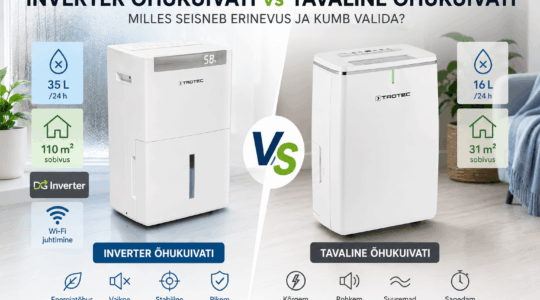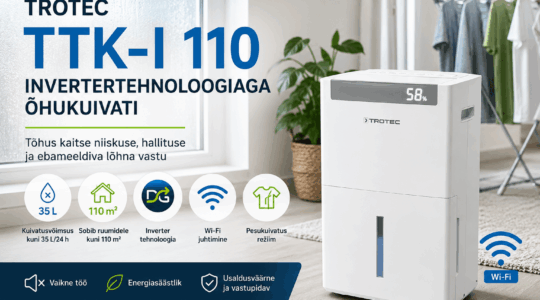
At home or at work: Regular ventilation and a suitable temperature help improve indoor air quality, prevent mold growth, and create a healthier indoor environment overall. But what should you do if humidity remains too high despite regular ventilation? Experts recommend portable dehumidifiers , which bring humidity levels back to normal.

There are many causes of excess moisture
Various activities cause a steady increase in humidity throughout the day. Simply breathing increases humidity, since the air we breathe contains water vapor. The more people there are in a room or building, the greater the impact of the air we exhale on humidity. Added to this is sweating. Additional water vapor is produced when cooking, washing, drying clothes, or taking a shower or bath. The air in a room can only absorb these amounts of moisture to a limited extent. As a result, moisture condenses on windows, mirrors, and cold surfaces in the room. This creates pockets of moisture that provide an ideal breeding ground for mold and can lead to health problems.
That is why it is essential to take appropriate measures to reduce humidity in your house or apartment. In this blog post, you’ll learn the best way to do that.
Proper Ventilation – That’s How It’s Done
To prevent excessive humidity from becoming a problem, the room should be ventilated several times a day with the windows wide open. This replaces the overly humid indoor air with fresh air from outside.
How often and for how long should it be ventilated?
As a general rule, the cooler the room temperature, the more frequently the room should be ventilated to prevent mold growth caused by moisture. The following recommendations apply during the ventilation process:
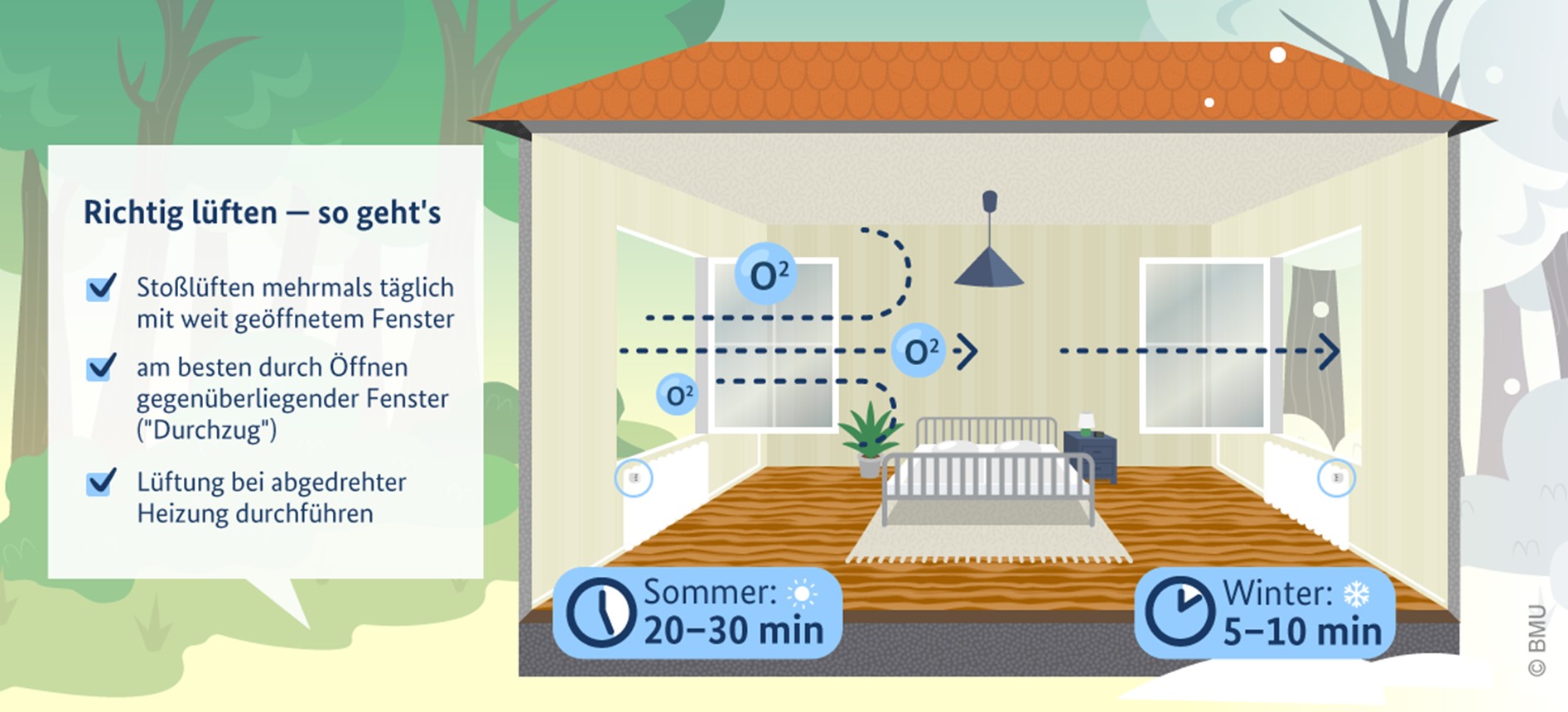
- Forced ventilation several times a day with a window open, preferably by opening a window on the opposite side (“cross-ventilation”)
- In the summer, ventilate for 20–30 minutes
- In winter, five to ten minutes is enough
Always ventilate the room when cooking, taking a shower, or drying laundry, for example, when large amounts of water vapor are produced. Tip: Before ventilating the room, turn off the heat so that expensive heat energy doesn’t escape outside unused.
Excessive Humidity Despite Ventilation: Expert Advice
If humidity persists despite regular ventilation or rises rapidly after ventilation, there may be several reasons for this. If the walls are damp or the roof is leaking, regular ventilation is ineffective, so specialized companies and dehumidification equipment must be used to resolve the issues. The situation is different if the humidity is too high due to a low room temperature. Warm air holds more moisture than cold air. Anyone who keeps the room temperature low to save on heating costs should therefore make sure that high humidity does not lead to mold problems in the apartment.
Dehumidifiers help create a consistently healthier indoor climate
If regular ventilation does not achieve the desired result, or if ventilation is reduced in the winter to save on heating costs, experts recommend using use portable dehumidifiers.
Dehumidifiers with a built-in hygrostat monitor humidity levels fully automatically and activate the dehumidification technology only when the humidity level threatens to exceed the preset target value. As a result, these dehumidifiers are relatively energy-efficient, yet all the more effective at creating a healthy indoor climate and preventing mold.
Convenient dehumidifiers like Troteci TTK 27 HEPA and TTK 52 not only automatically remove excess moisture from the room air—which can become a health hazard in the long term—but The integrated HEPA filter in the TTK 27 also purifies the indoor air, removing over 95% of pathogenic viruses (influenza, RSV, coronavirus), bacteria, mold spores, allergens, and fine dust particles. The beneficial effects of purified and optimally humidified indoor air can be felt with every breath.