

New Funding Program for Mobile Air Purifiers in Schools in Germany — The Ministry is funding the TAC series and Airgo CleanONE high-efficiency air purifiers to ensure safe classroom instruction.
The government wants to ensure safe and continuous instruction during the pandemic following the summer break. Economy Minister Peter Altmaier announced that in-person instruction should remain possible even if infection rates rise. A new lockdown and home schooling must be avoided at all costs. Therefore, the program should be implemented quickly and without red tape. Schools should be able to access the 200 million euros in funding immediately.
Full coverage of expenses by the federal and state governments
“This means there is also a possibility that schools run by cities and municipalities will be able to install such systems without any significant contribution on their part,” said Peter Altmaier in Berlin. The back-and-forth over who should pay for the air purifiers may finally come to an end. Local governments with empty coffers, in particular, have opted out due to the costs the purchase of mobile air purifiers and demanded greater financial support from the federal government.
“With mobile air purifiers, you can almost completely eliminate the risk of indirect transmission in schools if you use them correctly … These devices offer good protection against all virus variants.”
Prof. Christian Kähler, University of the Federal Armed Forces, Munich.
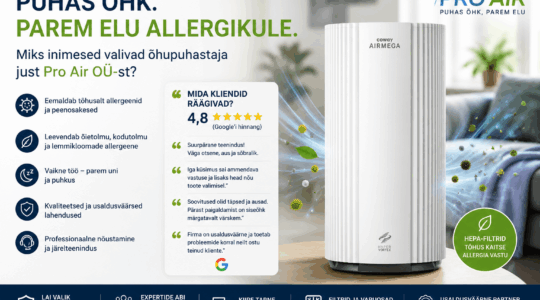
Numerous studies, including those conducted by the University of Frankfurt, confirm that portable air purifiers, such as the TAC series air purifiers and the Airgo Clean ONE, are highly effective at reducing infectious aerosols. Gerhard Scheuch, one of Germany’s leading aerosol experts, attributes more than 99 percent of indoor COVID-19 infections to aerosols. The Federal Environment Agency also has mobile air purifiers. According to a new assessment, it makes sense to prevent indirect coronavirus infections. In an interview with Handelsblatt, Dr. Heinz-Jörn Moriske, a professor at the Federal Environment Agency, said: “Of course, mobile air purifiers help against viruses, provided they are tested devices and are properly set up in the classroom.” Note: In addition, their effectiveness must be verified in advance (regardless of the technology used). Only then will the devices be effective in practice.”
Prof. Christian Kähler, director of the Institute of Fluid Mechanics and Aerodynamics at the University of the Federal Armed Forces in Munich, has investigated the effectiveness of TAC V+ high-efficiency air purifiers . The researcher concludes that with the TAC V+, , the risk of indirect infection in an enclosed space can be virtually eliminated:
Excerpt from the study ” Can Portable Air Purifiers Effectively Reduce the Risk of Indirect SARS-CoV-2 Aerosol Transmission? “
According to Kähler, when purchasing air purifiers suitable for school classrooms, it is important that the devices meet certain requirements regarding air efficiency and filter quality. This is because not every air purifier is suitable for filtering aerosols in the micrometer range. This ensures that funding is directed only toward truly effective air purifiers, rather than devices with untested technology that have questionable effectiveness or lack proof of effectiveness.
To ensure reliable virus filtration, portable air purifiers must meet three basic requirements:
1. The air handling capacity of the air purifier must be sufficiently high to allow for at least six air changes per hour. This is the only way to ensure that the aerosol concentration in the room decreases within a few minutes. The TAC V series of high-performance air purifiers can exchange air up to 16 times per hour, thereby providing an even higher level of protection for, for example, high-risk patients in doctors’ offices, hospital wards, or nursing homes.
2. The filter used must be certified in accordance with the DIN EN 1822 standard. Only H14-HEPA high-efficiency filters in accordance with the EN 1822 standard, such as TAC V + , TAC M and TAC Eco , and Airgo Clean ONE are used to filter out up to 99.995% of even small virus-laden aerosols (0.1–0.3 µm) from indoor air. This means that H14-HEPA filters are already 10 times more efficient than H13-HEPA filters, although the latter still offer relatively good filtration efficiency for particles in the bacterial size range. However, there are significant differences in the so-called MPPS range (most penetrating particle size), i.e., in the filtration of viruses and aerosols. The Laboratory Technology Project Group (ELATEC) of the Federal Institute for Occupational Safety and Health recommends in its statement on “The Use of HEPA Filters in Ventilation and Air Conditioning Systems (Resolution 16/2010)”: “HEPA filters should be at least Class H14 in accordance with DIN EN 1822-1.”
3. The air purifier must be quiet enough so that it does not interfere with work. If the noise is distracting, there is a risk that the device will be turned off or will not operate at the required airflow rate. In that case, there would no longer be a high level of protection against indirect SARS-CoV-2 infection.
The criteria defined by Prof. Kähler have even been exceeded by the TAC V+ mobile high-performance air purifier. The device is developed and manufactured in Germany (Heinsberg) and is shipped worldwide. A continuously updated overview on the company’s website shows which restaurants, government offices, schools, and medical facilities are already using the high-performance TAC or Airgo Clean ONE air purifiers.
AVAILABLE IN THE ONLINE STORE or at the PRO AIR OÜ office at Kuma tee 10, Peetri.