When choosing a pressure washer —as with any machine—the decision depends on its intended purpose as well as how it will be used.
Understanding these two factors is very important when making the right purchase, just as it is when choosing a car: if you prefer speed, you’ll buy a sports car, but if you’re looking for comfort and cargo capacity, you’ll opt for an SUV or a station wagon.
The first, important subdivision, in this case, involves cold-water pressure washers and hot-water pressure washers
Broadly speaking, the biggest difference between the two is the type of dirt they can remove and the speed at which they do so.
A major advantage of hot-water pressure washers is , above all , their ability to effectively and quickly remove grease; for example, they can thoroughly clean oil-coated mechanical components in a short amount of time, engines, and surfaces soiled with oil or grease.
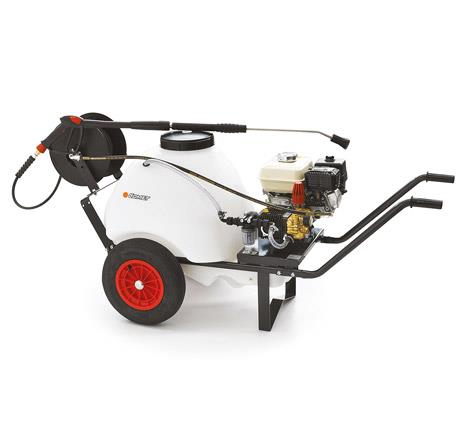
Cold-water pressure washers have other advantages as well: for example, there are very compact and portable models that can be stored in small spaces like a storage room and used as needed, but the biggest advantage is certainly the purchase and maintenance costs, which are generally lower than those of hot-water pressure washers.
In many cases , we can achieve the same result with both types of pressure washers; the difference lies in how that result is achieved.
DIFFERENCES BETWEEN HOT-WATER AND COLD-WATER PRESSURE WASHING
Cold-water pressure washers primarily rely on water pressure generated by engine-powered piston pumps: the higher the engine power, the greater the pressure, and the more effective the cleaning. The use of highly functional nozzles and chemical cleaning agents
also contributes to better results, as they help break down dirt and grime.
Hot-water pressure washers, on the other hand, contain a coil capable of heating the water pumped by the pumps and causing it to emerge from the nozzles at a temperature that dissolves grease and oil derived from hydrocarbons or plant- and animal-based compounds.
High-temperature water—and the steam produced by some models—actually helps dissolve oily grime even without detergents or cleaning agents.
COSTS, CONSUMPTION, AND THE ENVIRONMENT
It’s easy to see how a hot-water pressure washer can clean more thoroughly than a cold-water pressure washer, but this isn’t always the best option. Some plastic surfaces or certain paints, for example, cannot withstand high temperatures and may be damaged when washed with hot water.
A cost-benefit analysis should also be conducted regarding both the higher purchase cost of a hot-water pressure washer and the higher operating costs of a cold-water pressure washer
. Heating water requires more energy, but it avoids the use of chemicals that could harm the environment.
Hot-water pressure washers are a good choice if we are particularly concerned about environmental issues. What’s more, with frequent use, the initial cost is offset by savings on cleaning supplies (which are often expensive), and don’t forget that you can always use it in cold-water mode.
CHOOSE BASED ON YOUR NEEDS
In many cases, the choice between a cold-water and a hot-water pressure washer comes down to the desired results and how you plan to use it. Here are a few examples.
If you need to perform maintenance in a few minutes— cleaning the greased gearboxes and then reinstalling them in the mechanical system—you will definitely need hot water: cold water is ineffective against grease because it can only disperse the hydrogenated microparticles that make up oil and grease, but it cannot remove them quickly and thoroughly from the surface.
However, if you want to clean the mud off your backyard before a night out with friends or wash down your garden chairs after a storm, feel free to choose a cold-water pressure washer.
If you havea large workshop, you won’t have any problems using a hot-water pressure washer, but if you need to get close to an object in a small space, it’s better to use a more portable cold-water pressure washer.
Finally, don’t forget that the hot water and steam it produces can be a nuisance if you find yourself in an enclosed space.
COLD WATER OR HOT WATER PRESSURE WASHING: PROS AND CONS
In summary, this is a comparison of the pros and cons of using these two types of pressure washers.
Cold-water pressure washers are less expensive and require less maintenance. However, they require the addition of chemical detergents, use more water, and take longer to operate.
DISCOVER COMET’S COLD-WATER PRESSURE WASHERS
Hot-water pressure washers are more effective against grease and oil-based dirt, allowing you to clean in less time while using less water, pressure, and detergent. On the other hand, they require more frequent maintenance, consume more energy, and are more expensive to purchase.
These are the key factors to consider when you need to buy a pressure washer for your home or business. Analyze your needs and try to take the advantages listed above into account: you’re sure to make the best choice so that your next pressure washer meets all your needs, whether it’s for hot water or cold water.