




Odor Stop – an odor-neutralizing system for kitchens
Odor Stop is a professional odor neutralization system for the food industry, where intense organic odors are generated. The system helps reduce unpleasant odors in production processes, improve the work environment, and minimize odor disturbances in the surrounding area.
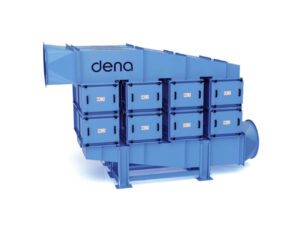
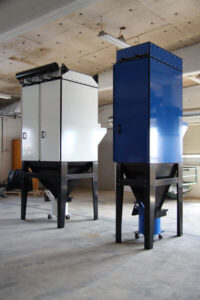
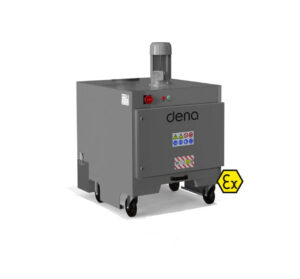
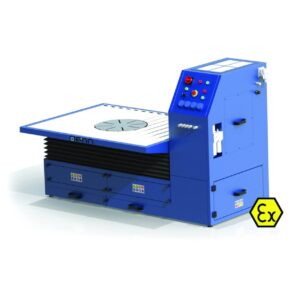
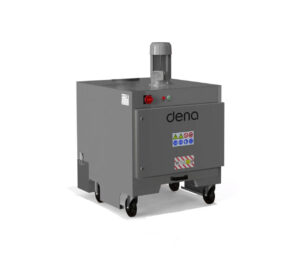
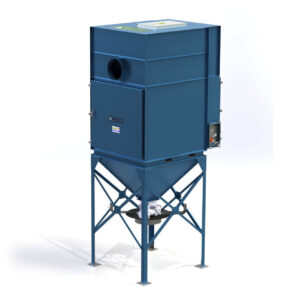
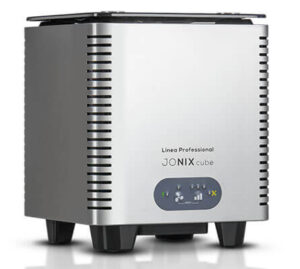
The new filtration system introduced by DENA is specifically designed to remove smoke and grease particles from the airflow in professional kitchens and to eliminate odors. The filters inside the module ensure consistent filtration efficiency, and thanks to their high oil separation and accumulation capacity, they enable significant energy savings and low pressure drop. The module is made of galvanized steel and painted with RAL 7035 epoxy powder coating. OIL STOP filters are ideal for removing grease, oils, and vapors from the air. The ODOR STOP version reduces odors through ozone generation.
This solution is suitable for use:
- in the food industry,
- in meat processing plants,
- in the fishing industry,
The Odor Stop system uses special spray technology and neutralizing agents that bind to odor molecules and help reduce the spread of unpleasant odors right at their source.
An Effective Solution to Industrial Odor Problems
The following may be generated during food processing, organic waste management, and wet production processes:
- organic scents,
- odors of decay and fermentation,
- smells of grease and smoke,
- biological odor disturbances,
- odors from wastewater and waste.
Odor Stop helps:
- improve indoor air quality,
- reduce employees’ exposure to unpleasant odors,
- improve working conditions,
- reduce complaints about the surrounding environment,
- to promote a cleaner and more professional production environment.
Suitable for various industrial sectors
Food Industry
Suitable for professional kitchens
Waste Management and Sorting
It helps reduce odors generated during the handling of organic waste and biowaste.
Industrial Ventilation and Air Purification
Can be integrated with existing ventilation and air purification systems.
Advantages of the Odor Stop System
- Professional Odor Neutralization
- Suitable for continuous industrial use
- Can be used indoors and outdoors
- Helps improve the work environment
- Suitable for high-volume manufacturing facilities
- Low maintenance requirements
- Can be automated
- Suitable for integration into existing systems
Possible Uses
Odor Stop systems are used:
- professional kitchens
Why Choose Pro Air OÜ?
Pro Air OÜ offers professional indoor climate, ventilation, and air purification solutions to industrial and commercial clients throughout Estonia. We provide technical consulting, equipment selection, and project-based solutions tailored to the specific needs of each site.
ODOR STOP electrostatic filters are certified in accordance with the EN ISO 16890 standard, which establishes a new filtration classification in the “general ventilation air filter” category. Filter efficiency is determined based on the particle classes ePM1, ePM2.5, ePM10, and COARSE, which are also used as assessment parameters by the WHO (World Health Organization) and environmental agencies. ODOR STOP electrostatic filters have also been tested in accordance with the UNI 11254 standard (Italian standards), which defines a specific classification for electrostatic filters based on the percentage efficiency measured using DEHS test dust for 0.4 μm particles: A, B, C, D. Key features: • standard dimensions in accordance with standard pocket filter sizes 592×592 and 592×287 (in accordance with EN 15805); • built-in electrical circuit, waterproof and insulated, which can be cleaned with water; • multipolar connection suitable for both mains power (230V-50/60Hz) and multiple parallel connections; • a self-centering system that compensates for manufacturing tolerances of up to 3 mm; • remote control/signal transmission from an external PLC display or directly from the filter’s LED indicator. Features: • High-efficiency filtration of particles ranging from 0.3 to 0.4 microns, comparable to efficiency classes E10 and E11 as defined by standard EN 1822:2009; and to filtration classes ePM1, ePM2.5, and ePM10 as defined by EN ISO 16890;