

A Dehumidifier for the Basement—Which One to Choose and How to Control Humidity?
A damp basement is a common problem in Estonia. Cool temperatures, moisture rising from the ground, inadequate ventilation, and warm, humid summer air can cause the relative humidity in the basement to rise too high. This can result in musty odors, condensation, mold, and damage to wood and metal surfaces.
A properly selected dehumidifier for your basement can help keep humidity under control, but you shouldn’t base your choice solely on the unit’s capacity in liters. Other important factors include the basement’s temperature, volume, moisture load, and whether the dehumidifier needs to run continuously.
What should the humidity level be in a basement?
For most basements, it’s best to aim for a relative humidity of approximately 50–60% RH. If humidity remains above 60–65% for an extended period, the risk of mold and condensation increases.
First, install a hygrometer and monitor the humidity for at least several days. A single reading does not provide a complete picture.
Why is the basement often particularly damp in the summer?
At first glance, this seems strange: it’s warm and dry outside, but the basement is getting damp.
The reason may be that warm summer air contains a lot of water vapor. When this air enters a cool basement, it cools down and the relative humidity rises. Condensation may even form on walls or floors that are cold enough.
Therefore, keeping windows and doors open for long periods in the summer may not necessarily dry out the basement—under certain conditions, it can actually bring in more moisture.
Condensation dehumidifier or adsorption dehumidifier?
This is one of the most important decisions when it comes to basements.
A condensation dehumidifier is well-suited for a typical heated basement or one with moderate temperatures. The warmer and more humid the air, the more effectively a condensation dehumidifier typically removes moisture.
An adsorption—or rotor—dryer is a better choice for a very cool basement where temperatures can remain low for extended periods. Its drying capacity depends on temperature in a different way, and the unit can operate effectively even under conditions where the performance of a compressor-based condensation dehumidifier drops significantly.
Therefore, the question is not just which dehumidifier removes more liters of water according to the catalog, but under what conditions those liters are achieved.
How do you choose the right air dryer for your basement?
When selecting an air dryer, you must consider at least the room’s area and height, temperature, existing humidity, desired humidity level, and the constant influx of moisture.
For example, the needs of a 20 m² dry storage room and a 100 m² damp basement are completely different.
It’s also not a good idea to compare units based solely on their maximum rating in liters per 24 hours. Manufacturers’ maximum dehumidification capacity is often determined under warm and very humid test conditions. In a cool basement, the actual amount of moisture may be significantly lower.
Continuous condensate drainage is a major advantage in the basement
If the dehumidifier needs to run for an extended period, we recommend choosing a model that can be connected to a condensate drain hose.
That way, you won’t have to empty the water tank manually every day, and the dehumidifier can control humidity automatically. For higher humidity loads, a condensate pump may also be necessary.
A good basement dehumidifier should allow you to set the desired relative humidity. If the humidity rises above the set level, the unit begins dehumidifying; once the target level is reached, it reduces or stops the compressor’s operation.
Does a dehumidifier help prevent mold?
A dehumidifier helps eliminate one of the main conditions for mold growth— excess moisture.
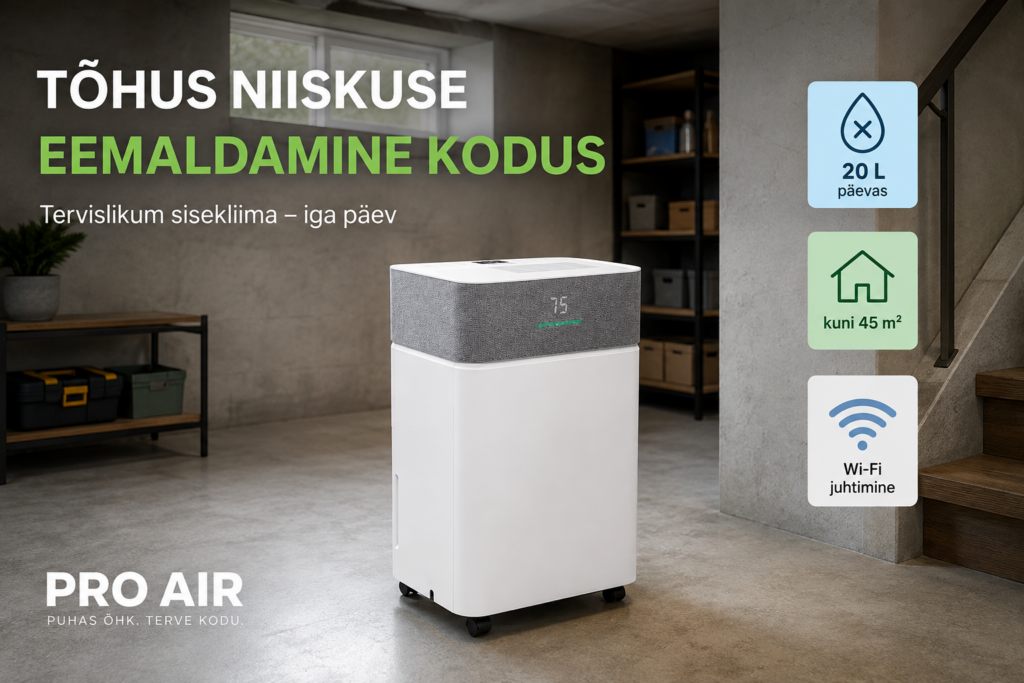
Smaller Basement – The TTR 57 E Basement Dehumidifier Is the Ideal Choice
If your basement is constantly too damp, reducing the humidity level can significantly limit the risk of new mold growth. However, a dehumidifier will not remove existing mold.
You’ll also need to identify the source of the moisture. If water is seeping in from the soil, there’s a leak in the plumbing, or the waterproofing is damaged, the underlying cause must be addressed as well.
Dehumidifier or ventilation?
These solutions address different problems and can work together.
Ventilation replaces indoor air with outdoor air. A dehumidifier, on the other hand, removes moisture from the indoor air and allows you to control the humidity level regardless of whether the outdoor air is currently dry or humid.
If the outside air is drier than the air in the basement, ventilation can help with drying. However, on a hot and humid summer day, bringing outside air into the basement may not improve the situation.
How do you use a dehumidifier properly in the basement?
The dehumidifier should be positioned so that air can circulate freely around it. In a larger basement or one with multiple rooms, it’s a good idea to keep interior doors open or use an additional fan to improve air circulation.
During the initial drying period, the unit may run frequently. This does not necessarily mean the dehumidifier is too small—moisture is released not only from the air but also from the walls, floor, and other materials.
Once the structures have dried and the humidity level has stabilized, the dehumidifier’s runtime will typically decrease.
When should you choose a more professional dehumidifier?
If you have a large basement, very high humidity, water damage, or constant exposure to moisture, a small home dehumidifier may not be enough.
In this case, it’s worth looking into professional units with higher airflow and drying capacity. For drying water damage or wet structures, it may be more appropriate to use a a construction dehumidifier in combination with air circulation fans.
Frequently Asked Questions
When is the humidity in the basement too high?
If the relative humidity remains above 60–65% for an extended period, it’s worth investigating the cause and considering ways to reduce the humidity.
Can a dehumidifier run in the basement all the time?
Yes, a unit equipped with a suitable hygrostat can automatically control humidity. A direct condensate drain is particularly convenient for continuous use.
Is a 10–20-liter dehumidifier suitable for a basement?
It may be suitable for a small basement with moderate temperatures, but the rated capacity alone is not enough. In a cool room, a condensation dehumidifier’s actual dehumidification capacity may be much lower than the catalog value.
Will a dehumidifier remove a musty odor from the basement?
Reducing humidity may help if the odor is caused by excess moisture, but mold, damp materials, or other sources of the odor must be addressed separately.
Is a standard compressor-based dehumidifier suitable for a cold basement?
It depends on the temperature and the specific model. At very low temperatures, it’s worth considering an adsorption dehumidifier.
Should you ventilate the basement in the summer?
Not necessarily. Warm, humid outside air can cause the relative humidity to rise very high as it cools down in a cool basement.
Which dehumidifier should I ultimately choose for the basement?
There is no one-size-fits-all model for all basements. The most important factors to consider are the basement’s volume, temperature, current humidity, desired relative humidity, and the cause of the moisture problem.
Pro Air OÜ offers solutions for everything from smaller home basements to larger basement levels, as well as for water damage and professional drying. When choosing the right device, it’s best to base your decision on the actual problem, not just the maximum l/24 h rating listed on the packaging.