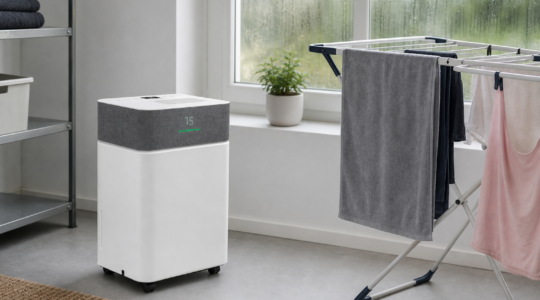

Foggy windows or condensation on interior glass panes are not uncommon during the cold season. This annoying moisture buildup is caused by excessive humidity in heated living spaces, which can have various causes. Without appropriate countermeasures, persistently humid indoor air causes a variety of problems, such as mold growth, physical discomfort, and even increased heating costs.
Because: Rooms with higher humidity require significantly more heating, since the moisture in the air must also be heated.
That’s why you shouldn’t just accept morning water droplets on your windows as a fact of life, but rather take steps to prevent health problems, moisture damage to your belongings, and high heating costs.
Optimal humidity (40–50%) prevents condensation
As a general rule, the following applies: A healthy humidity level in a living space is 40–50 percent. Lower humidity levels can lead to dehydration of the mucous membranes, sore throats, and an increased risk of catching a cold. If the humidity level is consistently above 60 percent, the risk of mold increases, and with it, the risk of health problems.
So just make sure that the humidity is within a healthy range—for example , using a BZ26 thermo-hygrometer , which displays both humidity and room temperature?
Easier said than done: various factors affect the humidity in a living space. Whether you’re cooking in the kitchen, working out in the living room, taking a shower in the bathroom, or even sleeping, the humidity in the room rises as a result of breathing. As a result, the humidity in an apartment can quickly rise to unhealthy and harmful levels.
Does regular ventilation help combat excessively humid indoor air?
The first thing to consider when condensation forms on windows is ventilation. However, even with doors and windows open, forced ventilation doesn’t always produce the desired result. Especially in the morning hours, outdoor humidity is often high, and ventilation is therefore sometimes less effective. Humidity levels of around 80 percent or higher are not uncommon in winter. In the worst-case scenario, airing out the apartment in the morning can actually increase the humidity inside.
Frequent ventilation is also far from ideal from an energy perspective. If you ventilate your apartment several times a day for 5–10 minutes with the windows wide open, you’re letting a lot of heat escape! The room cools down, it has to be reheated, and your heating costs go up.

A handy solution when the air is too humid: Troteci dehumidifiers
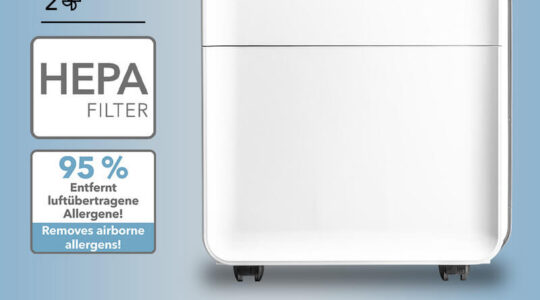
Available in various models and featuring a modern design, these devices automatically remove excess moisture from the air in a room, thereby preventing humidity levels from rising above the optimal range (40–50%).

Good reasons to choose a Trotec dehumidifier:
- The humidity in the living room is automatically regulated within a preset range (optimal: 40–50%).
- It does not condense on glass, mirrors, or windows, thereby reducing the risk of moisture damage and health problems
- reliable protection against mold growth
- low energy consumption thanks to energy-efficient thermostat control
- Rooms with optimal humidity require less heating than rooms with excessively humid air